Are Peptides Safe? A Balanced Look at Risks, Side Effects, and Safety Data for Research Compounds
The safety question is the most important one in peptide research. This guide examines what published safety data actually shows, common side effects by compound class, and the risk factors every researcher should understand.
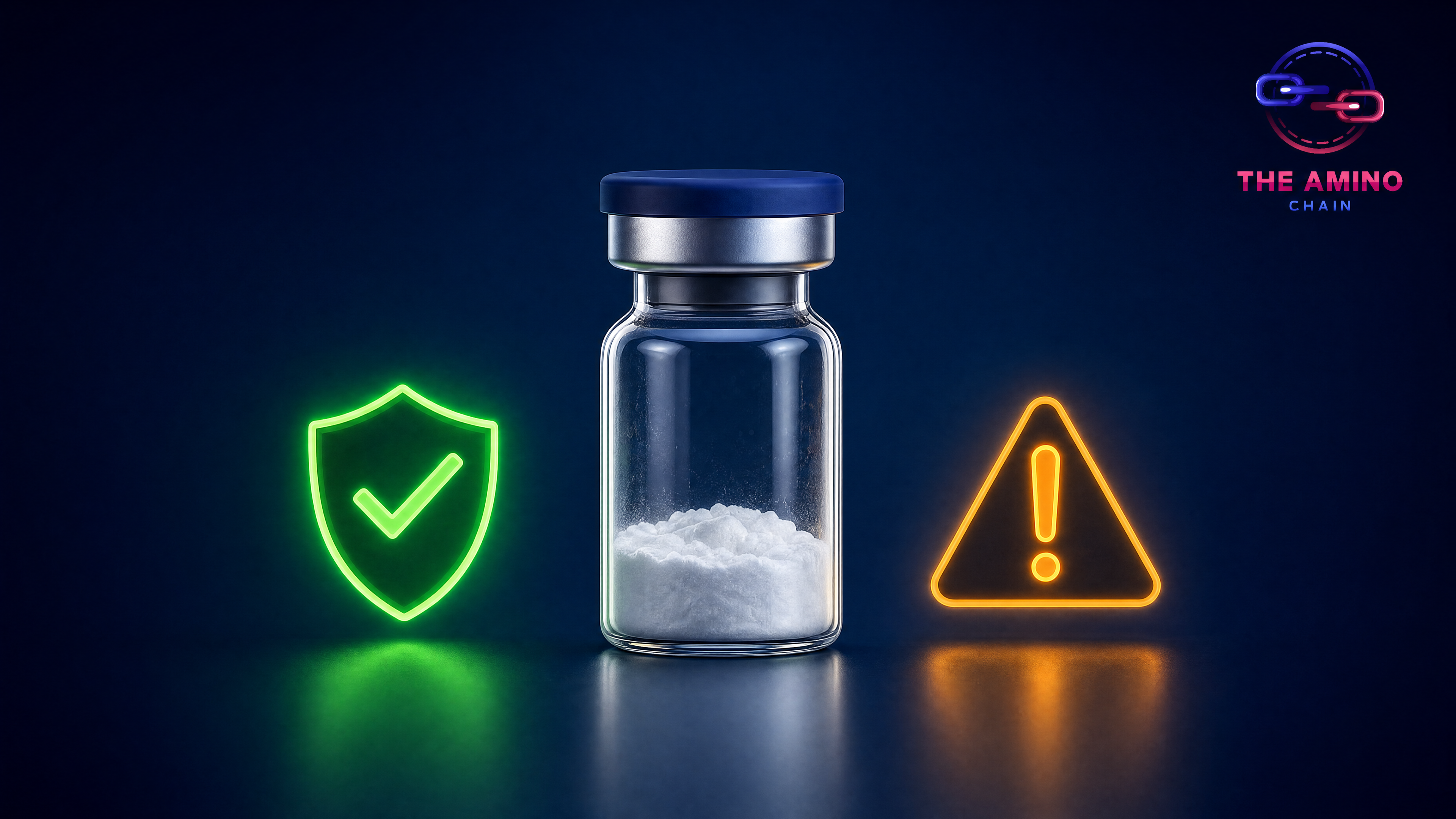
The most honest answer to "are peptides safe?" is: it depends on which peptide, at what dose, for how long, and in what context. Some peptides have decades of clinical safety data and are used by millions of patients. Others have limited preclinical data and minimal human safety information. Treating all "peptides" as a single category for safety purposes is like asking "are pills safe?" — the answer depends entirely on what's in the pill. This guide examines safety data for specific peptide classes, common risks, and the factors that determine whether a given peptide protocol is reasonable.
The Safety Spectrum
Peptides span an enormous safety spectrum. At one end: insulin, used safely by hundreds of millions of diabetic patients for over a century. Semaglutide, with Phase 3 clinical trial data in tens of thousands of patients. Thymosin Alpha-1, approved in 35+ countries with decades of clinical use. Calcitonin, with 40+ years of clinical safety data.
At the other end: novel research peptides with limited published data, no clinical trials, and uncertain long-term safety profiles. Most research peptides fall somewhere in between — they have preclinical safety data (animal studies) and some human observational data, but lack the rigorous clinical trial evidence that approved drugs possess.
Why Peptides Are Generally Well-Tolerated
Peptides have several inherent safety advantages over small-molecule drugs. They are made of natural amino acid building blocks that the body already processes. They typically act through specific receptors with defined biological effects, reducing off-target activity. They are rapidly metabolized by ubiquitous proteases, preventing accumulation. And many research peptides are synthetic versions of compounds the body naturally produces, meaning the biological pathways they engage are already part of normal physiology.
These inherent properties don't guarantee safety — they explain why peptides are generally better tolerated than synthetic chemicals with foreign structures that the body has no evolutionary experience processing.
Common Side Effects by Peptide Class
GLP-1 receptor agonists (semaglutide, tirzepatide, retatrutide): The most common side effects are gastrointestinal — nausea (40-50%), diarrhea (30%), vomiting (25%), constipation (25%). These effects are dose-dependent and typically diminish over weeks. Gradual dose escalation is essential. More serious but rare concerns include pancreatitis, gallbladder events, and the theoretical thyroid C-cell tumor risk from rodent studies.
Growth hormone secretagogues (CJC-1295, Ipamorelin, GHRP-2/6): Common effects include water retention, joint stiffness, tingling/numbness in extremities (carpal tunnel-like symptoms), and mild insulin resistance. Ipamorelin has the cleanest profile (no cortisol, prolactin, or appetite stimulation). GHRP-2 and GHRP-6 stimulate appetite and may elevate cortisol and prolactin. Long-term elevated GH/IGF-1 signaling carries theoretical cancer risk from epidemiological associations.
Tissue repair peptides (BPC-157, TB-500): Published preclinical safety data is favorable. BPC-157 toxicology studies at doses far exceeding research doses showed no significant organ toxicity, mutagenicity, or teratogenicity. TB-500's theoretical concern involves promoting growth of existing tumors through its cell migration and angiogenesis effects, though published research has not demonstrated this. Common reported effects are minimal — primarily injection site reactions.
Immune peptides (Thymosin Alpha-1, KPV, LL-37): Thymosin Alpha-1 has the strongest safety record among immune peptides, with extensive clinical data showing minimal adverse effects. KPV and LL-37 have more limited human safety data. As immunomodulatory compounds, they carry theoretical risks of immune imbalance if used inappropriately.
Risk Factors That Increase Concern
Peptide quality: Impure, mislabeled, or contaminated peptides are the single biggest safety risk in the research peptide space. Endotoxin contamination, incorrect identity, or significant impurities can cause reactions that have nothing to do with the peptide itself. Using vendors with third-party testing and legitimate COAs reduces this risk substantially.
Injection technique: Poor aseptic technique can cause infections — abscess formation, cellulitis, or systemic infection. Proper hand washing, alcohol swabbing, single-use needles, and sterile technique are essential regardless of which peptide is being used.
Drug interactions: Most peptides are metabolized by proteases rather than the cytochrome P450 system, reducing pharmacokinetic drug interactions. However, pharmacodynamic interactions are possible — GLP-1 agonists potentiate diabetes medications, GH secretagogues can worsen insulin resistance, and immune-modulating peptides may interact with immunosuppressive drugs.
Pre-existing conditions: Cancer history (IGF-1-elevating peptides, angiogenesis-promoting peptides), diabetes (GH secretagogues worsen insulin resistance), autoimmune disease (immunomodulatory peptides require careful selection), and cardiovascular disease (some peptides affect blood pressure and heart rate) all require specific consideration.
The Honest Assessment
Peptides as a class have a favorable safety profile compared to many drug categories. But "generally safe" is not the same as "proven safe for your specific situation." The responsible approach involves using high-quality compounds from tested suppliers, starting at conservative doses, monitoring relevant health markers, understanding compound-specific risks, and consulting qualified healthcare providers for any pre-existing health concerns. The goal is informed risk management, not blind reassurance or fear-based avoidance.