The Complete Beginner's Guide to Peptide Research: Everything You Need to Start
New to peptide research? This comprehensive guide covers everything from what peptides are through purchasing, reconstitution, storage, dosing, and the essential lab supplies you need to get started safely.
Starting peptide research can feel overwhelming. Between unfamiliar terminology, precise calculations, specialized equipment, and an ocean of conflicting information online, the barrier to entry seems high. It doesn't have to be. This guide covers everything a beginner needs to know — what peptides are, how they work, what you need to buy, how to handle and store them, and how to avoid the most common mistakes that waste time and money.
What Are Peptides?
Peptides are short chains of amino acids connected by peptide bonds. They're essentially small proteins — while the distinction is somewhat arbitrary, molecules with fewer than approximately 50 amino acids are generally called peptides, while larger chains are called proteins. Your body produces thousands of different peptides that serve as hormones, neurotransmitters, growth factors, and signaling molecules.
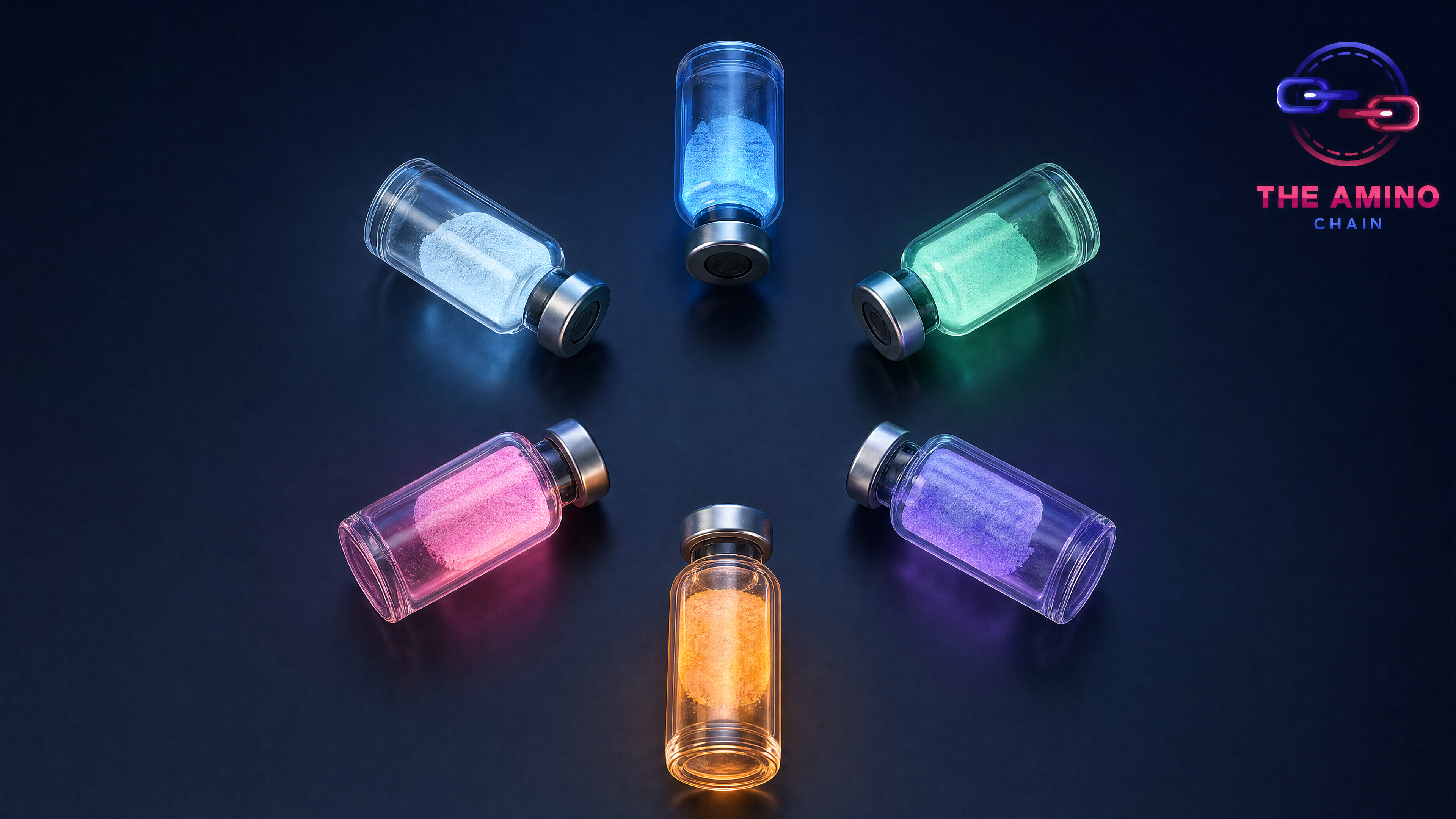
Research peptides are synthetic versions of naturally occurring peptides (like BPC-157 from gastric juice or TB-500 from Thymosin Beta-4) or novel sequences designed to interact with specific biological targets. They are produced through solid-phase peptide synthesis, purified by HPLC, and supplied as lyophilized (freeze-dried) powders for reconstitution.
Essential Supplies You Need
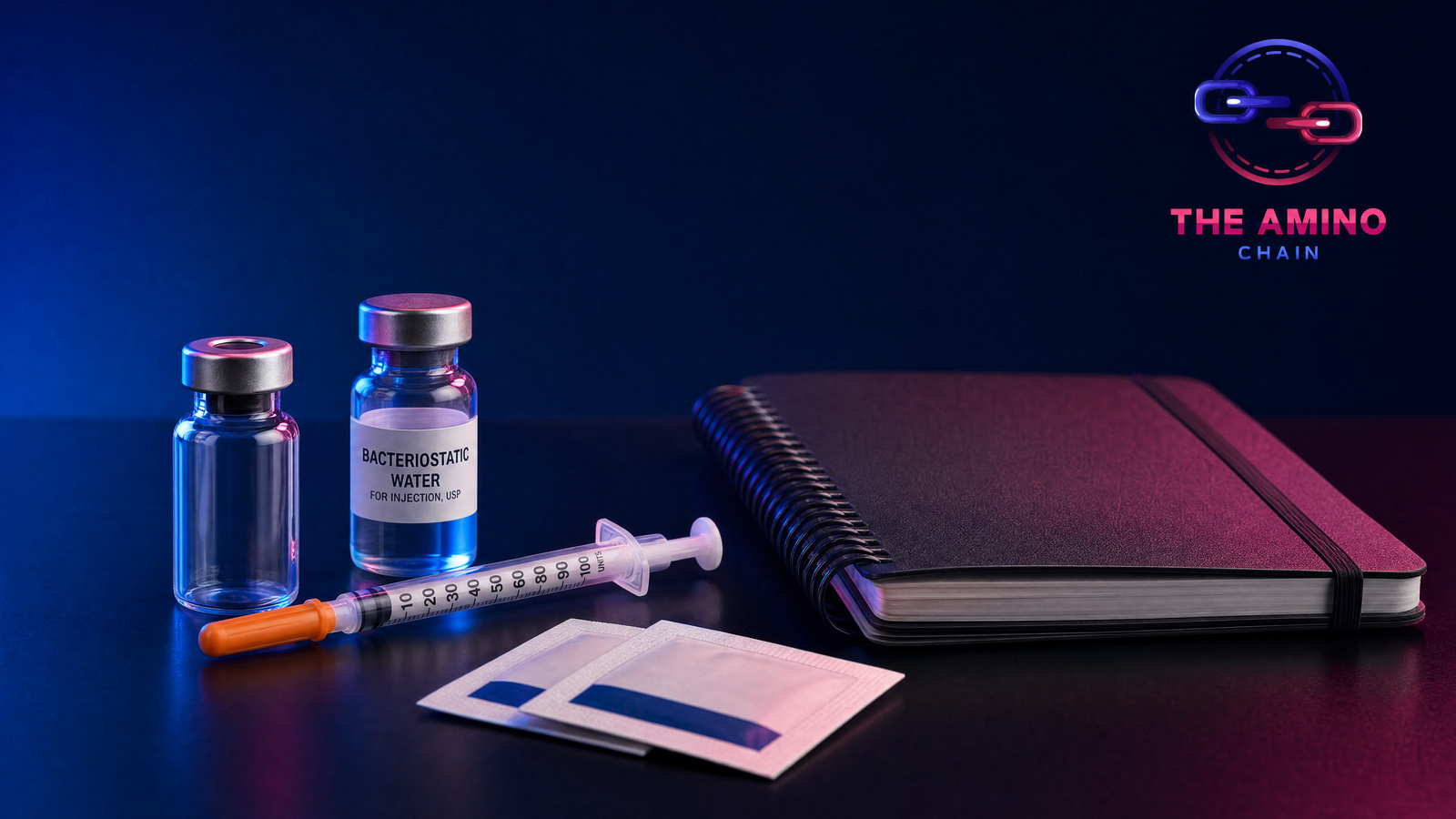
Before purchasing any peptide, you need the basic supplies for safe handling. Bacteriostatic water (BAC water) is the standard reconstitution solvent — sterile water containing 0.9% benzyl alcohol to prevent bacterial growth in multi-use vials. Insulin syringes (U-100, 29-31 gauge, 1/2 inch needle) are used for both reconstitution and administration. Alcohol prep pads clean vial stoppers and injection sites. And a reliable refrigerator (2-8°C) is essential for storing reconstituted peptides.
Optional but recommended supplies include nitrile gloves, a sharps container for used needles, and amber vials or aluminum foil for light-sensitive peptides.
How to Evaluate Peptide Quality
Not all peptide suppliers are equal. The key quality indicators are HPLC purity (should be 98% or higher, ideally 99%+), mass spectrometry confirmation (molecular weight matching the target sequence), and a Certificate of Analysis (COA) from independent third-party testing rather than in-house testing alone.
Red flags include suppliers who don't provide COAs, COAs with suspiciously identical results across multiple batches, unusually low prices (high-purity peptide synthesis is expensive), and products labeled as "research chemicals" without specific identity and purity data.
Reconstitution: Your First Critical Step
Reconstitution means dissolving the lyophilized peptide powder in bacteriostatic water to create an injectable solution. The process is simple but technique matters. Clean the vial stopper with an alcohol pad. Draw the desired volume of BAC water into a syringe. Insert the needle through the stopper and add water slowly down the inside wall of the vial — never inject directly onto the powder cake. Allow the water to trickle down and contact the powder gently. Swirl the vial gently; never shake it.
Most peptides dissolve within 1-3 minutes. If the powder hasn't fully dissolved after 10-15 minutes of gentle swirling, refrigerate the vial for 30 minutes and try again. Persistent cloudiness or visible particles after reconstitution may indicate aggregation — a sign that the peptide has been compromised.
Understanding Dosing
Peptide dosing requires basic math. The concentration of your reconstituted solution depends on how much BAC water you added. If you add 1mL to a 5mg vial, your concentration is 5mg/mL (or 5000mcg/mL). To calculate the volume to draw for a specific dose, divide your desired dose by the concentration. For example, 250mcg ÷ 5000mcg/mL = 0.05mL = 5 units on a U-100 insulin syringe.
Always double-check your math before injecting. The most common dosing error is confusing milligrams (mg) and micrograms (mcg) — a 1000x difference that can have significant consequences.
Storage: Protecting Your Investment
Lyophilized (unopened) peptides should be stored in the freezer (-20°C) for long-term storage or the refrigerator (2-8°C) for near-term use. Once reconstituted, always refrigerate at 2-8°C and use within 3-4 weeks. Never refreeze a reconstituted peptide unless you're making single-use aliquots (individual pre-measured doses in separate syringes) at the time of reconstitution.
Keep peptides away from light (store in original packaging or wrap in foil), away from moisture (keep vial sealed when not in use), and at stable temperatures (avoid frequent temperature fluctuations).
Common Beginner Mistakes
The most common mistakes beginners make include shaking the vial during reconstitution (causes denaturation), storing reconstituted peptides at room temperature (accelerates degradation), using too little BAC water (making concentrations too high to measure accurately), reusing needles (increases infection risk and dulls the needle), not rotating injection sites (causes tissue changes), and not keeping a research log (making it impossible to replicate or troubleshoot protocols).
Keeping a Research Log
A research log is essential for reproducible work. Record: the peptide name, supplier, batch number, and COA purity. The reconstitution date, BAC water volume, and calculated concentration. Each administration date, dose, injection site, and any observations. Storage conditions and any anomalies (temperature excursions, color changes, particulate matter). This documentation allows you to troubleshoot issues, replicate successful protocols, and track compound usage.
Legal and Safety Considerations
Research peptides are sold for laboratory research use only and are not approved for human use by the FDA or any regulatory authority. Researchers should be aware of their jurisdiction's regulations regarding peptide purchase, possession, and use. Proper disposal of sharps (needles) and biological materials should follow local guidelines. And any research involving animal subjects requires appropriate institutional approval and oversight.