Best Peptides for Healing: A Research-Based Ranking of Compounds for Injury Recovery, Tissue Repair, and Wound Healing
Which peptides have the strongest published evidence for healing? This guide ranks BPC-157, TB-500, GHK-Cu, and other compounds by the strength of their tissue repair evidence and explains which is best for each injury type.
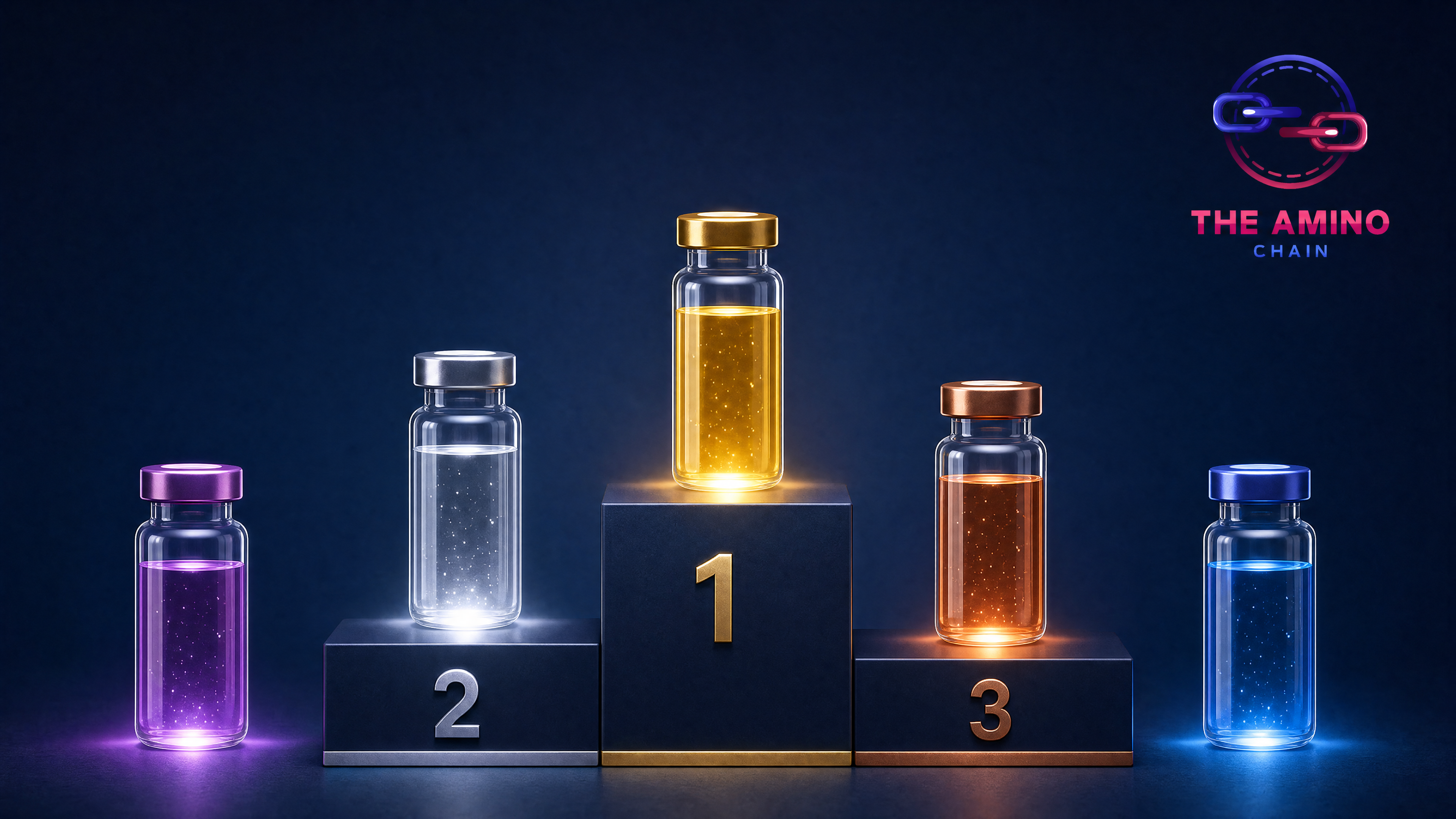
If you search "best peptide for healing," you'll find dozens of opinions but very little objective analysis. This guide takes a different approach: ranking healing peptides by the strength and breadth of their published research evidence, then matching specific peptides to specific injury types based on their documented mechanisms. Not every peptide is best for every injury — understanding which compound addresses which healing bottleneck is the key to rational peptide selection.
Ranking Criteria
Each peptide is evaluated on three criteria. Evidence breadth: how many different tissue types has it been studied in? Evidence depth: how many published studies support each application? Mechanism relevance: does the peptide's mechanism directly address the biological bottleneck in that specific injury type?
#1: BPC-157 — The Broadest Healing Evidence
BPC-157 ranks first by a significant margin — no other research peptide has been studied across as many tissue types for healing applications. Published research covers tendon healing (Achilles, patellar, rotator cuff), muscle healing (crush injuries, transections), bone healing (fractures), gut healing (ulcers, inflammatory bowel disease), ligament healing (MCL), skin healing (wounds, burns), nerve healing (transection, crush), liver protection, and cardiovascular effects.
The mechanisms driving BPC-157's broad healing profile include VEGF-mediated angiogenesis (improving blood supply to injury sites), growth factor receptor upregulation (enhancing tissue responsiveness to repair signals), NO system modulation (regulating inflammation and vascular function), and direct cytoprotective effects (protecting cells in the hostile post-injury environment).
Best for: Tendon injuries (strongest data), muscle injuries, gut healing, post-surgical recovery, ligament injuries. The broad mechanism makes BPC-157 a reasonable first-choice for most soft tissue injuries.
#2: TB-500 — Cell Migration and Inflammation
TB-500 (Thymosin Beta-4) ranks second for healing based on its unique mechanism — actin sequestration that promotes repair cell migration — and its published data in wound healing, cardiac tissue repair, and corneal healing. While its published evidence spans fewer tissue types than BPC-157, its mechanism addresses a critical healing bottleneck: getting repair cells to the injury site.
Published research showed TB-500 accelerated wound closure, promoted cardiac repair after infarction, enhanced corneal healing, and reduced inflammatory markers. The anti-inflammatory component (TNF-alpha, IL-1beta, IL-6 reduction) complements the cell migration mechanism by optimizing the inflammatory environment for repair.
Best for: Wounds, cardiac injuries, conditions requiring inflammatory modulation. Particularly valuable when combined with BPC-157 for complementary mechanisms.
#3: GHK-Cu — Extracellular Matrix and Remodeling
GHK-Cu ranks third for healing based on its extensive gene modulatory effects (4,000+ genes), collagen synthesis stimulation, and published wound healing data. GHK-Cu's mechanism is most relevant to the remodeling phase of healing — improving the quality of repair tissue rather than the speed of initial repair.
Published research showed GHK-Cu stimulated collagen synthesis, promoted elastin production, enhanced glycosaminoglycan synthesis, and provided antioxidant defense through SOD support. The gene expression profile consistently shifted toward a "younger" pattern of matrix production and maintenance.
Best for: Scar quality improvement, skin healing and anti-aging, post-injury matrix remodeling, hair follicle biology. Most relevant for the late remodeling phase rather than acute repair.
#4: AOD-9604 — Cartilage-Specific
AOD-9604 ranks fourth overall but first for cartilage-specific applications. Published research showed chondrocyte stimulation, proteoglycan and collagen synthesis enhancement, and GRAS safety status. For joint-related healing, AOD-9604 addresses a tissue type that BPC-157 and TB-500 only indirectly support.
Best for: Cartilage protection, osteoarthritis, joint health maintenance.
#5: Pentosan Polysulfate — Joint and Subchondral Bone
PPS ranks fifth for overall healing but deserves mention for its unique subchondral bone effects and synovial fluid improvement — joint healing mechanisms not addressed by any peptide. Decades of veterinary and clinical evidence support its joint applications.
Best for: Osteoarthritis, joint maintenance, subchondral bone health.
Matching Peptides to Injuries
Tendon injuries: BPC-157 (primary) + TB-500 (complementary). Muscle injuries: BPC-157 (primary). Joint/cartilage: AOD-9604 + PPS + BPC-157. Wound healing: TB-500 + BPC-157 + GHK-Cu. Post-surgical recovery: BPC-157 (primary). Scar prevention: GHK-Cu + BPC-157. Bone fractures: BPC-157 (primary). Nerve injuries: BPC-157 (published nerve healing data). Skin aging/repair: GHK-Cu (primary) + BPC-157.
The BPC-157 + TB-500 Combination
The combination of BPC-157 (environmental optimization — blood supply, growth factor signaling) and TB-500 (cellular mechanics — cell migration, inflammation modulation) is the most commonly researched multi-peptide healing protocol. The rationale is genuine mechanistic complementarity — they address different healing bottlenecks through non-overlapping pathways. While no published study has directly tested the combination against each compound alone in a controlled comparison, the mechanistic rationale is strong.
Important Caveats
Published healing evidence is primarily preclinical (animal studies). No research peptide has been proven in large-scale human clinical trials for any healing indication. Rankings are based on breadth and depth of published evidence, not clinical proof. And peptides support but do not replace the foundational requirements for healing: adequate nutrition, appropriate rest, mechanical loading, and medical evaluation for serious injuries.