Can Peptides Heal Cartilage? What Published Research Actually Shows About Cartilage Repair and Regeneration
Cartilage has almost no capacity to heal itself. Published research on BPC-157, AOD-9604, GHK-Cu, and other compounds reveals which peptides show the most promise — and the honest limitations of current evidence.
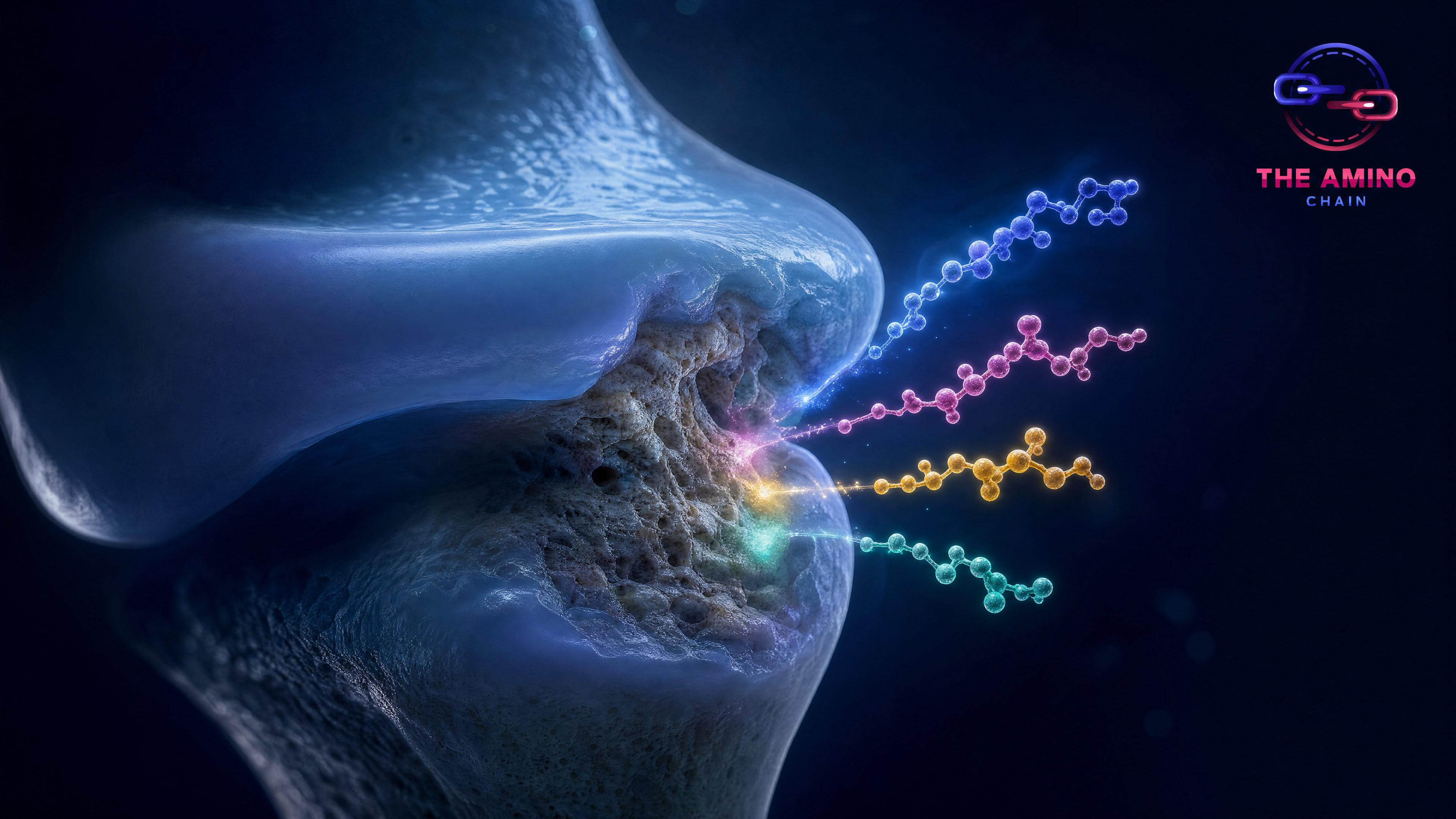
The short answer: published research shows several peptides can protect cartilage from degradation, stimulate chondrocyte activity, and improve the joint environment — but no peptide has been proven to regenerate destroyed articular cartilage in humans. The longer answer requires understanding why cartilage is so uniquely difficult to heal and what "cartilage repair" actually means at the cellular level.
Why Cartilage Doesn't Heal
Articular cartilage is one of the few tissues in the body with essentially zero regenerative capacity in adults. Four characteristics explain this limitation. No blood supply: cartilage is avascular, receiving nutrients only through diffusion from synovial fluid. No nerve supply: damage progresses silently until bone is exposed. Low cellularity: chondrocytes comprise only 1-5% of cartilage volume, with very limited proliferative capacity. No stem cell access: without blood supply, mesenchymal stem cells from bone marrow cannot reach cartilage defects (unless the defect penetrates into subchondral bone).
When cartilage is damaged, the body's default repair response — inflammation, cell migration, matrix deposition — simply doesn't work because the necessary components (blood, inflammatory cells, stem cells) can't reach the avascular tissue. This is fundamentally different from muscle, tendon, or bone repair.
What "Cartilage Protection" vs "Cartilage Regeneration" Means
Most published peptide research on cartilage falls into the category of chondroprotection — protecting existing cartilage from further degradation — rather than chondroregeneration — rebuilding cartilage that has been destroyed. This distinction is critical for setting realistic expectations.
Chondroprotection involves reducing inflammatory enzymes (MMPs, aggrecanases) that degrade cartilage matrix, stimulating chondrocytes to produce more proteoglycans and collagen, improving synovial fluid quality for better cartilage nutrition, and reducing the inflammatory environment within the joint. These effects can slow or arrest cartilage loss but cannot rebuild a joint that has already lost significant cartilage.
AOD-9604: The Strongest Cartilage Data
Among research peptides, AOD-9604 has the most direct published evidence for chondrocyte stimulation. Studies showed AOD-9604 promoted proteoglycan and collagen synthesis by chondrocytes through a mechanism independent of the IGF-1 pathway. In osteoarthritis animal models, AOD-9604 reduced cartilage degradation and improved joint function scores. AOD-9604 also received GRAS status from the FDA, reflecting its favorable safety profile.
AOD-9604's cartilage effects are chondroprotective and chondrostimulatory — it helps existing chondrocytes produce more matrix. Whether this can meaningfully rebuild cartilage defects remains an open question.
BPC-157: Indirect Cartilage Support
BPC-157's published cartilage-relevant research involves angiogenesis promotion (improving nutrient delivery to periarticular tissues), anti-inflammatory effects (reducing the enzymatic degradation that destroys cartilage), and cytoprotective effects (helping chondrocytes survive in the hostile post-injury joint environment). These are primarily protective effects rather than regenerative, but they address the environmental factors that accelerate cartilage loss.
GHK-Cu: Matrix Support
GHK-Cu's stimulation of glycosaminoglycan synthesis, collagen production, and MMP inhibition supports the cartilage extracellular matrix. Published data showed GHK-Cu promoted synthesis of the matrix components (aggrecan, type II collagen, hyaluronic acid) that give cartilage its compressive strength and resilience.
Pentosan Polysulfate: Synovial and Subchondral Effects
PPS addresses cartilage health indirectly through its effects on synovial fluid (stimulating hyaluronic acid production for better lubrication and nutrient diffusion) and subchondral bone (improving blood flow to the bone beneath cartilage). These indirect effects support cartilage maintenance without directly stimulating chondrocytes.
The Honest Bottom Line
Published peptide research offers legitimate approaches to cartilage protection and matrix maintenance. For early-stage cartilage damage and osteoarthritis prevention, peptide interventions may slow progression. For moderate cartilage loss, peptides may reduce symptoms and slow further degradation. For severe cartilage destruction (bone-on-bone osteoarthritis), no published peptide research demonstrates meaningful cartilage regeneration.
The most rational approach combines peptide research with the established pillars of joint health: appropriate exercise, weight management, nutrition, and medical evaluation for significant joint pathology.