Is Insulin a Peptide? Understanding Peptide Hormones, Their Structure, and How They Work in the Body
Insulin is indeed a peptide hormone — one of the most important in human biology. This article explains what makes a hormone a 'peptide hormone,' how insulin's structure determines its function, and how it compares to research peptides.
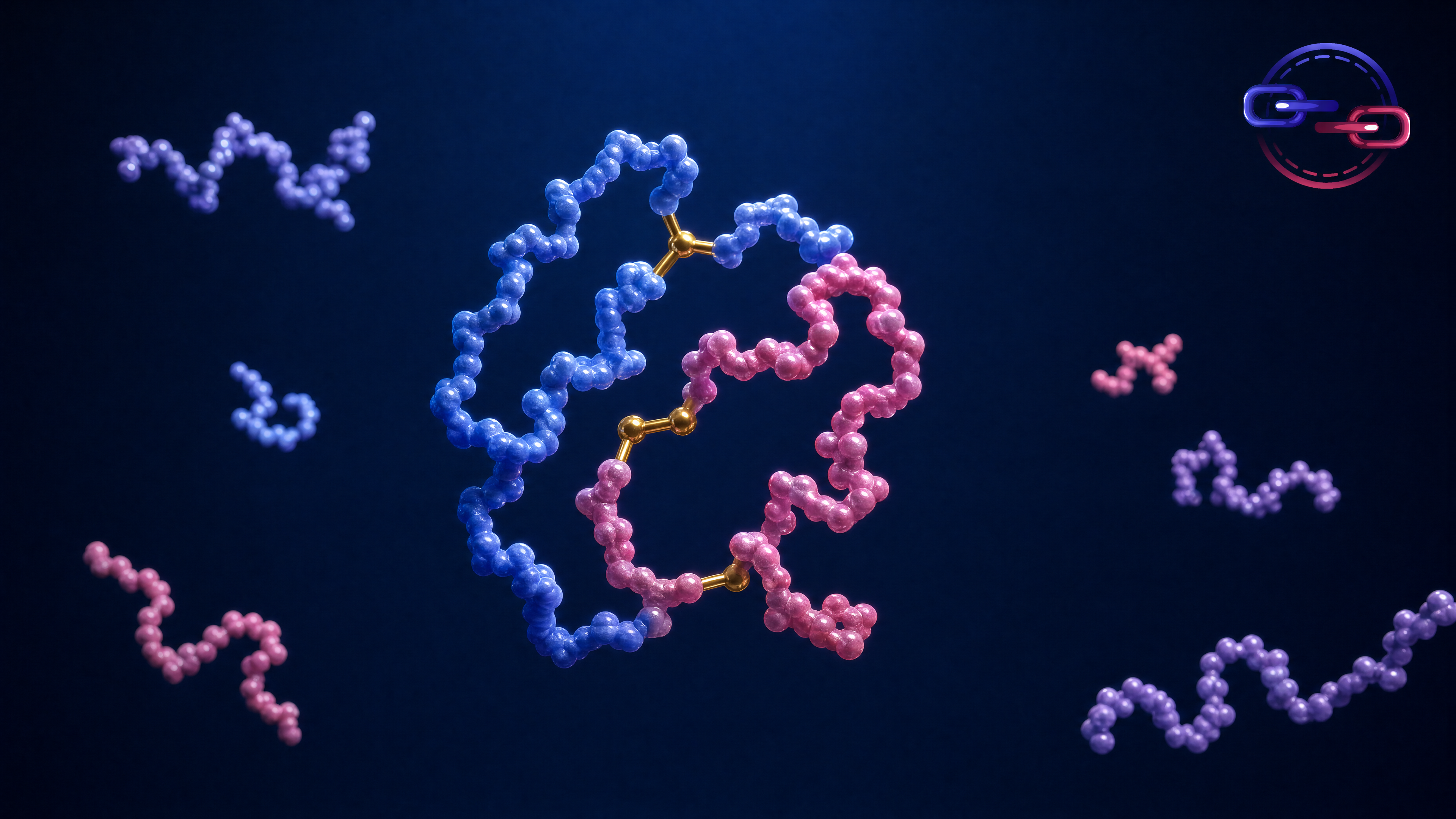
Yes — insulin is a peptide hormone. Specifically, it's a 51-amino acid peptide consisting of two chains (A-chain: 21 amino acids, B-chain: 30 amino acids) connected by two disulfide bonds. Understanding insulin as a peptide provides a useful lens for understanding the broader world of peptide research — because the same principles that govern insulin's biology apply to every research peptide: amino acid sequence determines structure, structure determines receptor binding, and receptor binding determines biological effect.
What Makes a Hormone a "Peptide Hormone"?
Hormones are classified by their chemical structure into three categories. Peptide hormones are made of amino acid chains — from tiny 3-amino acid thyrotropin-releasing hormone (TRH) to 191-amino acid growth hormone. Steroid hormones are derived from cholesterol — testosterone, estrogen, cortisol. And amino acid-derived hormones are modified single amino acids — thyroid hormones (from tyrosine), epinephrine (from tyrosine), serotonin (from tryptophan).
Peptide hormones are the largest category, including insulin, glucagon, growth hormone, GLP-1, GIP, oxytocin, vasopressin, ACTH, and many others. Every research peptide is either a synthetic version of a natural peptide hormone, a fragment of one, or an analog designed to mimic one.
Insulin's Peptide Structure
Insulin is synthesized as a single-chain precursor called preproinsulin (110 amino acids). The signal peptide is cleaved to produce proinsulin (86 amino acids), which folds and forms three disulfide bonds. Then the C-peptide (connecting peptide, 31 amino acids) is cleaved out, leaving the mature insulin molecule: two chains held together by two inter-chain disulfide bonds and one intra-chain disulfide bond within the A-chain.
This processing — from a single long chain to a two-chain final product with specific disulfide bonding — illustrates a principle common to many bioactive peptides: the final active form is often produced by post-translational processing of a larger precursor.
How Insulin Compares to Research Peptides
Insulin shares fundamental properties with all research peptides. It binds to a specific cell-surface receptor (the insulin receptor) to produce its effects. It's degraded by proteolytic enzymes (insulin-degrading enzyme, IDE). It has a short half-life in circulation (approximately 5-6 minutes). And its biological activity is completely determined by its amino acid sequence and three-dimensional structure.
Where insulin differs from most research peptides is in scale of evidence: insulin has been studied since its discovery in 1921 and is perhaps the most thoroughly characterized peptide in all of biology. Research peptides like BPC-157 and TB-500 have far smaller evidence bases by comparison.
Other Peptide Hormones You Already Know
Many familiar biological molecules are peptide hormones. Glucagon (29 amino acids) opposes insulin's glucose-lowering effects. GLP-1 (30 amino acids) is the target of semaglutide and tirzepatide research. Growth hormone (191 amino acids) is what GH secretagogues like CJC-1295 and Ipamorelin stimulate. Oxytocin (9 amino acids) is the subject of wound healing and metabolic research. And ACTH (39 amino acids) is the parent molecule from which Semax was derived.
Understanding that these familiar hormones are all peptides — chains of amino acids with specific sequences that determine their function — demystifies the concept of "research peptides." They're not exotic or artificial substances; they're synthetic versions of molecules the body naturally produces.
Why Peptide Hormones Can't Be Taken Orally (Usually)
Insulin's clinical history illustrates a challenge common to all peptide hormones: oral administration destroys them. Before Frederick Banting and Charles Best developed injectable insulin in 1921-22, type 1 diabetes was a death sentence — because eating pancreatic tissue (attempting to deliver insulin orally) was ineffective. Gastric acid denatures the peptide, and proteolytic enzymes digest it into inactive amino acid fragments.
This is why most research peptides require injection. BPC-157 is the notable exception — its gastric stability allows oral administration, a property that makes it unique among bioactive peptides of its size.
The Peptide-Protein Distinction
People often ask: is insulin a peptide or a protein? The distinction is somewhat arbitrary. Generally, chains under 50 amino acids are called peptides, and chains over 50 are called proteins. Insulin, at 51 amino acids, sits right at the boundary — it's commonly called both a "peptide hormone" and a "protein hormone." Growth hormone at 191 amino acids is unambiguously a protein. BPC-157 at 15 amino acids is unambiguously a peptide.
The functional distinction matters less than the structural principle: whether you call it a peptide or protein, the biological activity is determined by the amino acid sequence and three-dimensional structure.