Peptide Bioavailability: How Absorption, Distribution, and Metabolism Affect Research Outcomes
Not all administered peptide reaches its target. Bioavailability — the fraction of injected compound that reaches systemic circulation — varies by route, injection site, and peptide properties. Understanding this concept is essential for reproducible research.
When a researcher administers 250 micrograms of a peptide via subcutaneous injection, the amount that actually reaches the bloodstream and target tissues is less than 250 micrograms. The difference — determined by absorption efficiency, enzymatic degradation at the injection site, first-pass metabolism, and protein binding — is the concept of bioavailability. Understanding bioavailability is essential for interpreting dose-response relationships and designing reproducible research protocols.
What Bioavailability Means
Bioavailability is defined as the fraction of an administered dose that reaches systemic circulation in an unchanged, active form. Intravenous injection has 100% bioavailability by definition — the entire dose enters the bloodstream directly. All other administration routes have bioavailability less than 100% because some compound is lost before reaching the circulation.
For research peptides, subcutaneous bioavailability typically ranges from 50-80% depending on the specific peptide's properties. This means that of a 250mcg subcutaneous dose, approximately 125-200mcg reaches the bloodstream. The "lost" peptide is degraded by enzymes at the injection site or in the subcutaneous tissue before absorption.
Subcutaneous Absorption Pharmacokinetics
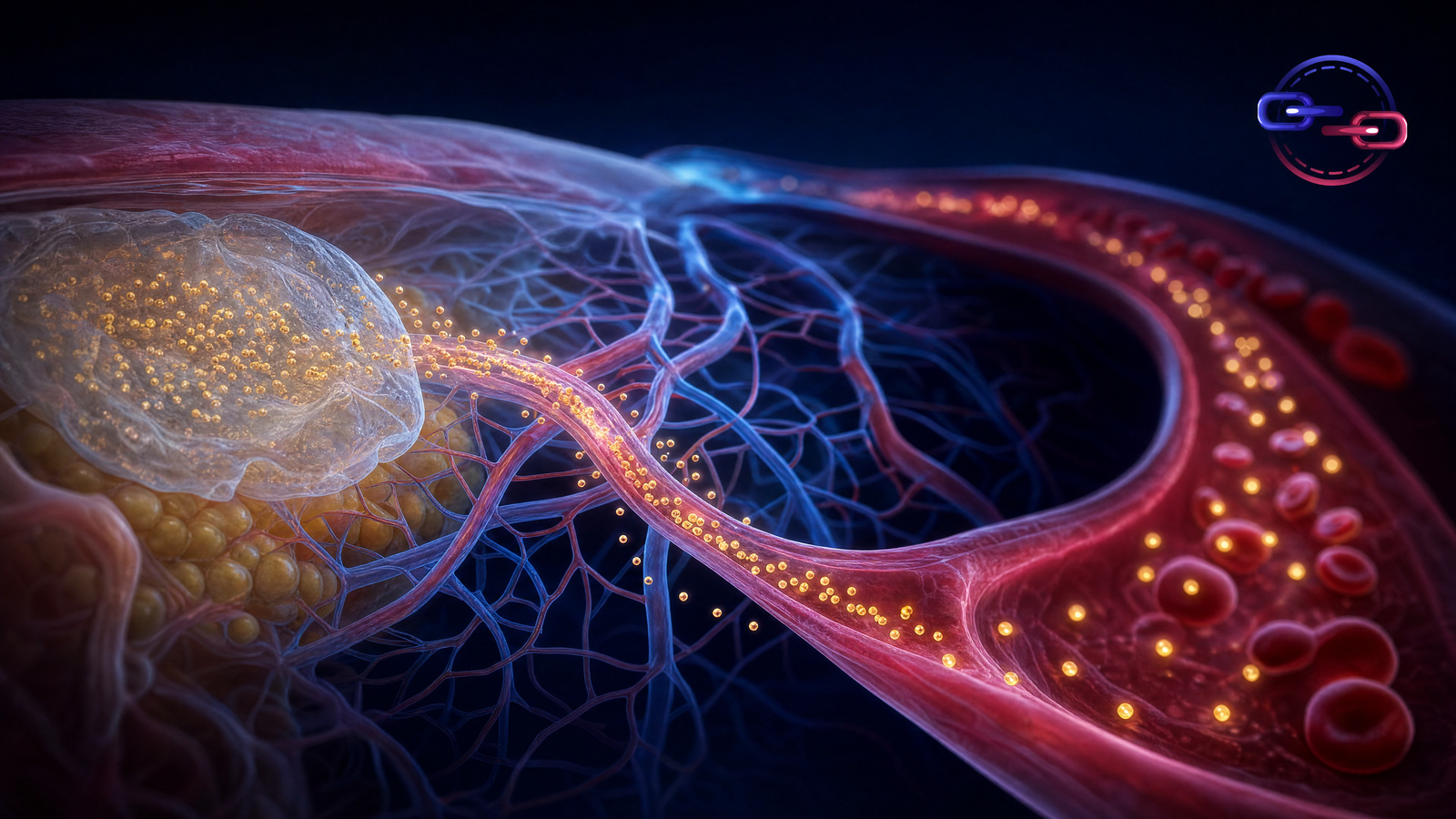
After subcutaneous injection, the peptide forms a depot in the fat layer. Absorption into the bloodstream occurs through two parallel processes: direct absorption into blood capillaries and indirect absorption via lymphatic drainage. Smaller peptides (under approximately 16 kDa) are absorbed primarily through capillaries, while larger peptides have increasing lymphatic contribution.
The absorption rate — how quickly the peptide enters circulation — is determined by blood flow to the injection site, the peptide's molecular size, its charge, and its interaction with subcutaneous tissue components. Smaller, more hydrophilic peptides are generally absorbed faster. The absorption rate determines the time to peak blood concentration (Tmax) and the peak concentration itself (Cmax).
Enzymatic Degradation
The subcutaneous tissue, blood, and liver all contain proteolytic enzymes that degrade peptides. Dipeptidyl peptidase-4 (DPP-4) is particularly relevant for incretin-based peptides — it rapidly cleaves native GLP-1 and GIP, which is why unmodified incretins have half-lives of only 2-3 minutes. The fatty acid conjugation strategy used in retatrutide and tirzepatide specifically addresses DPP-4 degradation by sterically blocking the cleavage site.
BPC-157's resistance to enzymatic degradation — unusual for a small peptide — may relate to its proline-rich composition. Proline residues create structural constraints that can make peptide bonds resistant to protease cleavage, potentially contributing to BPC-157's relatively high bioavailability and unusual oral activity.
Route of Administration Comparisons
Different administration routes produce different pharmacokinetic profiles. Subcutaneous injection produces moderate peak concentrations with sustained absorption over hours — good for compounds requiring sustained exposure. Intramuscular injection produces faster absorption and higher peak concentrations due to muscle's richer blood supply. Oral administration has very low bioavailability for most peptides (less than 1-2%) due to gastric acid degradation and poor intestinal absorption — BPC-157 being a notable exception with documented oral activity.
Intranasal administration is being explored for certain peptides, particularly those targeting the CNS, as the nasal mucosa provides a potential route to bypass the blood-brain barrier. Selank and Semax are examples of peptides studied via intranasal delivery.
Injection Site Effects
The injection site influences bioavailability and absorption kinetics. Abdominal subcutaneous injection generally provides the fastest and most consistent absorption due to the abdomen's rich capillary bed. Thigh injection tends to produce slower absorption. Upper arm injection is intermediate. These site-dependent differences mean that switching injection sites between doses can introduce variability into research protocols. Consistent site selection within a study minimizes this variability.
Implications for Research Design
Understanding bioavailability helps researchers design more reproducible protocols. Consistent injection technique, site selection, and timing relative to meals (which affect subcutaneous blood flow) reduce dose-to-dose variability. Recognizing that bioavailability is less than 100% helps interpret dose-response curves — the effective systemic dose is lower than the administered dose. And understanding the time course of absorption helps determine optimal dosing intervals for sustained versus pulsatile exposure protocols.