Peptide Stacking: The Science Behind Combining Multiple Research Compounds
Why do researchers study multiple peptides simultaneously? This article examines the biological rationale for peptide stacking, which combinations have published research support, and the scientific principles that guide combination protocols.
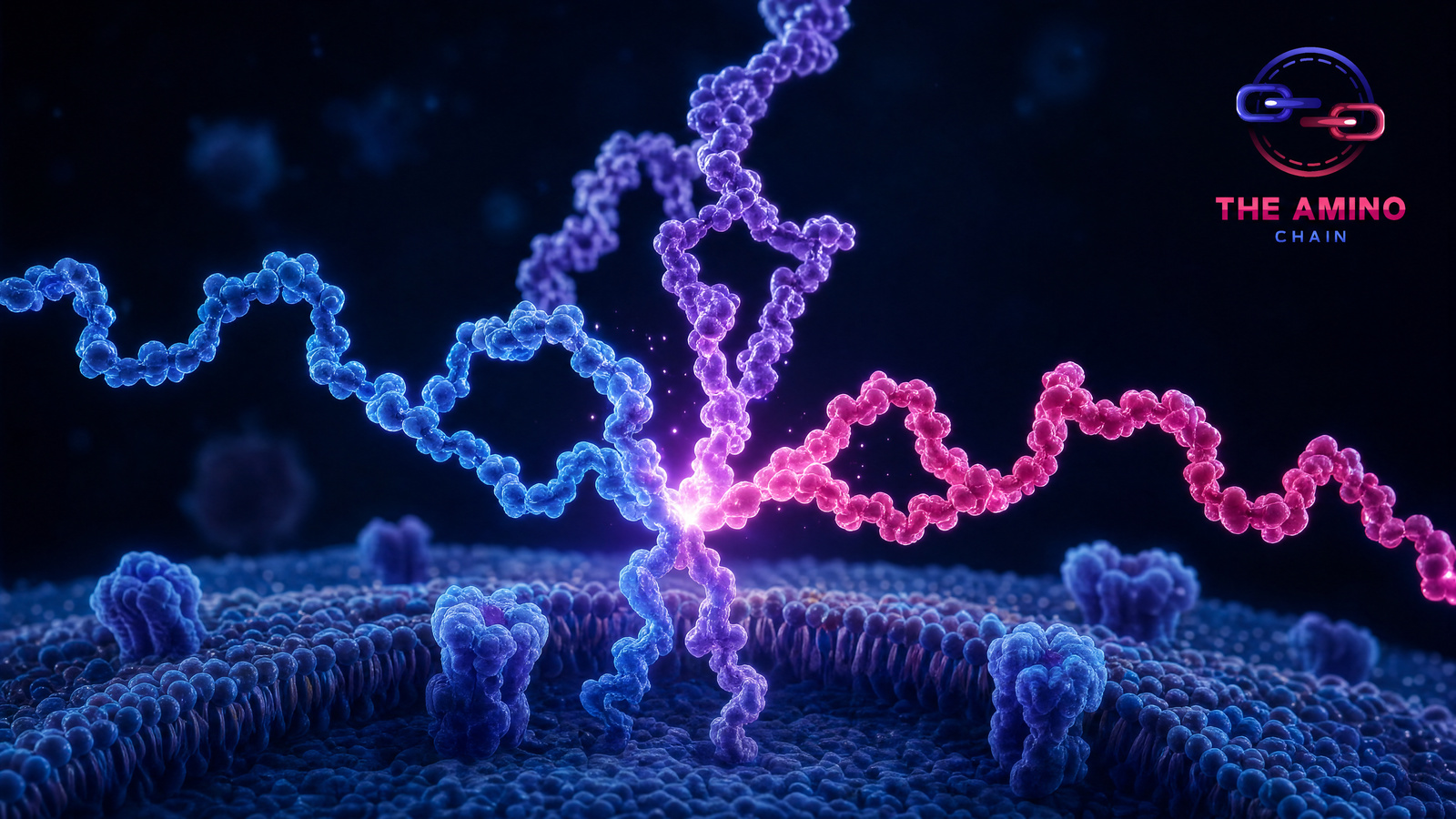
The concept of combining multiple research peptides — often called stacking — is one of the most discussed topics in peptide research communities. But beneath the discussion lies a legitimate scientific question: when multiple compounds affect different steps of the same biological pathway, does simultaneous administration produce effects greater than either compound alone? The answer, based on published research, appears to be yes — under specific conditions.
The Biological Rationale for Combination Research
Most biological processes involve multiple sequential steps, each regulated by different signaling molecules and cellular mechanisms. Tissue repair, for example, involves inflammation signaling, immune cell recruitment, angiogenesis, cell migration, extracellular matrix production, and tissue remodeling — each mediated by different pathways.
A single compound targeting one step may be limited by bottlenecks at other steps. If BPC-157 improves blood vessel formation but the repair cells can't migrate efficiently to the new blood vessels, the net benefit is constrained. Adding TB-500 to improve cell migration could theoretically relieve that bottleneck, producing a combined effect greater than either compound alone.
This is pharmacological synergy — and it's the same principle that underlies combination therapy in virtually every area of medicine.
BPC-157 + TB-500: The Most Studied Combination
The combination of BPC-157 and TB-500 is the most discussed peptide stack, and the rationale is mechanistically sound. BPC-157 operates primarily at the tissue level — promoting angiogenesis through VEGF upregulation, activating growth factor receptors, modulating nitric oxide signaling, and providing direct cytoprotective effects. TB-500 operates primarily at the cellular level — regulating actin dynamics to facilitate cell migration, modulating inflammatory cytokines, and influencing extracellular matrix remodeling.
These are genuinely complementary mechanisms targeting different bottlenecks in the same repair process. While no published studies have directly compared the combination against individual compounds in a single experimental system, the mechanistic rationale is among the strongest in peptide research.
CJC-1295 + Ipamorelin: Receptor-Level Synergy
The combination of CJC-1295 and Ipamorelin exemplifies a different type of synergy — convergent activation of the same endpoint (GH release) through different receptor systems. CJC-1295 activates the GHRH receptor on pituitary somatotroph cells. Ipamorelin activates the ghrelin receptor (GHS-R) on the same cells. The two receptor systems use different intracellular signaling cascades, and simultaneous activation produces a GH response greater than either stimulus alone.
This synergy has been demonstrated in published research and reflects the natural physiology where GHRH and ghrelin signals normally work together to drive GH pulsatility.
BPC-157 + GHK-Cu: Repair and Remodeling
GHK-Cu's primary mechanism — copper-dependent stimulation of collagen synthesis and extracellular matrix remodeling — complements BPC-157's angiogenic and cytoprotective effects. While BPC-157 may improve the biological environment for healing, GHK-Cu may enhance the quality of the repair tissue through increased collagen production and improved collagen crosslinking via lysyl oxidase activation.
This combination is less well-studied than BPC-157/TB-500 but has logical mechanistic support, particularly for research involving connective tissue biology.
Principles for Rational Combination Design
Not all combinations are scientifically justified. The following principles help distinguish rational combinations from arbitrary ones.
Complementary mechanisms: The compounds should affect different steps of the same biological process. Two compounds that both promote angiogenesis through VEGF are redundant, not complementary.
Non-overlapping toxicity: Each compound's potential adverse effects should involve different organ systems or pathways, so that combining them doesn't amplify any single risk.
Compatible chemistry: The compounds should be chemically stable when co-administered. Some peptides may interact chemically — aggregating, competing for binding sites, or degrading each other's activity.
Established individual profiles: Each compound should have its own body of published research establishing mechanism, activity, and safety profile individually before combination research is undertaken.
What Stacking Does NOT Mean
Stacking is not about adding more compounds in hopes that more is better. Each addition should have a specific mechanistic justification. A three-compound stack should have a clear rationale for why each component is present and what unique contribution it makes that the other two do not provide.
Adding compounds without specific rationale increases complexity, cost, and the difficulty of interpreting results — without necessarily improving outcomes. In research terms, every additional variable makes it harder to attribute observed effects to specific causes.