Peptides and Scar Tissue: Research on Adhesions, Fibrosis, and Tissue Remodeling
Scar tissue and adhesions cause chronic pain, restricted movement, and organ dysfunction. Published research on anti-fibrotic peptides reveals how compounds like BPC-157, GHK-Cu, and TB-500 influence the balance between repair and fibrosis.
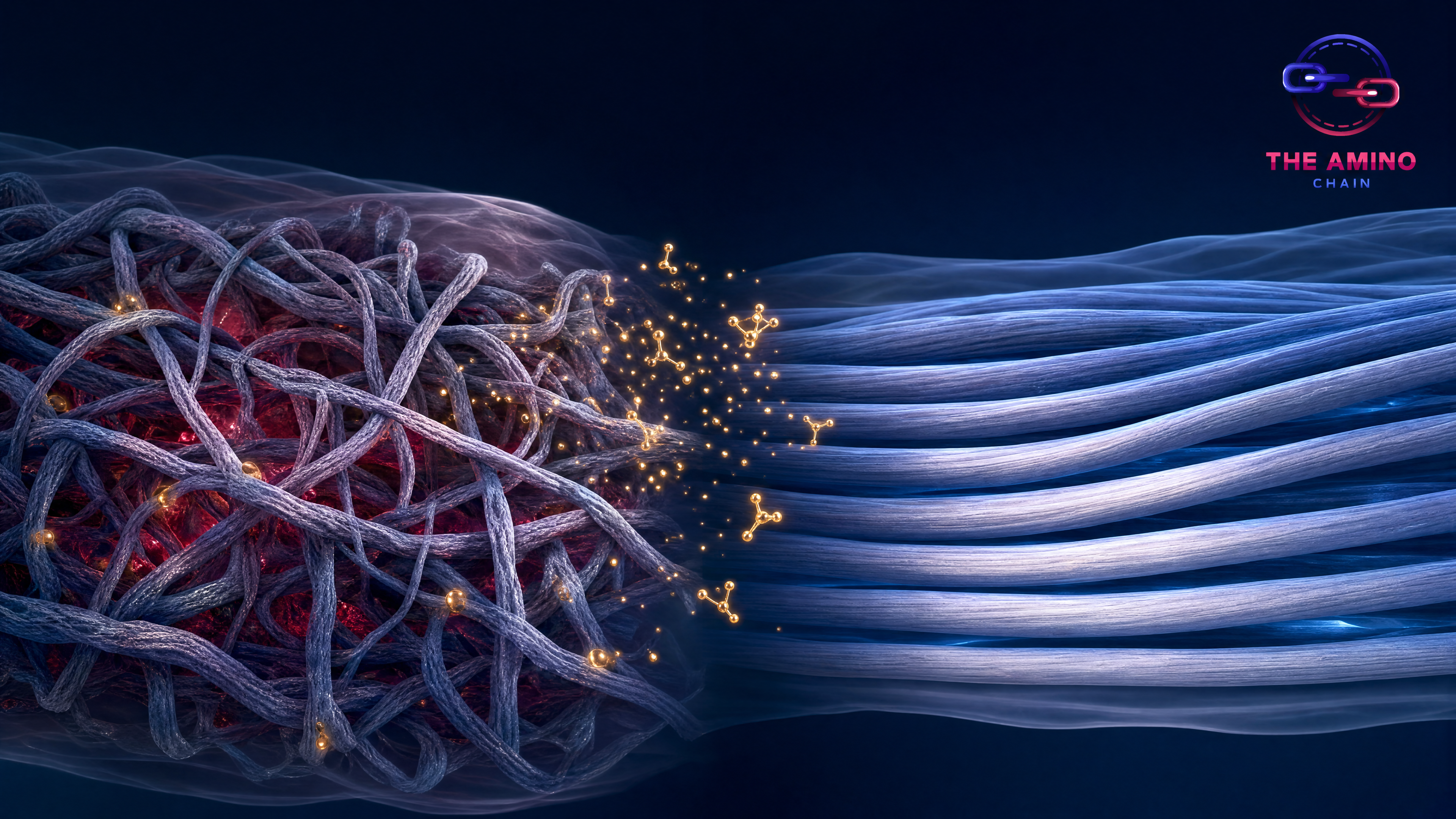
Every injury heals with scar tissue. In an ideal outcome, the scar is thin, flexible, and barely noticeable. In a problematic outcome, the scar is thick, rigid, and functionally limiting — or worse, forms adhesions that bind together tissues that should move freely. Post-surgical adhesions alone affect an estimated 93% of abdominal surgery patients, causing chronic pain, bowel obstruction, and infertility. Published peptide research has identified compounds that influence the balance between constructive repair and destructive fibrosis.
How Scars Form: The Fibrotic Cascade
Normal wound healing proceeds through inflammation, proliferation, and remodeling phases. In the proliferative phase, fibroblasts produce collagen to bridge the wound gap. In the remodeling phase, this initial collagen is reorganized — type III collagen is gradually replaced by type I collagen, and the fibers are realigned along stress lines. The remodeling phase can last months to years.
Fibrosis occurs when this process goes wrong. Excessive or persistent inflammation drives overproduction of extracellular matrix. TGF-beta1 — the master fibrotic cytokine — signals fibroblasts to differentiate into myofibroblasts, which produce collagen at 2-3 times the rate of normal fibroblasts and also contract, pulling scar tissue tight. When the remodeling phase fails to adequately reorganize this excess matrix, the result is dense, rigid scar tissue.
Adhesions: Scars Between Tissues
Adhesions are fibrous bands that form between tissues that are normally separate — between loops of intestine, between organs and the abdominal wall, or between tendons and their sheaths. They form when inflammation at adjacent tissue surfaces creates a fibrin bridge that is subsequently replaced by permanent collagen. Adhesions restrict movement, compress structures, and cause chronic pain. Once formed, they are difficult to treat — surgical removal often triggers new adhesion formation.
BPC-157 and Anti-Fibrotic Effects
Published BPC-157 research has documented anti-fibrotic effects in multiple tissue contexts. In post-surgical adhesion models, BPC-157 reduced adhesion formation and severity. The mechanism appears to involve modulation of the inflammatory phase (reducing the excessive inflammation that drives fibrotic responses), effects on the NO system (nitric oxide influences fibroblast-to-myofibroblast differentiation), and promotion of organized collagen deposition rather than chaotic fibrotic deposition.
Published studies showed BPC-157 reduced peritoneal adhesion formation in abdominal surgery models, decreased adhesion scores in tendon surgery models, and improved functional outcomes in tissues where adhesions typically limit mobility. The anti-adhesion effect appears to operate through modulation of the early inflammatory response — reducing the inflammatory intensity that triggers excessive fibrin deposition and subsequent adhesion formation.
GHK-Cu and Scar Remodeling
GHK-Cu's published effects on extracellular matrix remodeling are directly relevant to scar quality. The peptide stimulates collagen synthesis while also supporting decorin production — a proteoglycan that regulates collagen fibril diameter and spacing. Without adequate decorin, collagen fibers form irregularly, producing dense, disorganized scar tissue. GHK-Cu also modulates the MMP/TIMP balance — the enzyme system responsible for matrix turnover during remodeling — promoting controlled matrix reorganization rather than either excessive degradation or excessive accumulation.
Published data also showed GHK-Cu influences the TGF-beta isoform ratio. TGF-beta1 promotes fibrosis, while TGF-beta3 is associated with reduced scarring (fetal wounds heal without scars partly due to TGF-beta3 dominance). GHK-Cu's ability to shift this ratio toward the anti-fibrotic isoform is mechanistically significant for scar quality.
TB-500 and Inflammatory Modulation
TB-500's anti-inflammatory effects are relevant to scar formation because the magnitude and duration of the inflammatory response directly predict scar severity. Published research showed TB-500 reduced TNF-alpha, IL-1beta, and IL-6 — the inflammatory cytokines that drive fibroblast activation and TGF-beta1 production. By moderating the inflammatory phase, TB-500 may reduce the fibrotic stimulus that leads to excessive scarring and adhesion formation.
Combination Approaches
The scar formation process involves multiple phases, each with different dominant mechanisms. BPC-157's anti-inflammatory and NO-modulatory effects target the early inflammatory phase. TB-500's cell migration effects support appropriate repair cell trafficking. GHK-Cu's matrix remodeling effects optimize the late remodeling phase. A multi-peptide approach targeting different healing phases could theoretically produce better scar outcomes than any single compound alone.
Existing Scars
A common question is whether peptides can improve existing, mature scars. Published research suggests limited but possible benefit. Mature scars continue to remodel slowly over years, and the matrix-modulatory effects of GHK-Cu may influence this ongoing remodeling. However, dense, mature scar tissue has reduced vascularity and cellularity compared to active wounds, potentially limiting peptide delivery and cellular responsiveness. Expectations for existing scar improvement should be more modest than for prevention of excessive scarring in new wounds.