Peptides and Thyroid Function: Research on Metabolic Rate, Autoimmune Thyroid Disease, and Hormonal Balance
Thyroid dysfunction affects 200 million people worldwide. Published research on peptide interactions with thyroid function, autoimmune thyroiditis, and metabolic regulation reveals connections most researchers overlook.
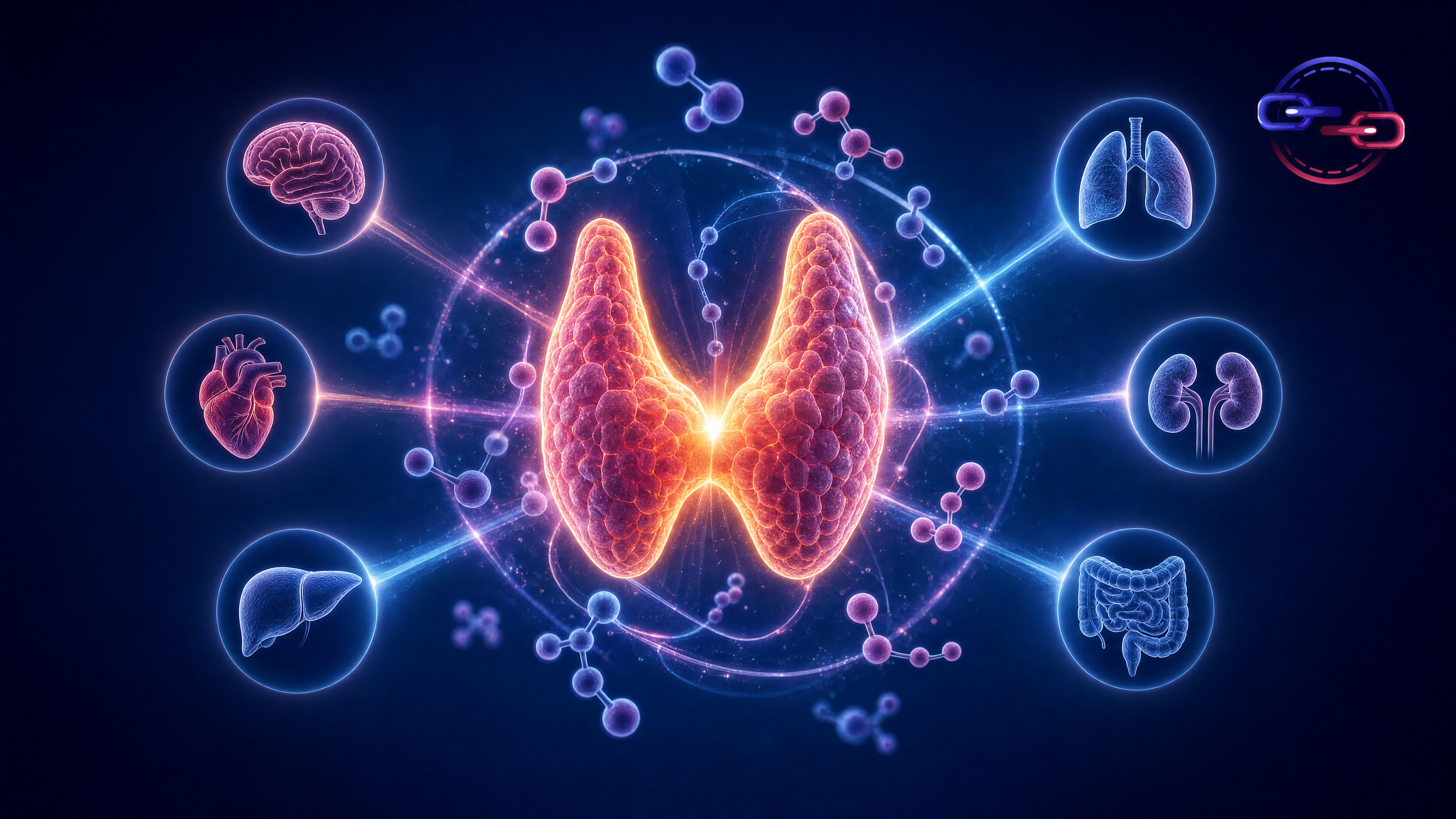
The thyroid gland regulates metabolic rate in virtually every cell in the body. When thyroid function is impaired — whether through autoimmune destruction (Hashimoto's thyroiditis, Graves' disease), iodine deficiency, or other causes — the consequences cascade across every organ system: fatigue, weight changes, temperature sensitivity, cognitive impairment, and cardiovascular effects. Published research on several peptide compounds has identified interactions with thyroid function that researchers should understand, whether as primary effects, secondary consequences, or potential therapeutic applications.
Thyroid Basics: T4, T3, and TSH
The thyroid produces primarily thyroxine (T4) — a prohormone with relatively low biological activity. T4 is converted to triiodothyronine (T3) — the active thyroid hormone — by deiodinase enzymes in peripheral tissues. TSH (thyroid-stimulating hormone) from the pituitary gland drives thyroid hormone production in a negative feedback loop: low T3/T4 increases TSH, stimulating the thyroid to produce more hormone. High T3/T4 suppresses TSH.
This feedback system is remarkably sensitive. Even subtle changes in thyroid hormone levels — within the "normal" laboratory range — can produce measurable effects on energy metabolism, body composition, cognitive function, and cardiovascular parameters.
GLP-1 Agonists and Thyroid Research
The most clinically relevant peptide-thyroid interaction involves GLP-1 receptor agonists including tirzepatide and retatrutide. Published preclinical research showed GLP-1R activation stimulated calcitonin release from thyroid C-cells in rodents, and long-term administration was associated with C-cell hyperplasia and medullary thyroid carcinoma (MTC) in rats. This finding led to a boxed warning on GLP-1 receptor agonist pharmaceuticals regarding thyroid C-cell tumor risk.
Important context: the clinical relevance of the rodent C-cell finding to humans is debated. Published research showed that rodent thyroid C-cells express significantly more GLP-1 receptors than human C-cells. Epidemiological data from millions of patients treated with GLP-1 receptor agonists has not shown increased MTC incidence. Nevertheless, GLP-1 agonist peptides are contraindicated in individuals with personal or family history of MTC or Multiple Endocrine Neoplasia type 2.
Autoimmune Thyroid Disease
Hashimoto's thyroiditis (the most common cause of hypothyroidism) and Graves' disease (the most common cause of hyperthyroidism) are autoimmune conditions where the immune system attacks thyroid tissue. Published research on immunomodulatory peptides has relevance here. Thymosin Alpha-1's balanced immune modulation — promoting tolerance mechanisms while maintaining protective immunity — is conceptually appropriate for autoimmune thyroid conditions where the immune system has lost tolerance to thyroid antigens.
VIP's published effects on Th1/Th2/Treg balance and its documented benefits in other autoimmune conditions suggest potential relevance to autoimmune thyroiditis, though published VIP research has not specifically examined thyroid autoimmunity.
Thyroid and Metabolic Peptide Interactions
Thyroid hormones and metabolic peptides share common downstream targets. Both thyroid hormones and MOTS-c influence AMPK activity. Both T3 and GH secretagogues affect protein synthesis rates and body composition. These overlapping pathways mean that thyroid status can influence peptide response, and peptide administration can interact with thyroid function in ways that may not be immediately apparent.
Published research on growth hormone secretagogues showed that thyroid hormone status affects GH responsiveness. Hypothyroid individuals have blunted GH responses to secretagogue stimulation, and thyroid hormone replacement restores normal GH dynamics. This interaction means that researchers using CJC-1295/Ipamorelin should be aware that undiagnosed hypothyroidism could reduce the expected GH response.
Thyroid and Mitochondrial Function
Thyroid hormones are primary regulators of mitochondrial biogenesis and function. T3 stimulates mitochondrial DNA replication, increases expression of electron transport chain components, and enhances oxidative phosphorylation capacity. Hypothyroidism impairs mitochondrial function, while hyperthyroidism drives excessive mitochondrial activity and oxidative stress.
SS-31's mitochondrial effects and MOTS-c's metabolic effects operate within a cellular environment whose baseline mitochondrial capacity is set by thyroid status. Published research has not directly examined SS-31 or MOTS-c in the context of thyroid dysfunction, but the mechanistic overlap suggests these interactions warrant investigation.
Practical Considerations
Researchers with known thyroid conditions should consider thyroid status as a variable that may influence peptide responses. Thyroid hormone replacement affects metabolic rate, body composition, and cardiovascular parameters — the same endpoints that many research peptides target. Ensuring stable thyroid function (consistent TSH, T3, T4 levels) before and during peptide research minimizes this confounding variable.