Peptides and Women's Health: Research on Hormones, Bone Health, Skin Aging, and Fertility
Most peptide research is conducted in male animal models. This article examines published research specifically relevant to women's health including hormonal interactions, bone density, skin aging, and reproductive biology.
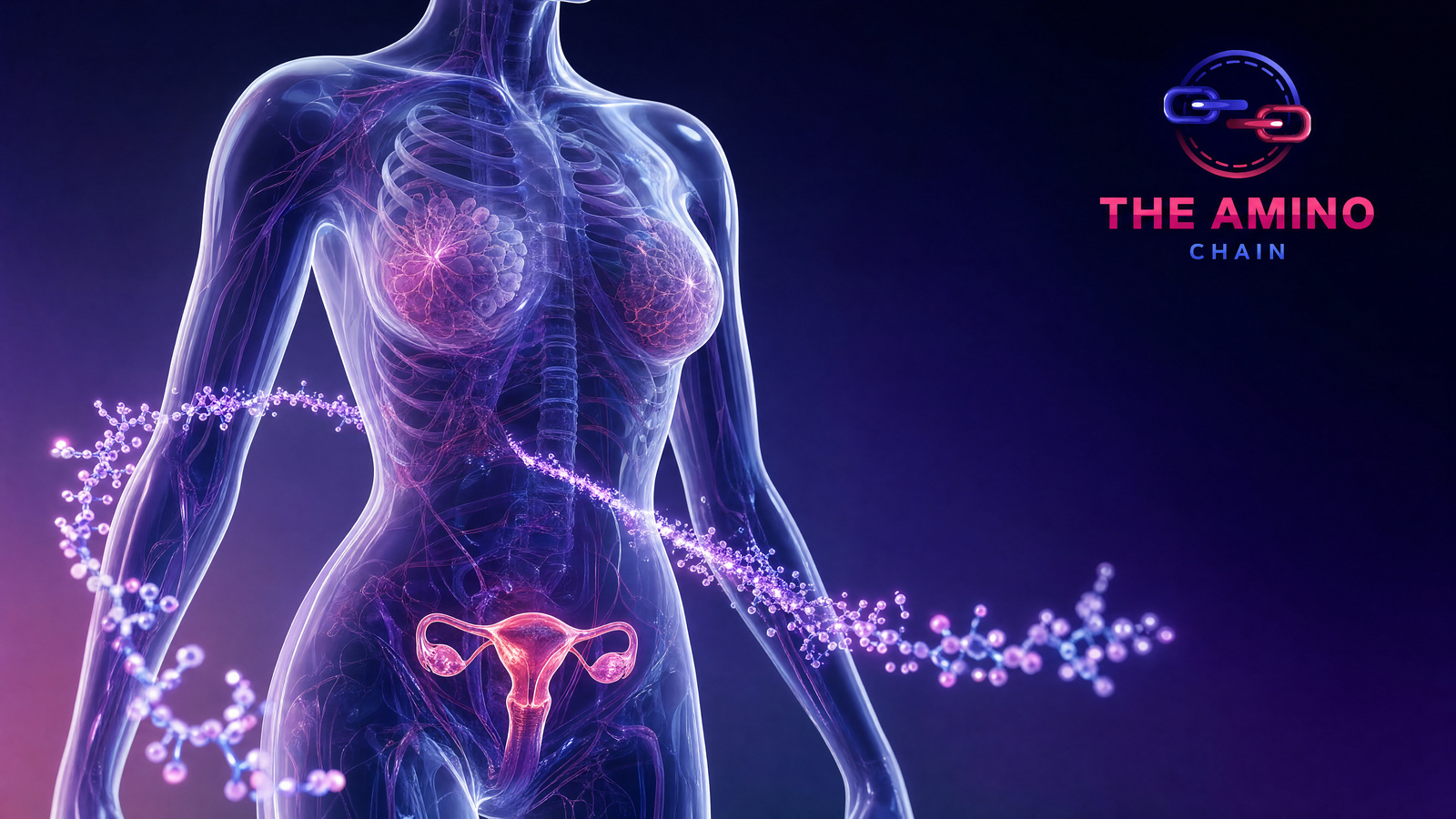
The majority of preclinical peptide research uses male animal models — a well-documented bias in biomedical research that leaves important questions unanswered about sex-specific effects. Women experience different hormonal environments, different disease risk profiles, and different aging patterns than men. This article examines published peptide research specifically relevant to women's health, identifying where sex-specific data exists and where critical gaps remain.
Hormonal Considerations
Estrogen and progesterone influence virtually every tissue system that peptide research targets. Estrogen promotes collagen synthesis, supports bone density, modulates immune function, and affects vascular biology. Progesterone influences GI motility, inflammation, and neurological function. The fluctuations of these hormones across the menstrual cycle, and their decline during menopause, create a fundamentally different biological context for peptide effects.
Published research on GHK-Cu's effects on collagen synthesis, for example, was primarily conducted in cell cultures without estrogen supplementation. Since estrogen is a major driver of collagen synthesis in vivo, the interaction between GHK-Cu and estrogen status is an important unknown. Post-menopausal women with declining estrogen may respond differently to collagen-stimulating peptides than pre-menopausal women.
Bone Health and Osteoporosis
Osteoporosis disproportionately affects women — 80% of osteoporosis patients are female, largely due to accelerated bone loss following menopause when estrogen withdrawal leads to increased osteoclast activity. Several research peptides have published data relevant to bone biology.
Oxytocin research showed direct effects on osteoblast differentiation and bone formation, with oxytocin administration improving bone density in ovariectomized animal models (the standard model for postmenopausal bone loss). BPC-157's published effects on bone healing may have enhanced relevance for women with estrogen-deficient bone. And kisspeptin's regulation of reproductive hormones connects indirectly to bone health through its upstream control of estrogen production.
Skin Aging Differences
Women's skin ages differently from men's, with more pronounced collagen loss after menopause. Published research indicates that women lose approximately 30% of their skin collagen in the first five years after menopause, followed by a more gradual 2% per year decline. Men's skin collagen declines more linearly throughout life.
GHK-Cu's collagen-stimulating and anti-aging effects may be particularly relevant for post-menopausal women experiencing accelerated collagen loss. Published clinical studies with topical GHK-Cu included female subjects and showed improvements in skin thickness and elasticity — though subgroup analysis by menopausal status was not reported in most studies.
Fertility and Reproductive Research
Kisspeptin research has the most direct relevance to women's reproductive health. Published clinical trials demonstrated kisspeptin's ability to trigger ovulation in IVF patients with potentially fewer side effects than traditional triggers. This application is specifically relevant to women and represents one of the few peptide research areas where female-specific clinical data exists.
BPC-157's GI protective effects are relevant to the gastrointestinal symptoms that many women experience in association with menstrual cycles — cyclic nausea, bloating, and altered motility that are influenced by progesterone fluctuations.
Autoimmune Disease
Women are disproportionately affected by autoimmune diseases — comprising 80% of autoimmune disease patients. The immunomodulatory peptides in research — Thymosin Alpha-1, KPV, VIP — have documented effects on the Th1/Th2 balance and regulatory T-cell function that are relevant to autoimmune pathology. However, published research rarely examines sex-specific immune responses to peptide treatment, leaving important questions about optimal dosing and timing relative to hormonal cycles.
The Research Gap
The sex bias in peptide research is a significant limitation. Most animal studies use exclusively male subjects, most cell culture studies don't account for sex hormone effects, and most clinical studies that include women don't report sex-stratified analyses. This gap means that women using published research to inform their understanding of peptide biology are extrapolating from data generated primarily in male biological contexts.
The gap is slowly closing. Recent NIH guidelines require sex as a biological variable in funded research, and more studies are including female animals and reporting sex-stratified results. But for the current body of published peptide research, women should be aware that the evidence base may not fully reflect their biological context.