Thymus Gland Peptides: How Thymic Decline Drives Immune Aging and Which Peptides May Help
The thymus shrinks 95% by age 50, taking your immune system's training center with it. Published research on thymic peptides — Thymosin Alpha-1, Thymulin, and Thymosin Beta-4 — reveals approaches to restoring what aging takes away.
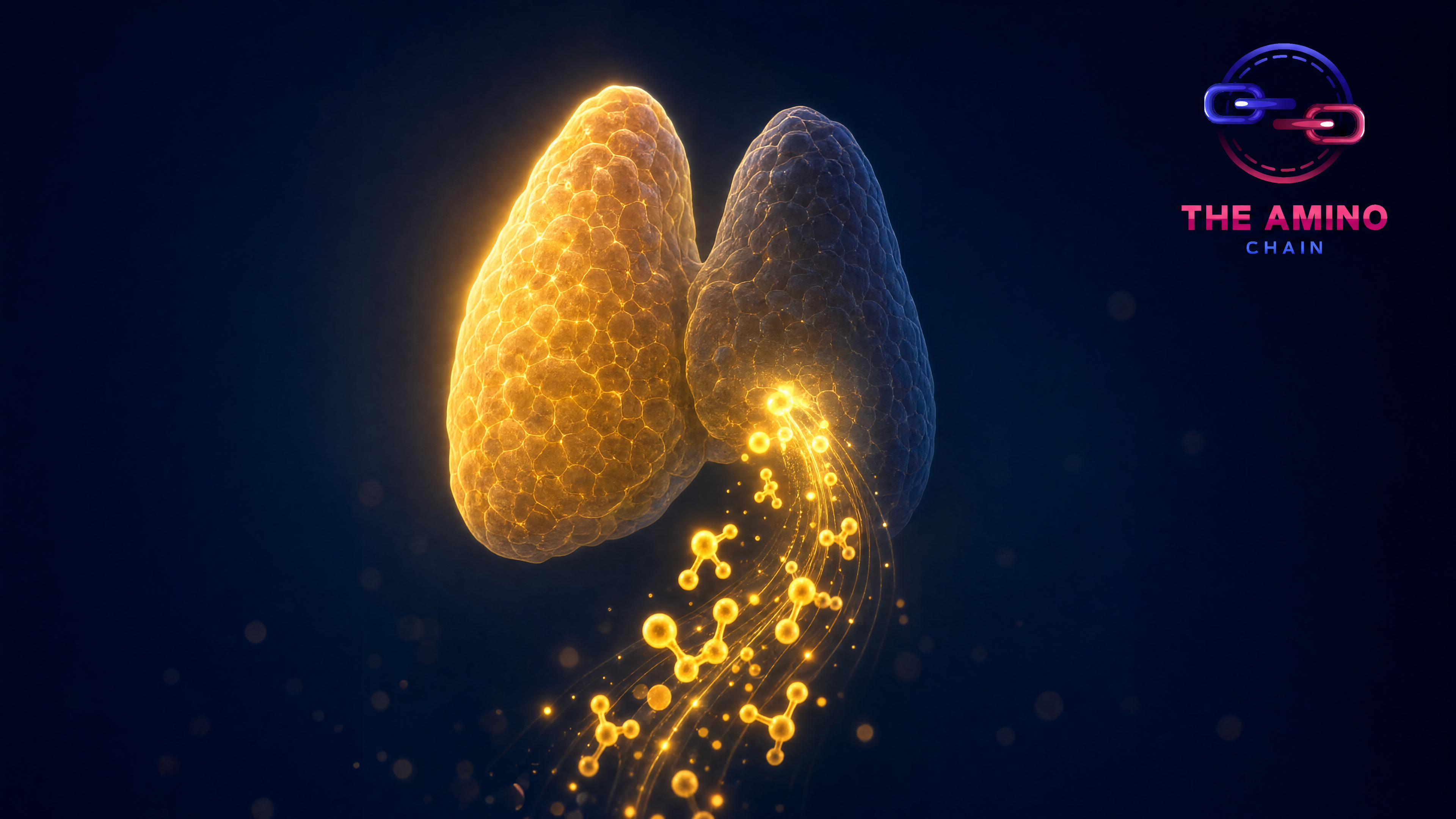
The thymus gland is the immune system's training academy — the organ where immature T-cells from bone marrow are educated to recognize self from non-self, becoming the mature T-cells that drive adaptive immunity. But the thymus has a devastating design flaw: it begins involuting (shrinking and being replaced by fat) after puberty, and by age 50, thymic output has declined approximately 95%. This thymic involution is a primary driver of immunosenescence — the age-related decline in immune function that increases susceptibility to infections, reduces vaccine responses, and impairs cancer surveillance. Published research on thymic peptides offers potential approaches to addressing this fundamental aging process.
The Thymus: Your Immune Training Center
The thymus performs two critical functions that no other organ replicates. Positive selection: T-cell precursors that can recognize self-MHC molecules (and therefore can interact with other immune cells) are selected to survive. Negative selection: T-cell precursors that react too strongly to self-antigens (and therefore might attack the body's own tissues) are eliminated. This dual selection process produces a T-cell repertoire that can recognize foreign threats while tolerating the body's own tissues.
New T-cells that complete thymic education are called Recent Thymic Emigrants (RTEs). They emigrate from the thymus into the peripheral blood, where they become the naive T-cell pool — the reserve of immune cells available to respond to new, previously unencountered threats. As thymic output declines with age, the naive T-cell pool shrinks, and the immune system becomes increasingly dependent on memory T-cells from past encounters.
Why Thymic Involution Matters
The consequences of thymic involution accumulate over decades. Reduced naive T-cell production means fewer cells available to respond to novel pathogens — explaining why elderly individuals are more susceptible to new infections. Impaired vaccine responses reflect the reduced ability to generate new immune responses against vaccine antigens. Increased autoimmunity may result from impaired negative selection of self-reactive T-cells in the involuting thymus. And reduced cancer surveillance occurs because the T-cell repertoire becomes less diverse and less capable of recognizing novel tumor antigens.
Thymosin Alpha-1: The Most Studied Thymic Peptide
Thymosin Alpha-1 (Ta1) is a 28-amino acid peptide originally isolated from thymic tissue by Dr. Allan Goldstein. It is approved in over 35 countries for immune-related conditions and has the most extensive clinical safety database of any thymic peptide. Published research showed Ta1 enhances dendritic cell maturation, promotes T-cell differentiation (both CD4+ and CD8+), activates NK cells, and modulates Toll-like receptor expression. Critically, Ta1 is immunomodulatory rather than immunostimulatory — it restores balanced immune function rather than simply boosting immune activity.
Published clinical applications include viral hepatitis (improved viral clearance when combined with antivirals), cancer immunotherapy (enhanced immune surveillance alongside standard treatment), vaccine enhancement (improved antibody responses in elderly or immunocompromised individuals), and immune restoration in immunodeficient states.
Thymulin: The Zinc-Dependent Thymic Peptide
Thymulin (9 amino acids) is unique among thymic peptides in requiring zinc for biological activity. The zinc ion induces a conformational change necessary for receptor binding. Published research showed thymulin promotes T-cell differentiation, enhances NK cell activity, and modulates cytokine production. Thymulin levels decline dramatically with age — even faster than thymic tissue mass — suggesting active downregulation of production.
The zinc dependency creates a direct link between nutritional zinc status and thymic immune function. Zinc deficiency — affecting approximately 2 billion people worldwide — directly reduces active thymulin levels, contributing to immune impairment. Published research showed zinc supplementation restored thymulin activity in zinc-deficient individuals.
Thymosin Beta-4 (TB-500): Beyond Immunity
Thymosin Beta-4 (the parent molecule of TB-500) was originally identified in thymic tissue, but its primary documented functions extend well beyond immunity into wound healing, cell migration, and tissue repair. However, Thymosin Beta-4 does have immune-relevant properties: published research showed it modulates inflammatory responses (TNF-alpha, IL-1, IL-6) and influences macrophage activation and phenotype. These immune-modulatory effects may contribute to its wound healing properties by optimizing the inflammatory phase of tissue repair.
Can Thymic Involution Be Reversed?
Published research has explored several approaches to thymic regeneration. Growth hormone and IGF-1 administration has shown partial thymic regrowth in aged animal models. IL-7 administration promotes thymic T-cell development. Castration (removing sex steroids) partially reverses thymic involution in animals, as sex steroids are major drivers of involution. And thymic peptide administration may compensate for reduced thymic output by providing the peptide signals that the involuting thymus can no longer produce in adequate quantities.
The Research Perspective
Thymic peptide research represents one of the most biologically rational approaches to addressing immune aging. The thymus involutes, its peptide output declines, and immune function deteriorates — providing exogenous thymic peptides to compensate for this decline is a logical intervention. The clinical evidence for Thymosin Alpha-1 is the strongest among thymic peptides, with decades of published safety and efficacy data. Thymulin and Thymosin Beta-4 have complementary but less clinically validated profiles.