AOD-9604: The Modified GH Fragment and Fat Metabolism Research
AOD-9604 is a modified fragment of human growth hormone that has been studied specifically for its effects on fat metabolism — without the broader growth-promoting effects of full-length GH. Here's what the published research shows.
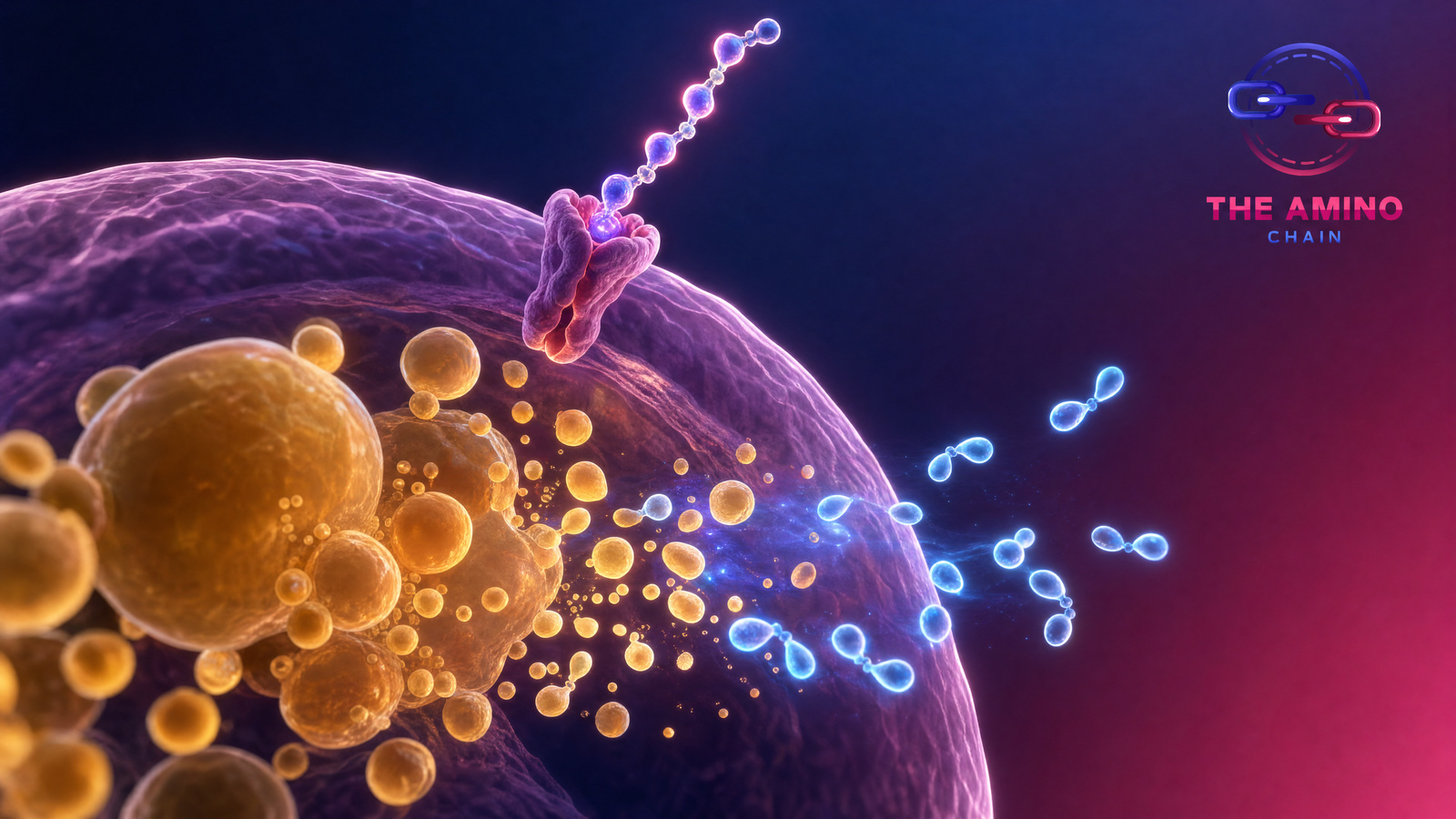
AOD-9604 represents a fascinating approach in peptide research: taking a specific fragment of a larger hormone — in this case, the fat-metabolizing region of human growth hormone — and modifying it to retain the desired metabolic effects while eliminating the growth-promoting and diabetogenic properties of the full molecule.
What Is AOD-9604?
AOD-9604 (Advanced Obesity Drug, compound 9604) is a modified peptide fragment corresponding to amino acids 177-191 of human growth hormone (hGH), with the addition of a tyrosine residue at the N-terminus. This 16-amino acid sequence was identified in the 1990s by researchers at Monash University in Australia as the region of hGH responsible for its lipolytic (fat-breaking) activity.
The key insight was that hGH's metabolic effects on fat tissue could be separated from its growth-promoting effects on muscle, bone, and organs. The C-terminal fragment retains the ability to stimulate lipolysis and inhibit lipogenesis without affecting IGF-1 levels, blood glucose, or tissue growth — properties confirmed in published clinical studies.
Mechanism of Action
AOD-9604's mechanism involves interaction with the beta-3 adrenergic receptor pathway in adipose tissue. Published research has demonstrated that the peptide stimulates lipolysis — the breakdown of stored triglycerides into free fatty acids and glycerol — through a mechanism distinct from full-length growth hormone's lipolytic activity.
Additionally, AOD-9604 has been shown to inhibit lipogenesis — the process by which the body converts excess calories into stored fat. This dual action — increasing fat breakdown while decreasing fat production — is mechanistically interesting because most individual compounds affect only one side of the equation.
Importantly, published data shows that AOD-9604 does not stimulate production of IGF-1 or affect insulin sensitivity — two significant concerns with full-length growth hormone therapy. This selectivity is what makes the fragment approach scientifically interesting as a research tool for studying fat metabolism independent of broader growth hormone effects.
Published Clinical Research
AOD-9604 is one of the few research peptides with published human clinical trial data. Phase 2 studies in obese subjects demonstrated statistically significant fat loss compared to placebo over 12-week treatment periods. The compound was well-tolerated with no serious adverse events reported and no effects on glucose metabolism or IGF-1 levels.
However, a larger Phase 3 clinical trial failed to replicate the magnitude of fat loss seen in Phase 2, and clinical development for obesity was discontinued. This outcome is important context — it illustrates the gap that often exists between early clinical results and larger confirmatory studies, a pattern seen across pharmaceutical development.
Cartilage Research
More recently, AOD-9604 has attracted research attention for a completely different application: cartilage biology. Published studies have shown that the peptide stimulates proteoglycan and collagen synthesis in chondrocytes (cartilage cells) in vitro. This led to clinical investigation of AOD-9604 for osteoarthritis, with regulatory approval in Australia as an injectable treatment for knee osteoarthritis under the name Inovopep.
This pivot from metabolic to musculoskeletal research illustrates how peptide biology can reveal unexpected activities — the same compound studied for fat metabolism turned out to have significant effects on a completely different tissue system.
Research Considerations
AOD-9604 is reconstituted in bacteriostatic water and stored at 2-8 degrees Celsius. As a relatively small peptide (MW approximately 1817 Da), it is generally stable and soluble in aqueous solutions. Researchers should be aware that the published clinical data, while informative, represents a mixed picture — promising early results followed by less impressive confirmatory data in the obesity context, alongside emerging positive data in the cartilage field.