BPC-157 and Eye Health: Corneal Healing Research and Ocular Biology
The cornea must heal while maintaining optical clarity — one of the most demanding repair challenges in the body. Published BPC-157 research on corneal wounds and ocular inflammation reveals intriguing possibilities.
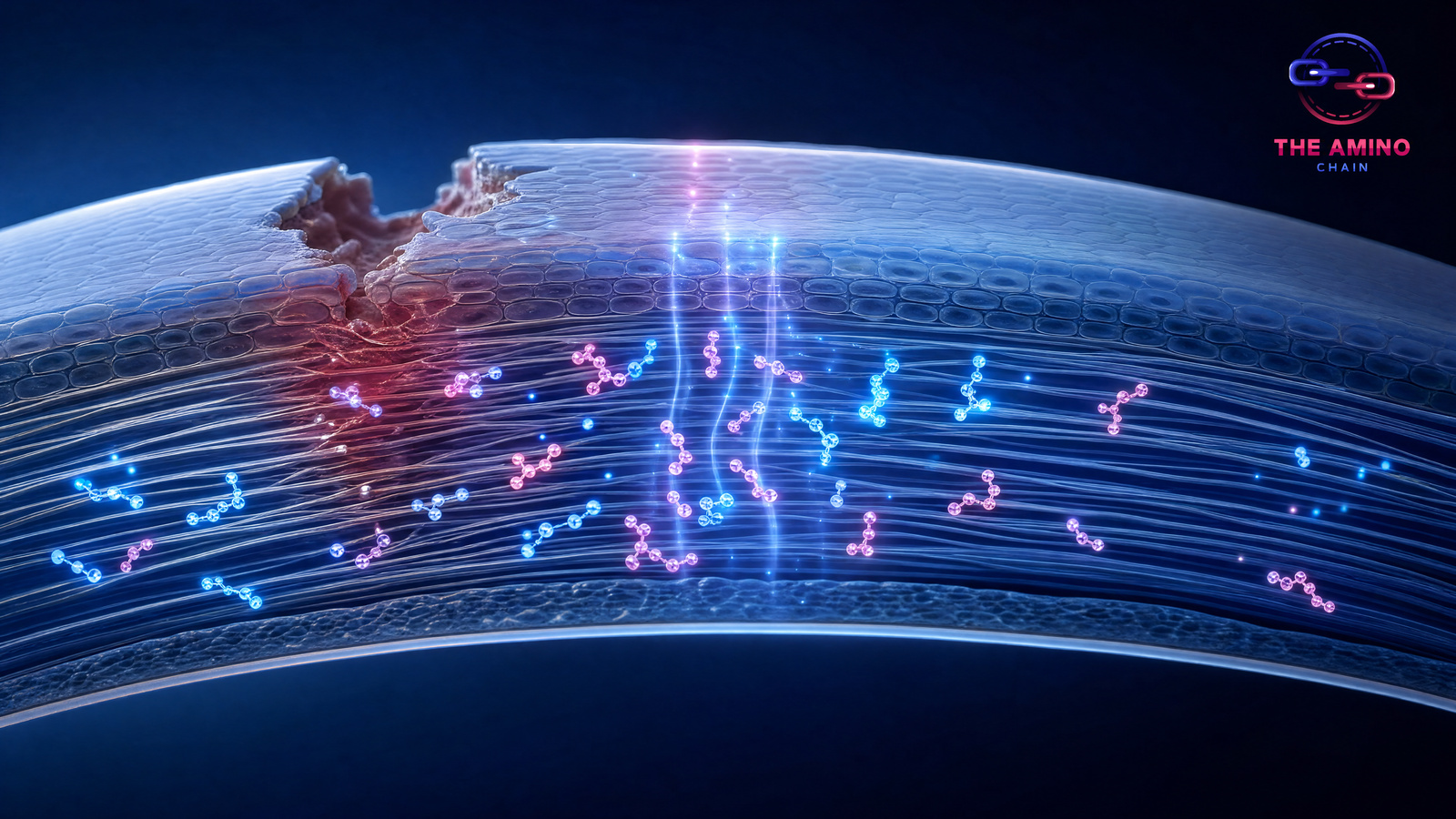
The cornea presents one of the most challenging healing environments in the body. It must repair damage while maintaining the optical transparency essential for vision — a constraint that doesn't apply to any other tissue. Published BPC-157 research on corneal healing demonstrates effects on epithelial regeneration, inflammatory control, and scar prevention in this uniquely demanding tissue.
Corneal Biology: Healing Under Constraints
The cornea is an avascular tissue — it receives oxygen directly from the air and nutrients from the aqueous humor and tears rather than from blood vessels. This avascularity is essential for transparency but creates the same healing challenges seen in other avascular tissues like tendons and cartilage: limited repair cell access, nutrient delivery through diffusion rather than direct blood supply, and slow healing kinetics.
Corneal healing must also avoid two outcomes that would compromise vision: vascularization (blood vessel growth into the normally avascular cornea) and fibrosis (scar formation that creates opacity). The repair process must be robust enough to close wounds and restore structural integrity while constrained enough to avoid these vision-threatening outcomes.
Published BPC-157 Corneal Research
Published studies have examined BPC-157 in corneal wound models, including alkali burn injuries (among the most severe corneal injuries, often leading to permanent vision loss). The peptide demonstrated several beneficial effects in these models.
Accelerated epithelial healing was observed, with faster closure of corneal epithelial defects in treated eyes compared to controls. The corneal epithelium is a rapidly renewing tissue — cells at the periphery divide and migrate centrally to replace damaged cells. BPC-157's promotion of cell migration through actin dynamics and the FAK-paxillin pathway is directly relevant to this centripetal migration pattern.
Reduced inflammatory cell infiltration was another consistent finding. Corneal inflammation (keratitis) is both a response to injury and a potential cause of additional damage — inflammatory mediators and reactive oxygen species can damage delicate corneal structures. BPC-157's anti-inflammatory modulation may help control this destructive phase while allowing the constructive aspects of the healing response to proceed.
The Scar Prevention Question
Corneal scarring is the primary cause of vision loss after corneal injury. Fibrotic tissue in the cornea is opaque because its collagen fibers are disorganized — in contrast to the precisely arranged parallel collagen fibrils of normal corneal stroma that allow light transmission. Published BPC-157 research showing reduced scarring in corneal wound models is particularly significant because of the direct impact on visual function.
The mechanism may involve BPC-157's promotion of organized collagen deposition — demonstrated in tendon and other connective tissue models — applied to the corneal context. If healing corneal tissue maintains more organized collagen fibril arrangement, the resulting repair would be more transparent.
Dry Eye and Corneal Surface Disease
Chronic corneal surface disease — including dry eye syndrome, which affects up to 30% of the population over age 50 — involves persistent epithelial damage, low-grade inflammation, and tear film instability. The corneal epithelium is constantly renewed but this renewal can be overwhelmed by chronic inflammatory insult. BPC-157's combination of epithelial healing promotion and anti-inflammatory effects has theoretical relevance to these chronic conditions.
Research Limitations and Context
Corneal research with BPC-157 is preclinical and limited in scope compared to the peptide's GI or musculoskeletal research. The number of published corneal studies is small, and they use animal models whose corneal biology differs from humans in important ways (particularly corneal size, blink rate, and tear composition). However, the findings are consistent with BPC-157's demonstrated mechanisms in other tissue systems, and the cornea's healing constraints make it a particularly interesting test case for tissue repair compounds.