BPC-157 and Frozen Shoulder: Research on Adhesive Capsulitis, Inflammation, and Joint Capsule Healing
Frozen shoulder affects up to 5% of the population and can last 1-3 years. Published BPC-157 research on joint capsule healing, inflammation resolution, and connective tissue repair has direct relevance to this painful condition.
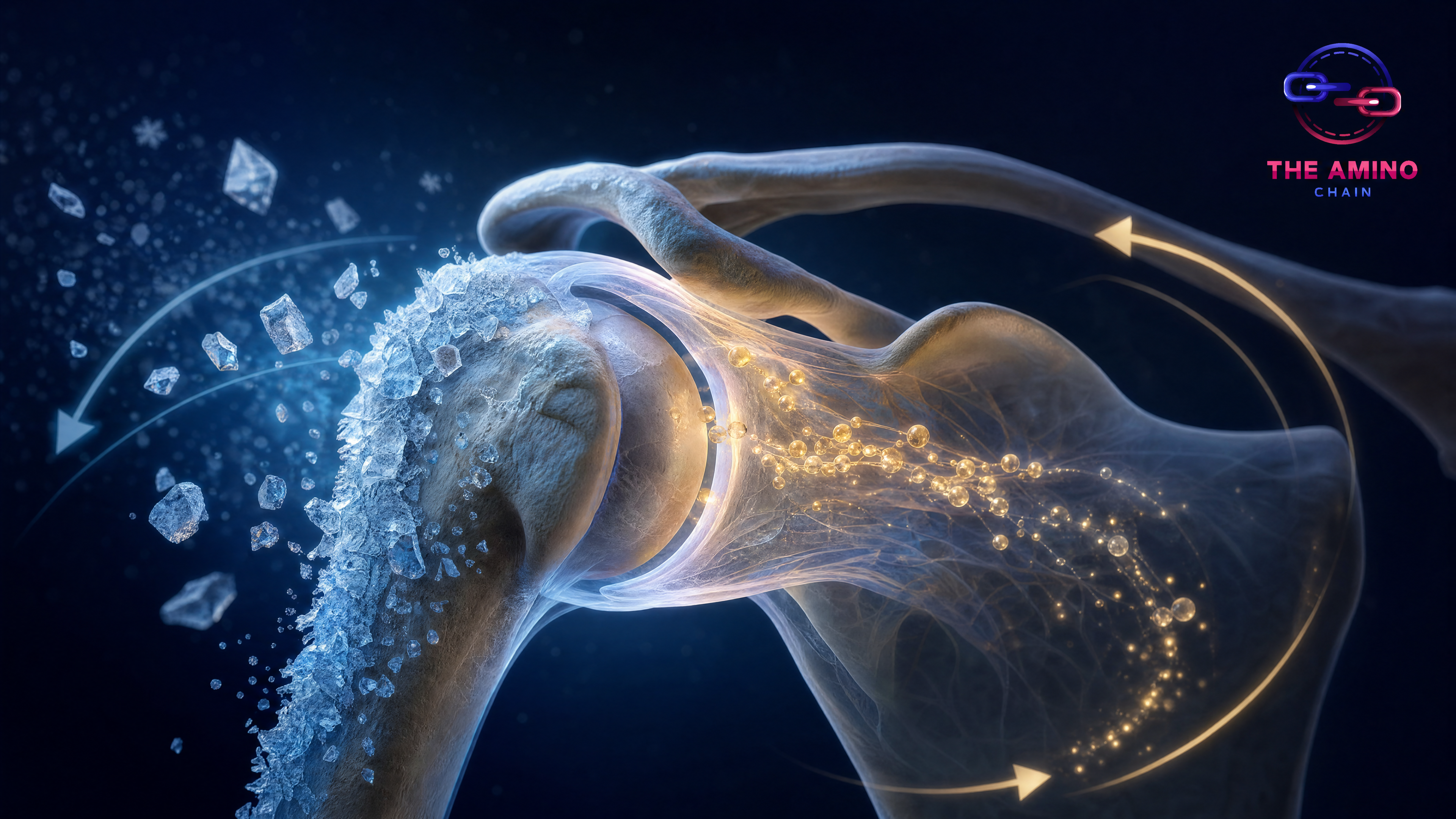
Adhesive capsulitis — commonly called frozen shoulder — is one of the most frustrating musculoskeletal conditions. The shoulder joint capsule becomes inflamed, thickened, and fibrotic, progressively restricting range of motion until the shoulder is essentially "frozen." The condition typically progresses through three stages over 1-3 years: the freezing stage (increasing pain and stiffness), the frozen stage (less pain but severe restriction), and the thawing stage (gradual return of motion). Published BPC-157 research addresses several mechanisms directly relevant to each stage.
The Pathology of Frozen Shoulder
At the cellular level, frozen shoulder involves inflammation of the synovial lining of the joint capsule, followed by fibrosis — excessive deposition of collagen and scar tissue that contracts and stiffens the capsule. The rotator interval, axillary fold, and coracohumeral ligament become thickened and contracted. The capsule, normally loose and flexible enough to allow the shoulder's remarkable range of motion, becomes rigid and adherent.
Key molecular drivers include elevated TGF-beta (driving fibroblast-to-myofibroblast differentiation and collagen overproduction), elevated inflammatory cytokines (IL-1, IL-6, TNF-alpha), increased matrix metalloproteinase activity, and neovascularization with accompanying nerve ingrowth that contributes to pain.
BPC-157 and Joint Capsule Inflammation
Published BPC-157 research has documented anti-inflammatory effects in joint tissue contexts. The peptide modulates inflammatory cytokine expression — the same cytokines (IL-1, IL-6, TNF-alpha) that drive the freezing stage of adhesive capsulitis. By reducing capsular inflammation, BPC-157 may address the initiating event that triggers the fibrotic cascade.
BPC-157's nitric oxide modulation is particularly relevant because NO plays a dual role in frozen shoulder: inflammatory NO production (via iNOS) contributes to tissue damage, while constitutive NO production (via eNOS) supports normal vascular function and tissue homeostasis. BPC-157's bidirectional NO modulation — documented extensively in published research — may help normalize NO signaling rather than simply suppressing it.
Anti-Fibrotic Potential
The hallmark of frozen shoulder is capsular fibrosis — excessive scar tissue formation within the joint capsule. Published BPC-157 research has documented anti-fibrotic effects in multiple tissue contexts, including peritoneal adhesion reduction and scar quality improvement. The anti-fibrotic mechanism involves modulation of TGF-beta signaling, effects on fibroblast-to-myofibroblast differentiation, and influence on the MMP/TIMP balance that controls matrix remodeling.
If BPC-157's anti-fibrotic effects extend to the joint capsule — a reasonable extrapolation from published data in other connective tissues — the peptide could theoretically address the pathological process that converts capsular inflammation into permanent stiffness.
Angiogenesis and Capsular Healing
BPC-157's VEGF-mediated angiogenesis is relevant to frozen shoulder recovery. The thawing stage — where the capsule gradually loosens and motion returns — involves remodeling of the fibrotic capsule. This remodeling requires adequate blood supply to deliver the inflammatory cells, enzymes, and nutrients needed to break down excessive scar tissue and restore normal capsular architecture.
Published BPC-157 research showed promotion of angiogenesis in hypovascular tissues — a property directly relevant to the joint capsule, which has limited baseline vascularity similar to tendons.
Pain Modulation
Frozen shoulder pain is often severe during the freezing stage, sometimes exceeding the pain of rotator cuff tears. The pain involves both inflammatory nociception (from capsular inflammation) and neurogenic pain (from nerve ingrowth into the inflamed capsule). BPC-157's documented effects on pain-related pathways — including its interaction with the opioid system and its anti-inflammatory effects — may address both pain components.
Injection Site Considerations
For frozen shoulder research specifically, the question of injection proximity is relevant. The affected tissue is the glenohumeral joint capsule — a deep structure surrounded by the rotator cuff muscles and deltoid. Published BPC-157 research used various injection routes (intraperitoneal, subcutaneous, intramuscular), and the optimal route for joint capsule delivery has not been established in published studies. Subcutaneous injection near the posterior or lateral shoulder places the peptide in proximity to the affected capsule, though direct intra-articular delivery would theoretically provide the highest local concentration.
Combined Approach
Frozen shoulder research often combines multiple interventions: physical therapy (to maintain and restore range of motion), anti-inflammatory agents (to reduce capsular inflammation), and occasionally surgical release or manipulation under anesthesia (for refractory cases). BPC-157's multi-mechanism profile — anti-inflammatory, anti-fibrotic, angiogenic, and analgesic — may complement physical therapy by addressing the biological barriers to capsular remodeling while therapy addresses the mechanical component.