BPC-157 and Gut Health: What Research Says About Intestinal Permeability and GI Protection
BPC-157 originates from gastric juice — making gut health its home turf. This article examines the published research on intestinal barrier function, leaky gut, IBS-related inflammation, and BPC-157's cytoprotective effects on the GI tract.
BPC-157 was literally discovered in gastric juice — the protective fluid lining your stomach. Of all the research applications for this peptide, gastrointestinal protection and repair is where the published evidence is deepest and most compelling. With over 100 studies spanning gastric ulcers, intestinal inflammation, and mucosal healing, the GI research profile of BPC-157 is unmatched by any other research peptide.
The Origin Story Matters
BPC-157 is a partial sequence of a protein naturally found in human gastric juice called Body Protection Compound. This origin is biologically significant: the stomach is one of the most hostile environments in the body — constant exposure to hydrochloric acid (pH 1-2), digestive enzymes that break down proteins, and mechanical churning. Yet healthy gastric mucosa repairs itself continuously, maintaining barrier integrity despite this assault. BPC-157 appears to be part of that protective machinery.
Intestinal Permeability: The Leaky Gut Problem
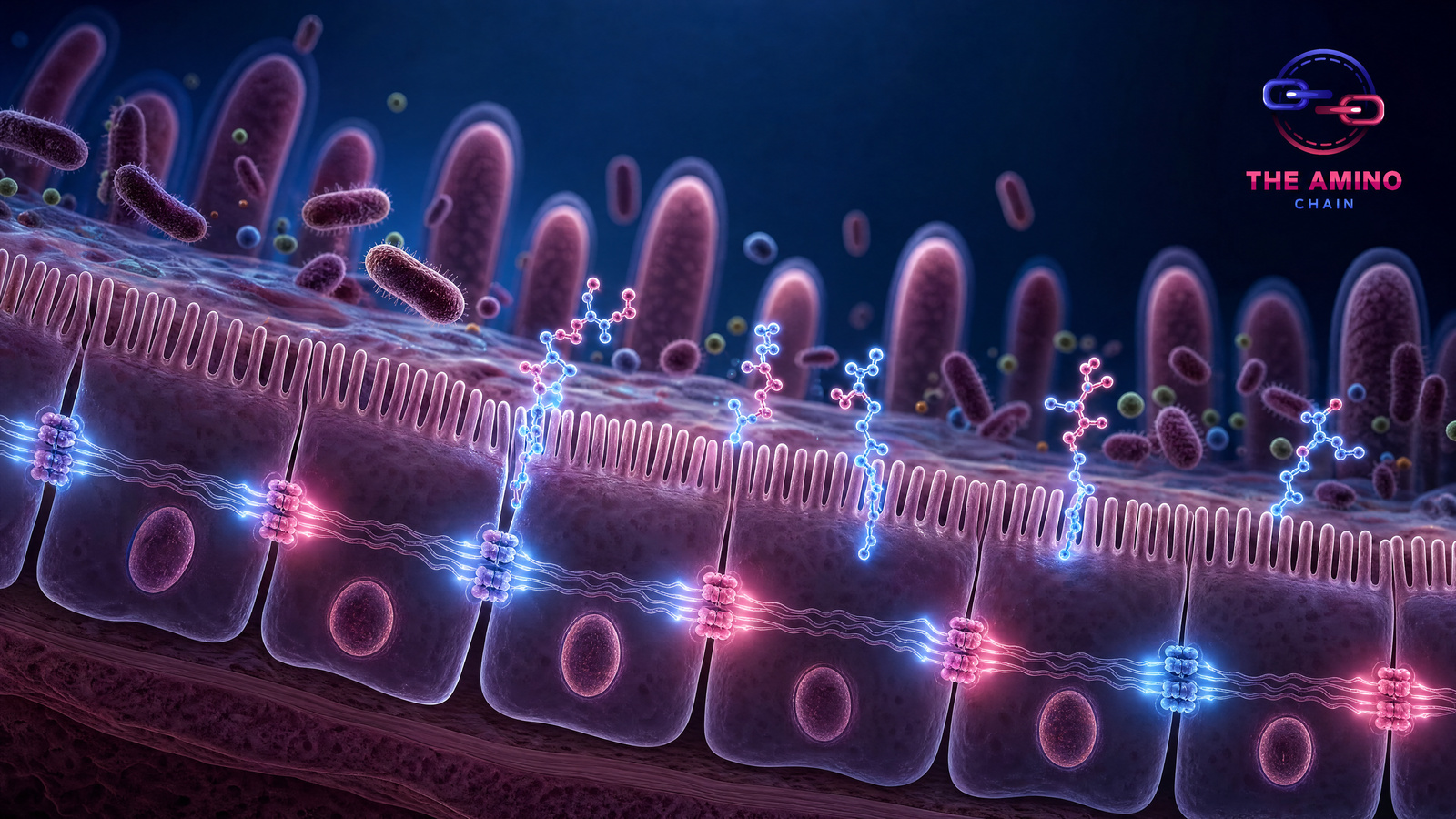
The intestinal barrier is a single layer of epithelial cells held together by tight junction proteins. This barrier must selectively absorb nutrients while blocking bacteria, toxins, and undigested food particles from entering the bloodstream. When tight junctions become compromised — through inflammation, stress, alcohol, NSAIDs, or other insults — intestinal permeability increases. This is colloquially called "leaky gut."
Increased permeability allows bacterial endotoxins (particularly lipopolysaccharide, or LPS) to cross into systemic circulation, triggering immune activation and chronic low-grade inflammation. This process has been implicated in conditions ranging from irritable bowel syndrome to autoimmune disorders, metabolic syndrome, and even neurological conditions through the gut-brain axis.
BPC-157's published effects on intestinal barrier function are directly relevant to this pathology. Animal studies have demonstrated the peptide's ability to protect against various models of intestinal barrier disruption and to accelerate restoration of barrier integrity after damage.
Gastric Ulcer Research: The Strongest Evidence
The most robust body of BPC-157 GI research involves gastric ulcer models. Published studies have examined the peptide's effects against ulcers induced by ethanol, aspirin, capsaicin, and other ulcerogenic agents. The findings are remarkably consistent: dose-dependent acceleration of ulcer healing with improvements in mucosal blood flow, epithelial cell migration, and angiogenesis at the injury site.
What makes this data particularly compelling is its consistency across different ulcer models, different research groups, and different administration routes. Both systemic and local (intragastric) administration have shown effects, supporting the compound's relevance to GI biology through multiple pathways.
The Nitric Oxide System in the Gut
BPC-157's interaction with the nitric oxide system takes on special significance in GI biology. NO is a critical regulator of gastrointestinal function — it maintains mucosal blood flow, regulates gastric acid secretion, modulates smooth muscle tone, and influences intestinal motility. Disruption of NO signaling is implicated in multiple GI pathologies including gastroparesis, inflammatory bowel disease, and ischemia-reperfusion injury.
Published BPC-157 research has demonstrated bidirectional modulation of the NO system — potentially restoring NO signaling toward physiological levels rather than simply increasing or decreasing it. In the GI context, this means the peptide may help maintain the delicate NO balance that supports normal gut function.
NSAID Gastroprotection
Non-steroidal anti-inflammatory drugs (NSAIDs) are among the most commonly used medications worldwide, and GI damage is their most significant side effect. NSAIDs inhibit cyclooxygenase (COX) enzymes, reducing prostaglandin synthesis that normally protects the gastric mucosa. The result can be gastric erosions, ulcers, and potentially life-threatening GI bleeding.
Published BPC-157 studies have specifically examined protection against NSAID-induced gastric damage. In aspirin and diclofenac models, BPC-157 demonstrated significant cytoprotective effects — reducing mucosal damage severity and accelerating healing of established NSAID-induced lesions. This research area is particularly relevant given the widespread chronic use of NSAIDs.
Inflammatory Bowel Disease Models
Published research has examined BPC-157 in animal models of inflammatory bowel disease, including both colitis and small intestinal inflammation. The peptide demonstrated anti-inflammatory effects with reductions in inflammatory cytokine expression, decreased tissue damage scores, and improved mucosal healing. While these are preclinical models rather than human IBD studies, the mechanisms involved — NO modulation, angiogenesis, anti-inflammatory signaling — are directly relevant to human IBD pathology.
The Gut-Brain Axis Connection
Emerging research has begun exploring BPC-157's effects on the gut-brain axis — the bidirectional communication network between the GI tract and the central nervous system. Published studies have reported effects on dopaminergic and serotonergic systems, which are heavily influenced by gut signaling. Given that approximately 95% of the body's serotonin is produced in the gut, compounds that protect GI function may have downstream effects on neurological signaling.
Practical Research Context
BPC-157's stability in gastric acid is unusual among peptides — most peptides are rapidly degraded in the acidic stomach environment. This stability is consistent with BPC-157's gastric juice origin and has led to published research examining oral administration, which would be particularly relevant for GI applications where direct contact with the intestinal mucosa may be important.
As with all research peptides, these findings are preclinical. No human clinical trials for GI applications have been published. However, the depth and consistency of the preclinical GI data make this one of the most well-supported research applications for BPC-157.