BPC-157 and Heart Health: Cardiovascular Research, Blood Pressure, and Cardiac Protection
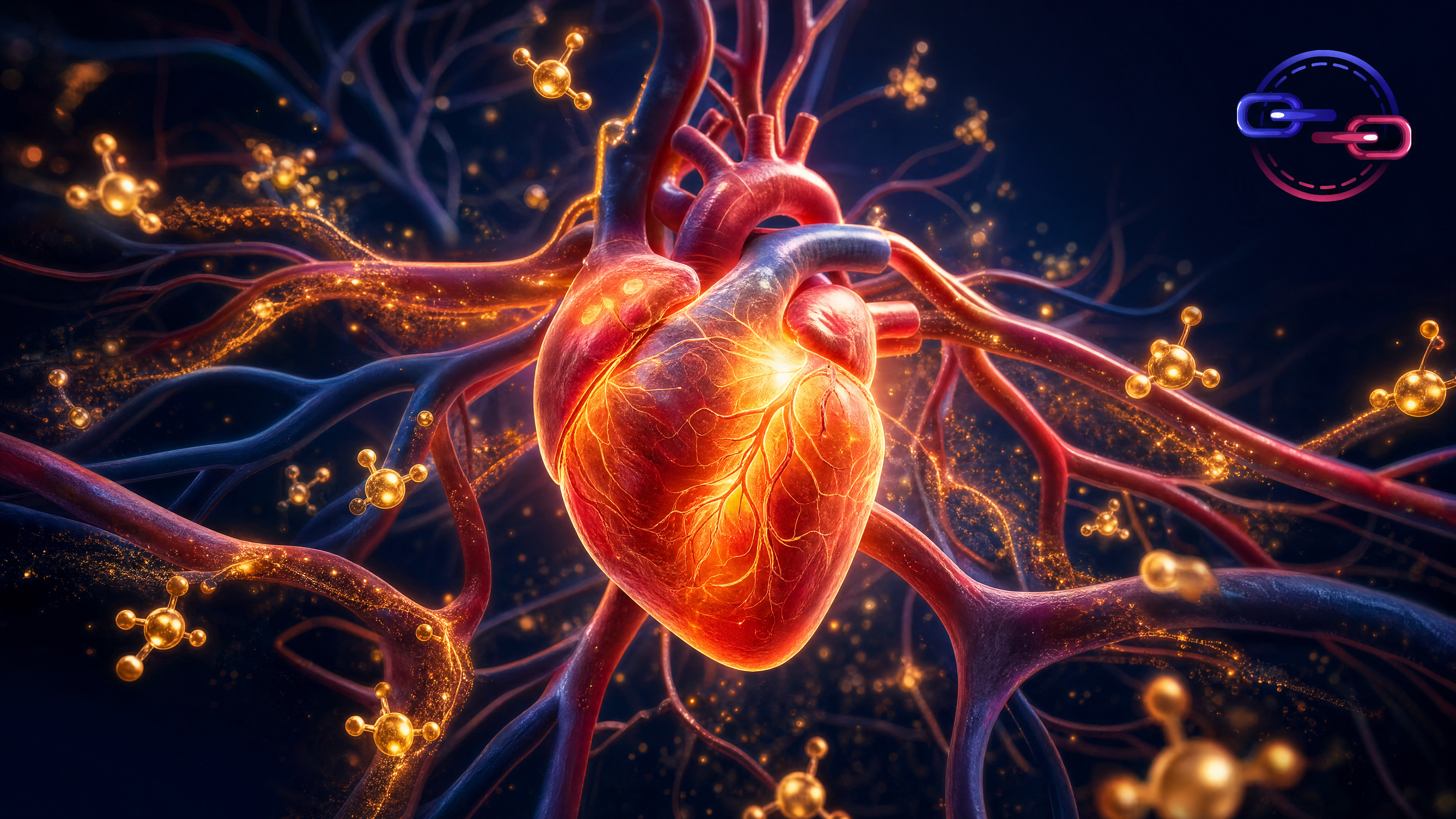
BPC-157's effects on the NO system and blood vessel formation have significant implications for cardiovascular research. Published studies have examined effects on blood pressure, cardiac arrhythmias, and heart failure models.
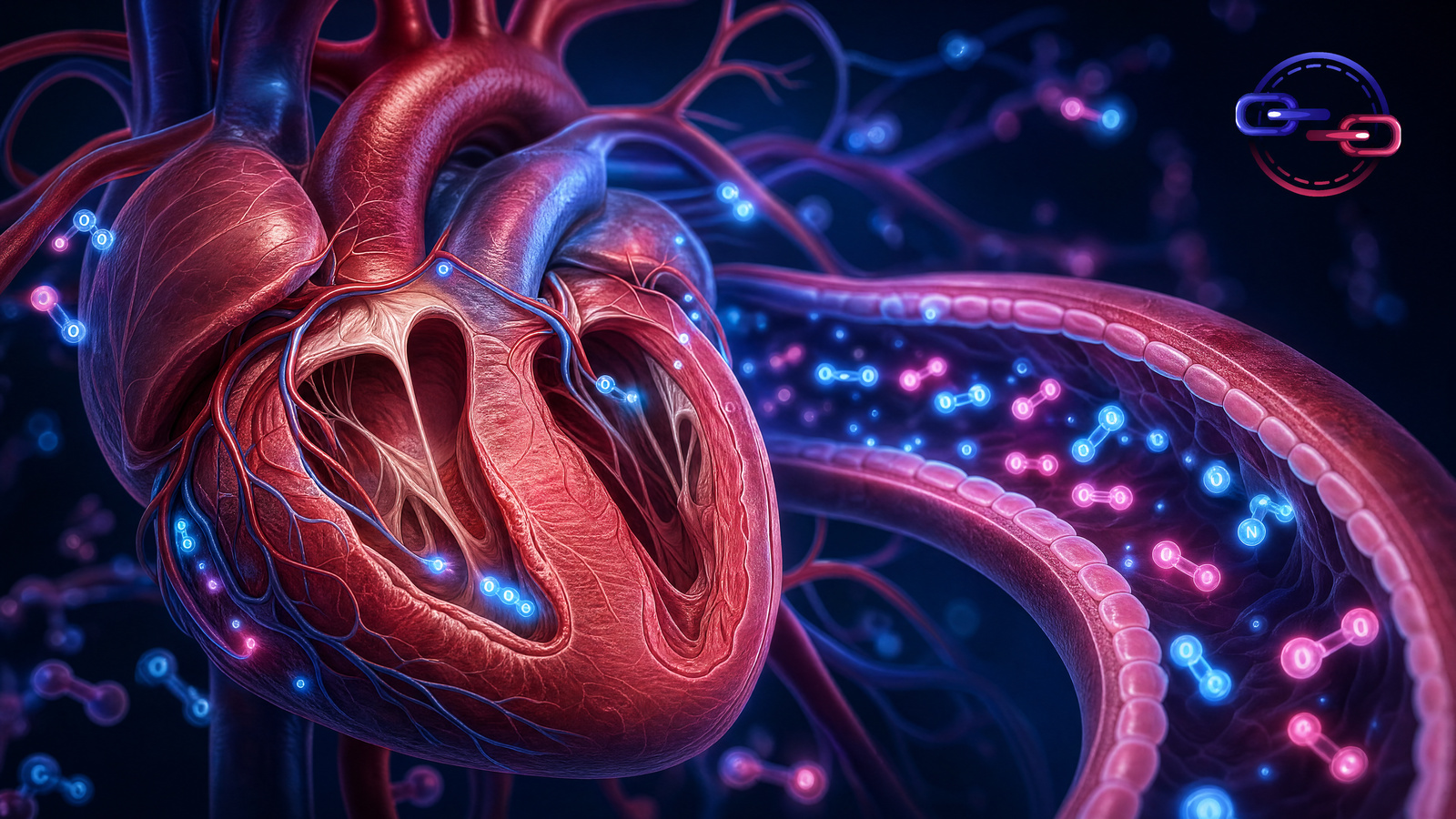
The cardiovascular system — heart, blood vessels, and the blood that flows through them — is fundamentally dependent on the two biological processes that BPC-157 most consistently influences: nitric oxide signaling and angiogenesis. Published research on BPC-157's cardiovascular effects spans blood pressure regulation, cardiac arrhythmia models, heart failure, and vascular injury — making it one of the most active areas of BPC-157 investigation.
NO and the Cardiovascular System
Nitric oxide is arguably the most important signaling molecule in cardiovascular biology. It was named "Molecule of the Year" by Science magazine in 1992, and its discoverers received the Nobel Prize in 1998. In blood vessels, NO produced by endothelial nitric oxide synthase (eNOS) causes smooth muscle relaxation, reducing blood pressure and increasing blood flow. NO also inhibits platelet aggregation (preventing blood clots), reduces inflammation in vessel walls, and prevents smooth muscle cell proliferation that contributes to atherosclerosis.
BPC-157's documented bidirectional modulation of the NO system positions it as a uniquely interesting compound for cardiovascular research. Rather than simply increasing or decreasing NO production, the peptide appears to help restore NO signaling toward physiological levels — potentially beneficial in both conditions of NO deficiency (hypertension, endothelial dysfunction) and NO excess (septic shock, certain inflammatory states).
Blood Pressure Research
Published studies have examined BPC-157's effects in hypertensive animal models. The peptide demonstrated blood pressure-lowering effects, likely mediated through NO-dependent vascular relaxation. In L-NAME-induced hypertension models (where NO production is pharmacologically blocked), BPC-157 partially reversed the hypertensive effect, suggesting interaction with the NO pathway even under conditions of pharmacological blockade.
Conversely, in models of excessive NO production (such as L-arginine overload), BPC-157 appeared to moderate the hypotensive response. This bidirectional pattern is consistent with the peptide's behavior in other NO-dependent systems.
Cardiac Arrhythmia Research
Published BPC-157 studies have examined anti-arrhythmic properties in various experimental models. Cardiac arrhythmias — irregular heartbeats ranging from benign palpitations to lethal ventricular fibrillation — involve disrupted electrical conduction in the heart muscle. Published data suggests BPC-157 may influence cardiac ion channel function and conduction patterns, though the specific mechanisms are still being characterized.
In digitalis-induced arrhythmia models (a well-established experimental system), BPC-157 demonstrated protective effects against both atrial and ventricular arrhythmias. The NO system plays a role in cardiac electrophysiology, and BPC-157's NO modulation may contribute to these anti-arrhythmic properties.
Heart Failure Models
Published research has examined BPC-157 in experimental heart failure models, including those induced by doxorubicin (a chemotherapy drug known for cardiotoxicity) and isoproterenol (a beta-adrenergic agonist that causes cardiac hypertrophy and failure at high doses). In both models, BPC-157 demonstrated cardioprotective effects with improvements in cardiac function parameters and reductions in histological markers of cardiac damage.
The mechanisms are likely multifactorial: direct cytoprotection of cardiomyocytes, improved coronary blood flow through NO modulation, reduced inflammatory damage, and potentially enhanced angiogenesis in ischemic myocardium.
Vascular Injury and Repair
Blood vessel damage — from atherosclerosis, surgical procedures, or thrombotic events — requires endothelial repair for restoration of normal vascular function. Published BPC-157 research has demonstrated accelerated endothelial repair in vascular injury models, consistent with the peptide's angiogenic and cell migration-promoting properties. Rapid endothelial recovery is critical because exposed subendothelial tissue triggers platelet activation and thrombosis.
The Thrombosis Connection
Published studies have examined BPC-157's effects in thrombosis models — conditions where blood clots form inappropriately in vessels. The peptide showed protective effects against thrombotic events, likely through a combination of NO-mediated anti-platelet effects and promotion of endothelial integrity. This anti-thrombotic profile adds another dimension to BPC-157's cardiovascular relevance.
Research Perspective
Cardiovascular research with BPC-157 remains preclinical. However, the consistency of effects across multiple cardiovascular models — blood pressure, arrhythmias, heart failure, vascular injury, and thrombosis — and the clear mechanistic link through the NO system make this one of the most coherent areas of BPC-157 research. The cardiovascular system's dependence on NO signaling and angiogenesis aligns precisely with BPC-157's two most well-documented biological effects.