BPC-157 and Muscle Tears: Research on Strain Recovery and Skeletal Muscle Repair
Muscle strains and tears affect athletes and active adults regularly. This article examines published BPC-157 research on skeletal muscle biology, satellite cell activation, and the repair process following muscle injury.
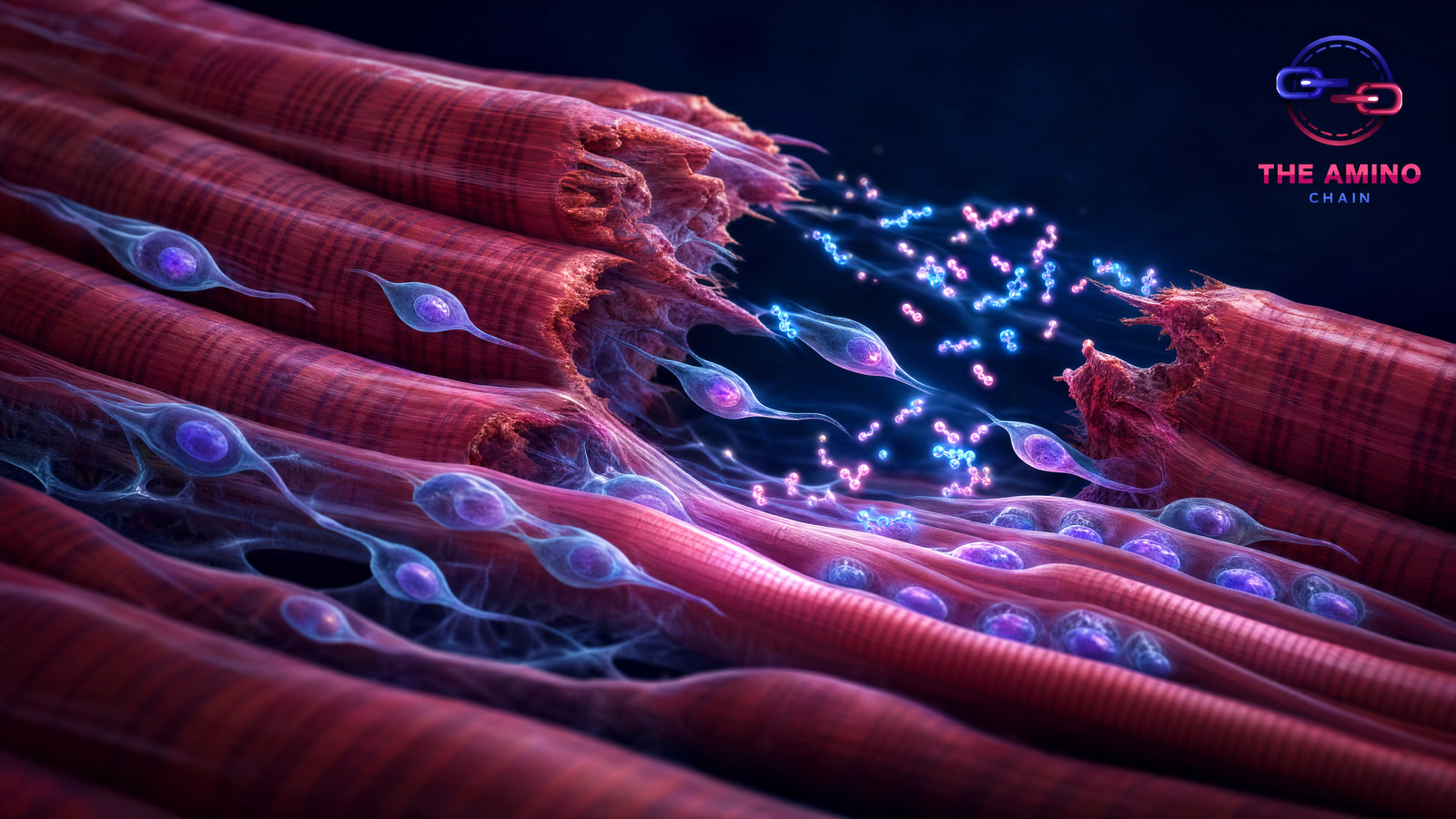
Muscle strains — partial or complete tears of muscle fibers — are among the most common injuries in sports and daily life. Unlike tendons and ligaments, muscle has a robust regenerative capacity thanks to satellite cells, a population of muscle-specific stem cells. Published BPC-157 research on muscle biology examines how this peptide may influence the muscle repair process, from initial damage through complete functional recovery.
How Muscles Tear and Heal
Muscle strains typically occur at the musculotendinous junction — where muscle fibers transition to tendon tissue. This junction experiences the highest mechanical stress during eccentric contractions (lengthening under load). Grade I strains involve microscopic fiber disruption with intact fascia. Grade II strains involve partial fiber tearing. Grade III strains are complete ruptures requiring surgical consideration.
Muscle healing proceeds through three phases: destruction (0-3 days) where damaged fibers undergo necrosis and inflammatory cells infiltrate; repair (3-21 days) where satellite cells activate, proliferate, and begin forming new myofibers; and remodeling (21+ days) where new fibers mature, align along the direction of force, and regain contractile function.
BPC-157 and Muscle Repair Research
Published studies have examined BPC-157's effects on skeletal muscle injury in animal models. The peptide demonstrated acceleration of functional recovery following muscle crush and transection injuries, with treated animals regaining strength and mobility faster than untreated controls.
Histological analysis of healing muscle tissue showed more advanced repair at matched timepoints — greater satellite cell activation, more organized myofiber regeneration, and reduced fibrotic scarring in the repair tissue. This last finding is particularly important because excessive fibrosis in healing muscle reduces contractile function and increases re-injury risk.
Satellite Cell Biology
Satellite cells are the key to muscle regeneration. These quiescent stem cells reside between the sarcolemma (muscle cell membrane) and the basal lamina (surrounding matrix). When muscle is damaged, inflammatory signals activate satellite cells, which then proliferate, differentiate into myoblasts, and fuse either with each other to form new myofibers or with existing damaged fibers to repair them.
BPC-157's growth factor receptor upregulation (EGF, VEGF receptors) may enhance the signaling environment that drives satellite cell activation. Its promotion of cell migration through the FAK-paxillin pathway could improve satellite cell trafficking to the injury site. And its anti-inflammatory modulation may help optimize the inflammatory signals that initiate satellite cell activation without the excessive inflammation that can impair regeneration.
Angiogenesis in Muscle Repair
Muscle tissue is highly vascularized — every muscle fiber is served by a capillary network that delivers oxygen and removes metabolic waste. When muscle is torn, this capillary network is disrupted. Restoring blood supply to the damaged area is essential for delivering the nutrients, oxygen, and repair cells needed for regeneration.
BPC-157's well-documented promotion of VEGF-mediated angiogenesis is directly relevant to this process. Published studies showing enhanced neovascularization in BPC-157-treated healing tissue have been demonstrated in multiple tissue types, and the same mechanism applies to muscle repair.
Fibrosis Prevention
The biggest long-term risk after muscle injury is excessive fibrosis — scar tissue formation within the healing muscle. Fibrotic tissue can't contract, reducing the muscle's strength and power output. It also creates areas of stress concentration that predispose to re-injury at the borders between scar and normal muscle.
BPC-157's promotion of organized tissue repair — rather than disorganized scarring — has been demonstrated in multiple tissue systems. In muscle, this could mean better alignment of regenerating fibers, reduced collagen deposition in the repair zone, and ultimately a more functional repair that's less prone to re-injury.
Practical Recovery Considerations
Evidence-supported muscle strain management includes the POLICE protocol (Protection, Optimal Loading, Ice, Compression, Elevation) in the acute phase, progressive loading to stimulate fiber alignment and maturation, and gradual return to sport with attention to movement quality. These principles remain the foundation of muscle strain recovery regardless of any supplementary research approaches.