BPC-157 and NSAID Protection: Research on Countering Anti-Inflammatory Drug Side Effects
NSAIDs are among the most used medications worldwide — and GI damage is their biggest risk. Published BPC-157 research on NSAID gastroprotection represents some of the most clinically relevant data for this peptide.
Non-steroidal anti-inflammatory drugs — ibuprofen, aspirin, naproxen, diclofenac — are used by over 30 million people daily worldwide. They're effective pain relievers, but their GI side effects are significant: an estimated 100,000 hospitalizations and 16,500 deaths annually in the US alone from NSAID-related GI complications. Published BPC-157 research on NSAID gastroprotection addresses one of the most clinically relevant drug safety challenges in medicine.
How NSAIDs Damage the GI Tract
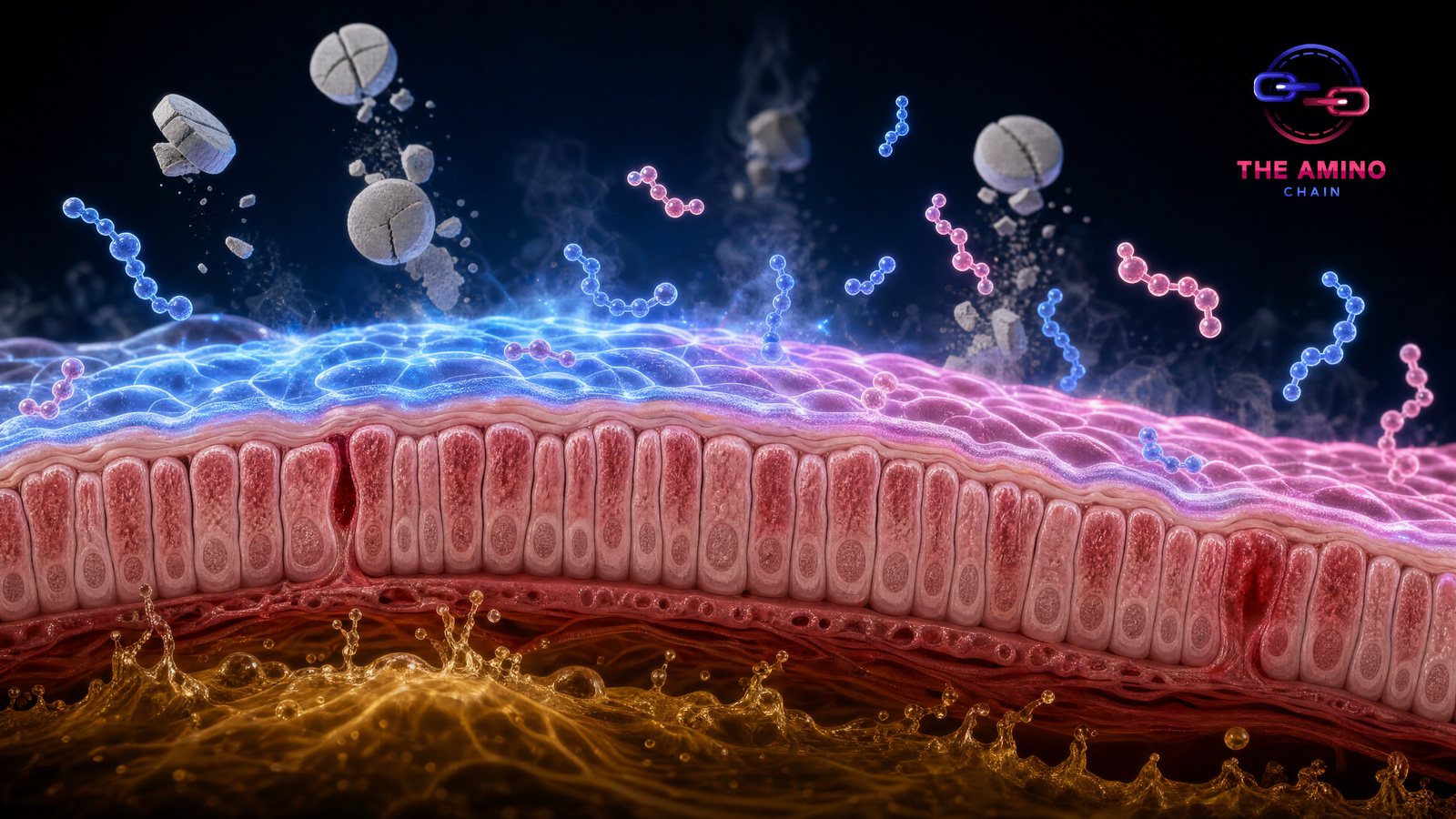
NSAIDs work by inhibiting cyclooxygenase (COX) enzymes, which produce prostaglandins involved in inflammation and pain. The problem is that prostaglandins also protect the GI mucosa by stimulating mucus and bicarbonate secretion, maintaining mucosal blood flow, and promoting epithelial cell renewal. When NSAIDs suppress prostaglandin production systemically, the GI protective mechanisms are compromised along with the inflammatory ones.
The resulting damage ranges from superficial erosions (affecting most chronic NSAID users) to deep ulcers with potential for hemorrhage or perforation. Even COX-2 selective NSAIDs, designed to spare GI prostaglandins, carry some GI risk.
BPC-157 Research on NSAID Gastroprotection
Published studies have specifically examined BPC-157's ability to protect against NSAID-induced GI damage. In aspirin, diclofenac, and indomethacin models, BPC-157 demonstrated significant cytoprotective effects. Treated animals showed reduced mucosal lesion severity, fewer deep ulcers, and accelerated healing of established NSAID-induced damage compared to controls.
The protective effects were observed with both systemic and intragastric administration, and were dose-dependent — higher doses providing greater protection. This dose-response relationship is important for establishing the effect's reliability and for guiding future research protocols.
Mechanism: Beyond Prostaglandin Replacement
BPC-157's gastroprotection doesn't simply replace the prostaglandins that NSAIDs deplete. Instead, published research suggests the peptide works through alternative protective pathways. NO modulation maintains mucosal blood flow independent of prostaglandin-mediated mechanisms. VEGF-driven angiogenesis supports mucosal healing and tissue repair. Direct cytoprotective effects help epithelial cells survive the chemical insult. And anti-inflammatory modulation reduces the secondary inflammatory damage that amplifies NSAID-induced injury.
This multi-pathway protection is mechanistically interesting because it suggests BPC-157 could complement rather than conflict with NSAID therapy — protecting the GI tract through different mechanisms than the ones NSAIDs disrupt.
Combined NSAID-Alcohol Research
The combination of NSAID use and alcohol consumption dramatically increases GI risk — each agent damages the mucosa through different mechanisms, and together they produce synergistic damage. Published BPC-157 research has examined this combined insult model, with the peptide showing protective effects against the compounded GI damage. This is clinically relevant because many NSAID users also consume alcohol.
Small Intestinal Protection
While gastric damage receives the most attention, NSAIDs also cause significant small intestinal injury — a problem called NSAID enteropathy. This damage is harder to detect clinically but can cause chronic iron-deficiency anemia and protein loss. Published BPC-157 research has demonstrated protective effects in small intestinal injury models, suggesting the peptide's GI protection extends beyond the stomach.
Clinical Relevance
The NSAID gastroprotection research is among BPC-157's most clinically relevant data because the problem it addresses is so widespread and well-characterized. Current gastroprotective strategies (proton pump inhibitors, misoprostol) have limitations: PPIs don't protect the small intestine, and misoprostol causes diarrhea in many patients. A gastroprotective compound working through alternative pathways would address a genuine unmet need in clinical medicine — though translating preclinical BPC-157 data to human use requires clinical trials that have not yet been conducted.