BPC-157 and Patellar Tendonitis: Research on Jumper's Knee, Tendon Degeneration, and Repair
Patellar tendonitis affects 20% of jumping athletes and can persist for years. Published BPC-157 tendon research — including the most extensive dataset of any peptide for tendon healing — is directly relevant to this stubborn condition.
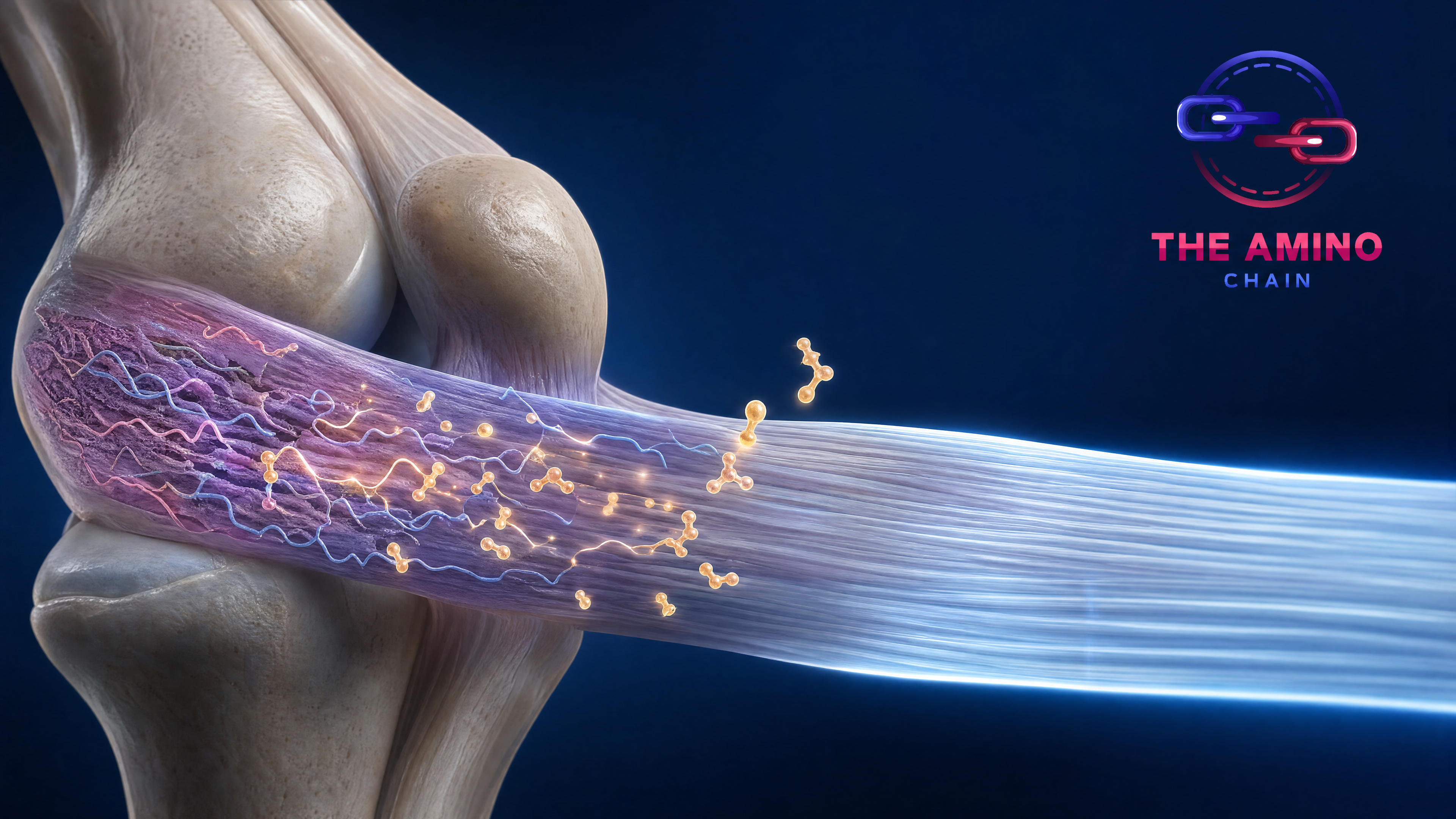
Patellar tendonitis — commonly called jumper's knee — is a chronic overuse injury of the patellar tendon that connects the kneecap to the shinbone. It affects approximately 20% of jumping athletes (basketball, volleyball) and is notoriously resistant to treatment, with some cases persisting for years despite conventional therapy. The condition involves not just inflammation but progressive tendon degeneration — a distinction that matters for understanding how BPC-157 research applies.
Tendonitis vs Tendinopathy: A Critical Distinction
Despite the "-itis" suffix suggesting inflammation, chronic patellar tendon problems are more accurately described as tendinopathy — a degenerative condition characterized by disorganized collagen, increased ground substance, neovascularization with accompanying nerve ingrowth, and absence of inflammatory cells. The initial injury involves inflammation (true tendonitis), but if left unresolved, the tissue progresses to a degenerative state (tendinosis) where the primary problem is failed healing rather than ongoing inflammation.
This distinction matters because treatments that only address inflammation (NSAIDs, corticosteroid injections) may provide temporary symptom relief without addressing the underlying degenerative process. BPC-157's published research addresses both inflammatory and degenerative components.
BPC-157's Tendon Healing Evidence
BPC-157 has the most extensive published tendon healing dataset of any research peptide. Studies have demonstrated accelerated healing in transected Achilles tendons, crushed patellar tendons, and various other tendon injury models. The results consistently show not only faster healing but improved mechanical properties — greater tensile strength, higher load-to-failure, and better collagen organization compared to controls.
Published biomechanical testing showed BPC-157-treated tendons achieved approximately 75-85% of normal tendon strength at timepoints where control tendons achieved only 40-50%. This improvement in mechanical quality — not just healing speed — is particularly relevant for patellar tendinopathy, where the degenerative tissue is mechanically inferior to healthy tendon.
Angiogenesis in the Patellar Tendon
The patellar tendon's mid-substance — where tendinopathy typically occurs — has limited blood supply. Published BPC-157 research showed VEGF-mediated promotion of new blood vessel growth in tendon tissue. Improved vascularity addresses a fundamental bottleneck in patellar tendon healing: the delivery of oxygen, nutrients, growth factors, and repair cells to the degenerative zone.
However, the neovascularization picture in tendinopathy is complex. Established tendinopathy actually shows INCREASED (but abnormal) blood vessel growth accompanied by sensory nerve ingrowth — this pathological neovascularization contributes to pain. The question of whether BPC-157's angiogenic effects promote healthy functional vasculature or exacerbate pathological neovascularization has not been directly addressed in published research.
Collagen Synthesis and Organization
BPC-157's effects on collagen biology are directly relevant to patellar tendinopathy. Published research showed stimulation of type I collagen synthesis (the primary structural collagen in tendons), promotion of collagen fiber alignment (critical for tensile strength), and enhancement of lysyl oxidase-mediated crosslinking (through NO system modulation). These effects address the disorganized, mechanically inferior collagen that characterizes degenerative tendon tissue.
Loading and Rehabilitation
Published tendon research has established that mechanical loading is essential for tendon healing and adaptation — progressive eccentric loading protocols are the gold standard rehabilitation approach for patellar tendinopathy. BPC-157's biological effects may optimize the tendon's response to mechanical loading by improving the healing environment, growth factor signaling, and collagen synthesis capacity. The combination of BPC-157 with progressive loading protocols addresses both the biological and mechanical requirements for tendon recovery.