BPC-157 and Skin Healing: Research on Burns, Wounds, and Dermal Repair
From minor cuts to severe burns, skin healing relies on the same biological pathways BPC-157 has been shown to influence. This article examines the published research on dermal wound healing and burn recovery.
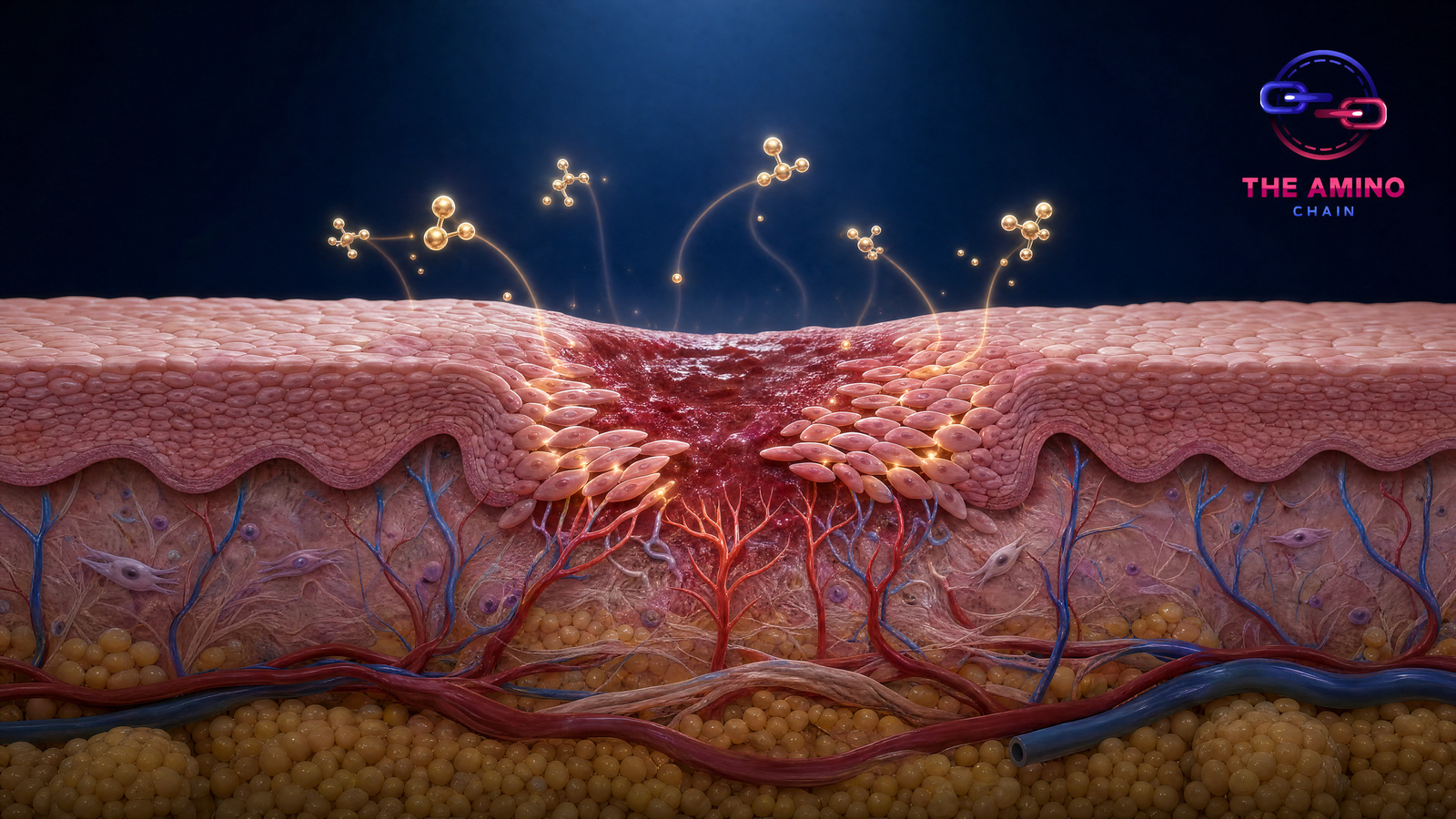
The skin is the body's largest organ and its first line of defense. When it's breached — by cuts, burns, surgical incisions, or chronic wounds — the body launches a complex repair process involving dozens of cell types, growth factors, and signaling molecules. Published BPC-157 research on dermal wound healing demonstrates that this peptide influences multiple stages of skin repair simultaneously.
The Wound Healing Cascade
Skin wound healing follows four overlapping phases: hemostasis (seconds to minutes), inflammation (hours to days), proliferation (days to weeks), and remodeling (weeks to months). Each phase must complete successfully for optimal healing. Disruptions at any stage — excessive inflammation, inadequate blood supply, infection, poor nutrition — can result in chronic wounds that fail to close.
BPC-157 and Wound Closure
Published animal studies have demonstrated accelerated wound closure in BPC-157-treated subjects compared to controls. The peptide showed effects across multiple wound types including incisional wounds (surgical cuts), excisional wounds (tissue removal), and thermal injuries (burns). The consistency of the wound-closure acceleration across different injury types suggests a broad mechanism rather than an injury-specific effect.
Histological analysis of BPC-157-treated wounds revealed increased granulation tissue formation, enhanced re-epithelialization, and improved collagen deposition compared to controls. These findings indicate that BPC-157 doesn't just speed up wound closure — it appears to improve the quality of the healing process.
Angiogenesis: The Critical Factor
Blood supply is the single most important factor in wound healing. Without adequate perfusion, oxygen delivery is insufficient, nutrients can't reach repairing cells, immune cells can't access the wound to prevent infection, and metabolic waste accumulates. BPC-157's well-documented promotion of VEGF-mediated angiogenesis is directly relevant to wound healing — new blood vessel formation in the wound bed is essential for progression from the inflammatory to the proliferative phase.
Published studies showed significantly increased capillary density in BPC-157-treated wounds, with earlier and more robust neovascularization compared to controls. This enhanced blood supply supports every subsequent aspect of the healing process.
Burn Research
Burns present unique healing challenges compared to other wounds. Thermal injury causes a central zone of coagulative necrosis surrounded by a zone of stasis (ischemic tissue at risk of dying) and a zone of hyperemia (inflamed but viable tissue). The primary goal in burn treatment is to save the zone of stasis — preventing viable tissue from dying due to secondary ischemia and inflammation.
Published BPC-157 research in burn models demonstrated protective effects on the zone of stasis, with reduced tissue necrosis and improved survival of at-risk tissue. The mechanisms likely involve both angiogenic effects (maintaining blood supply to ischemic tissue) and cytoprotective effects (protecting cells from inflammatory damage).
Collagen and Scar Quality
The final quality of a healed wound depends on collagen deposition and remodeling during the proliferative and remodeling phases. Normal skin contains primarily type I collagen in an organized basket-weave pattern. Scar tissue contains a higher proportion of type III collagen in a parallel pattern, which is mechanically weaker and less elastic.
BPC-157's promotion of organized collagen deposition — demonstrated in tendon healing studies — may also apply to dermal healing. If the peptide promotes a more normal collagen organization pattern during skin repair, the resulting scar would be stronger, more elastic, and potentially less visible.
Diabetic Wound Healing
Diabetic wounds are notoriously difficult to heal due to peripheral neuropathy (reduced sensation leading to unrecognized injuries), microangiopathy (impaired blood supply), hyperglycemia-induced immune dysfunction, and reduced growth factor signaling. Published BPC-157 research in diabetic wound models showed improvements in healing parameters, suggesting that the peptide's angiogenic and growth factor effects may partially compensate for the biological deficits that impair diabetic wound healing.
Practical Context
Wound healing research with BPC-157 is preclinical. Conventional wound care — debridement, infection prevention, moisture management, pressure offloading, and nutritional optimization — remains the evidence-based foundation of wound management. BPC-157 research provides insights into wound biology mechanisms but does not yet have clinical evidence for human wound treatment.