BPC-157 and TB-500 for Knee Pain: Exploring the Science Behind These Research Compounds
A deep dive into the theoretical mechanisms of BPC-157 and TB-500 in relation to knee injuries — covering tendon repair pathways, inflammatory signaling, angiogenesis, and what current research actually shows.
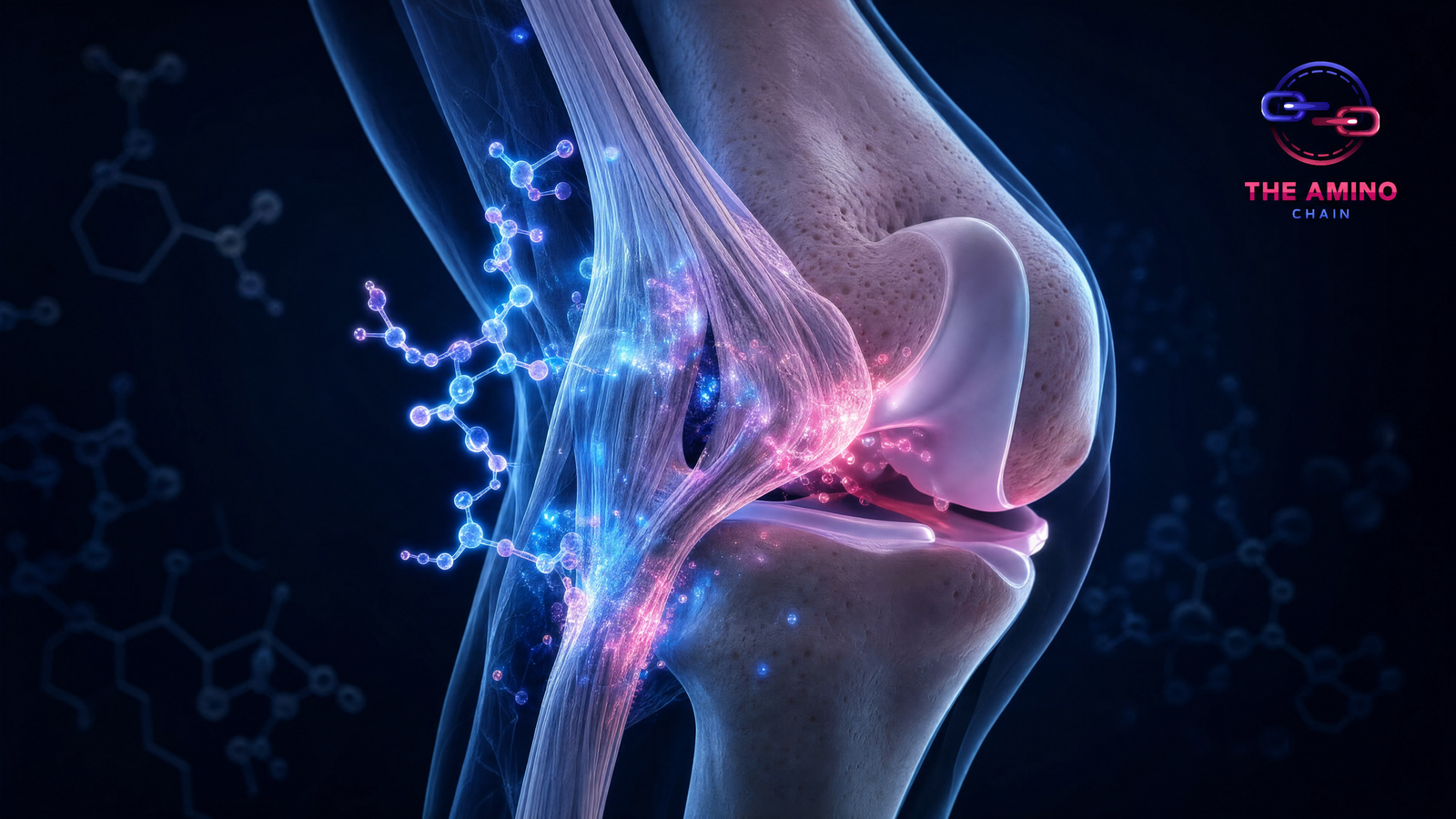
Knee pain is one of the most common musculoskeletal complaints, affecting athletes, active individuals, and people experiencing age-related joint changes. In recent years, research compounds such as BPC-157 and TB-500 have gained significant attention due to their proposed roles in tissue repair pathways. This article explores what science actually tells us about these compounds and their potential relevance to joint recovery.
Understanding Knee Pain and Tissue Repair
The knee is a remarkably complex joint, composed of cartilage, tendons, ligaments, muscles, synovial tissue, and bone structures all working in concert. When injury or irritation occurs, the body initiates a multi-phase repair process that involves inflammation signaling, immune system activation, formation of new blood vessels, collagen production, and tissue remodeling.
Researchers have long been interested in whether certain compounds can influence parts of these repair pathways — not to replace the body's natural healing, but to potentially support or optimize it.
What Is BPC-157?
BPC-157 is a synthetic pentadecapeptide — a chain of 15 amino acids — derived from a protective protein naturally found in human gastric juice. The name itself stands for "Body Protection Compound," reflecting its origins in gastrointestinal biology.
Published research investigating BPC-157 has focused on several theoretical mechanisms that may be relevant to musculoskeletal recovery. These include supporting blood vessel formation (angiogenesis), influencing growth factor pathways such as VEGF and EGF, modulating inflammation signals through the nitric oxide system, and supporting connective tissue repair processes through fibroblast activation.
BPC-157 and Tendon/Ligament Repair Pathways
Tendons and ligaments present a unique challenge for recovery because they have relatively limited blood supply compared to many other tissues. This reduced vascularity contributes to the slower healing times that anyone who has experienced a knee ligament injury knows all too well.
Preclinical research has examined whether BPC-157 may influence the biological processes involved in connective tissue healing. Published studies in animal models have reported effects on fibroblast activity — the cells responsible for producing collagen and structural proteins — as well as collagen organization and tissue remodeling signals.
The theoretical implication is that improving certain repair pathways could potentially support the structural recovery of damaged soft tissues. However, it is important to emphasize that these findings come from animal models and cell culture studies, not human clinical trials.
BPC-157 and Inflammatory Signaling
Inflammation is a necessary and important part of healing. Without the initial inflammatory response, the body cannot clear damaged tissue or recruit repair cells to the injury site. However, excessive or prolonged inflammation can contribute to pain, swelling, and delayed recovery — a problem frequently seen in chronic knee conditions.
Laboratory studies have investigated whether BPC-157 may affect inflammatory pathways involved in tissue stress. The published data suggests a nuanced interaction with the nitric oxide system, where BPC-157 appears to modulate rather than simply suppress inflammatory signaling. The theoretical goal is not to eliminate inflammation completely, but rather to influence the balance between inflammatory activity and repair.
BPC-157 and Blood Vessel Formation
Healthy tissue repair requires adequate blood supply to deliver oxygen, nutrients, and repair-related cells to the injury site. This is particularly relevant for knee injuries, where damaged tendons and ligaments already suffer from limited vascularity.
Some animal studies have explored whether BPC-157 may influence angiogenesis — the process of forming new blood vessels from existing vascular structures. Published research has reported increased VEGF (vascular endothelial growth factor) expression in BPC-157-treated tissue, suggesting a possible mechanism for enhanced blood supply to healing areas.
What Is TB-500?
TB-500 is a synthetic peptide fragment corresponding to the active region of thymosin beta-4, a naturally occurring 43-amino acid protein found in virtually all nucleated cells in the body. Thymosin beta-4 is one of the most abundant intracellular peptides in mammalian cells, present at concentrations of 0.1-0.5 mM in most cell types.
Its primary biochemical function involves regulating actin polymerization — the process by which cells build and reorganize their internal structural framework. This might sound abstract, but actin dynamics are fundamental to cell migration, wound healing, and tissue repair.
TB-500 and Cellular Migration
One of the most studied aspects of thymosin beta-4 biology is its role in cell migration. During tissue healing, cells must physically move toward injured areas to participate in removing damaged tissue, producing structural proteins, and supporting regeneration.
TB-500 facilitates this migration by maintaining a pool of available G-actin (monomeric actin) that cells can rapidly polymerize into F-actin (filamentous actin) to extend their leading edge and propel themselves forward. Think of it as keeping the building materials ready so repair crews can move quickly when needed.
TB-500 and Soft Tissue Remodeling
After the initial inflammatory phase of healing subsides, tissues enter the remodeling phase — a critical period where the temporary repair matrix is gradually replaced with organized, functional tissue. This involves breaking down damaged structures, creating new extracellular matrix components, and organizing collagen fibers along lines of mechanical stress.
Published research suggests that thymosin beta-4 pathways may influence several aspects of this remodeling process. The peptide has been shown to modulate matrix metalloproteinase activity, affect collagen deposition patterns, and influence the balance between type I and type III collagen — all factors that determine the quality of the final repaired tissue.
TB-500 and Angiogenesis
Similar to BPC-157, thymosin beta-4 research has examined connections with blood vessel development. Published studies in cardiac and dermal models have demonstrated that TB-500 treatment was associated with increased capillary density and improved blood flow to healing tissues.
For knee recovery research, the implication is that improved vascular support may enhance the tissue environment by increasing nutrient and oxygen delivery to areas with inherently limited blood supply.
BPC-157 vs TB-500: Different Pathways, Complementary Mechanisms
While both compounds are studied in the context of tissue recovery, their proposed mechanisms are distinct. BPC-157 research emphasizes localized tissue protection through NO pathway modulation, growth factor receptor upregulation, and direct cytoprotective effects. TB-500 research emphasizes systemic effects through actin regulation, cellular migration promotion, and inflammatory cytokine modulation.
This mechanistic distinction is why some researchers investigate both compounds simultaneously — the theory being that BPC-157 addresses what happens at the site of tissue damage while TB-500 addresses how the body mobilizes repair resources to that site.
What Does Current Research Actually Show?
It is essential to maintain scientific rigor when discussing these compounds. The vast majority of available research comes from laboratory studies, animal models, and cellular experiments. These studies provide valuable insights into biological mechanisms, but results from animals or cells do not automatically translate into proven benefits in humans.
Important unanswered questions remain: How effective are these compounds in human subjects? What concentrations would be appropriate for various experimental systems? What are the long-term safety considerations? How do they compare with existing interventions in controlled studies? Which injury types, if any, would benefit most from further investigation?
Conventional Approaches to Knee Recovery
Regardless of emerging peptide research, evidence-supported approaches for knee problems include physical therapy to strengthen surrounding muscles and restore movement patterns, progressive loading to help tissues adapt and become stronger, identification and correction of underlying biomechanical issues, and medical evaluation for persistent pain, swelling, or instability.
These conventional approaches have decades of clinical evidence supporting their effectiveness and should form the foundation of any recovery program.
The Future of Peptide Research in Joint Health
BPC-157 and TB-500 remain areas of active scientific interest precisely because they interact with biological pathways fundamental to healing and regeneration. The theoretical framework is compelling, and preclinical data continues to accumulate across multiple research groups and experimental systems.
Future clinical research may help determine whether these compounds have meaningful applications in human recovery contexts. For now, they should be viewed as research tools for investigating tissue repair mechanisms — experimental compounds with promising preclinical data that awaits validation in human studies.
Understanding the science behind these compounds helps researchers and interested individuals distinguish between promising biological insights and proven medical treatments — a distinction that matters for making informed decisions about research directions and personal health.