BPC-157 + TB-500 Synergy: Why Researchers Combine Them and What Published Data Shows
The BPC-157 and TB-500 combination is the most widely discussed peptide stack. This article examines the specific mechanistic synergy, what published research supports the combination, and how the two peptides complement each other.
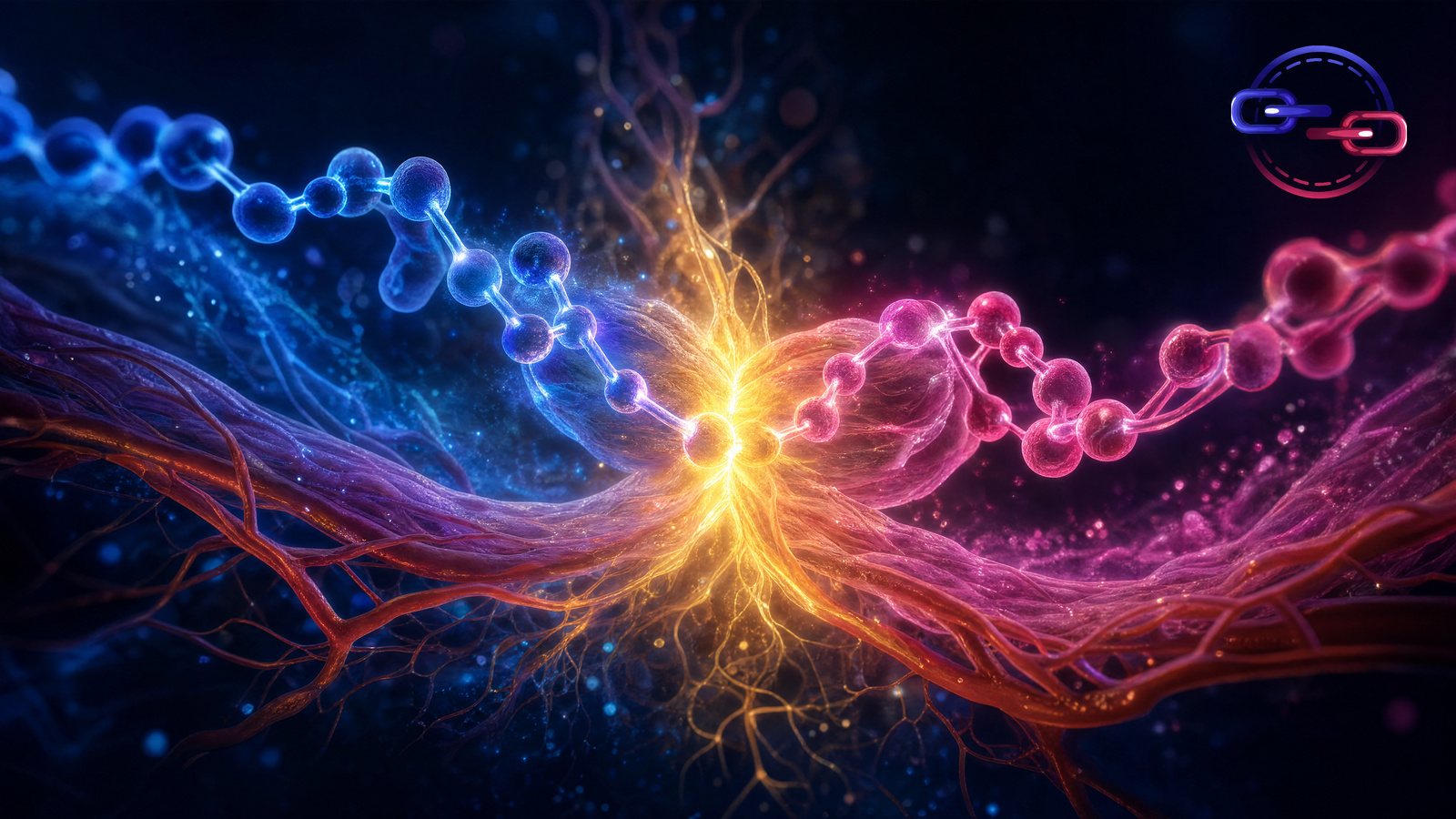
If you spend any time in peptide research communities, you'll encounter the BPC-157 + TB-500 combination — often called the "Wolverine Stack" for its association with tissue repair research. But the popularity of this combination raises important questions: is there actual scientific rationale for combining these two specific peptides, or is it simply marketing? Published research on each compound's distinct mechanism of action reveals a genuine mechanistic complementarity that justifies the combination from a biological perspective.
Different Targets, Same Goal
The fundamental rationale for combining BPC-157 and TB-500 is that they address tissue repair through different but complementary molecular pathways. BPC-157 primarily influences the tissue environment — angiogenesis, growth factor signaling, NO modulation, and cytoprotection. TB-500 primarily influences cellular mechanics — actin dynamics, cell migration, and inflammatory modulation. Together, they address both WHERE healing happens (the tissue environment) and HOW repair cells function (cellular mechanics).
BPC-157's Environmental Effects
BPC-157 creates favorable conditions for healing by promoting new blood vessel formation (VEGF-mediated angiogenesis), ensuring adequate oxygen and nutrient delivery to injured tissue. It upregulates growth factor receptors (EGF, VEGF receptors), amplifying the tissue's responsiveness to repair signals. It modulates nitric oxide signaling bidirectionally, supporting vascular function and cellular signaling. And it provides direct cytoprotection, helping existing cells survive the injury environment.
In essence, BPC-157 improves the biological infrastructure required for healing — blood supply, signaling capacity, and cellular survival.
TB-500's Cellular Effects
TB-500 addresses the cellular mechanics of repair. Its actin-sequestering function maintains pools of monomeric G-actin available for rapid cytoskeletal reorganization, enabling repair cells (fibroblasts, satellite cells, endothelial cells) to migrate efficiently toward injury sites. Its anti-inflammatory modulation (TNF-alpha, IL-1beta, IL-6) optimizes the inflammatory phase — reducing excessive inflammation without eliminating the constructive inflammatory signals needed to initiate repair.
TB-500 ensures that the cells responsible for repair can actually reach the damage and function effectively once there.
The Synergy Model
True pharmacological synergy occurs when two compounds produce a combined effect greater than the sum of their individual effects. While no published study has directly tested BPC-157 + TB-500 in combination versus each compound alone in a controlled comparison, the mechanistic rationale for synergy is strong.
Consider a tendon injury: BPC-157 promotes new blood vessel growth to the injury site and upregulates growth factor receptors on fibroblasts. TB-500 promotes fibroblast migration to the same site and provides the cytoskeletal machinery for effective cell movement. BPC-157 without TB-500 creates a well-vascularized healing environment but repair cells may not reach it efficiently. TB-500 without BPC-157 promotes cell migration but toward an environment with potentially inadequate blood supply and growth factor signaling. Together, the combination addresses both bottlenecks simultaneously.
Different Healing Phases
Tissue repair proceeds through inflammation, proliferation, and remodeling phases. BPC-157 and TB-500 influence different but overlapping phases. TB-500's anti-inflammatory modulation is most relevant during the inflammatory phase (days 0-5). BPC-157's angiogenesis and growth factor effects are most relevant during the proliferative phase (days 5-21). Both compounds influence the remodeling phase through effects on collagen organization and matrix quality.
The combination provides coverage across the entire healing timeline, rather than concentrating effects on a single phase.
Practical Research Considerations
Published BPC-157 and TB-500 research used the compounds individually. Extrapolating to combination use requires assumptions about additive versus synergistic interactions, potential receptor competition, and pharmacokinetic interactions. No published data suggests antagonistic interactions between the two compounds, and their distinct receptor targets and mechanisms make negative interactions unlikely from a pharmacological perspective.
The combination is typically administered at the same dose as each compound individually — the rationale being that the synergy comes from complementary pathway engagement rather than from increased total peptide load.
What the Stack Doesn't Replace
Regardless of peptide research, tissue healing depends on fundamental biological inputs: adequate protein intake for matrix synthesis, sufficient sleep for growth hormone release and tissue repair, appropriate mechanical loading to guide tissue organization, and medical evaluation for serious injuries. The peptide stack addresses molecular and cellular healing mechanisms — it does not replace these foundational requirements.