Dihexa: The Angiotensin IV Analog Generating Interest in Cognitive and Neurotrophic Research
Dihexa is reported to be 10 million times more potent than BDNF at promoting synaptic connectivity. This article examines the published research, the HGF/c-Met mechanism, and the important caveats surrounding this cognitive peptide.
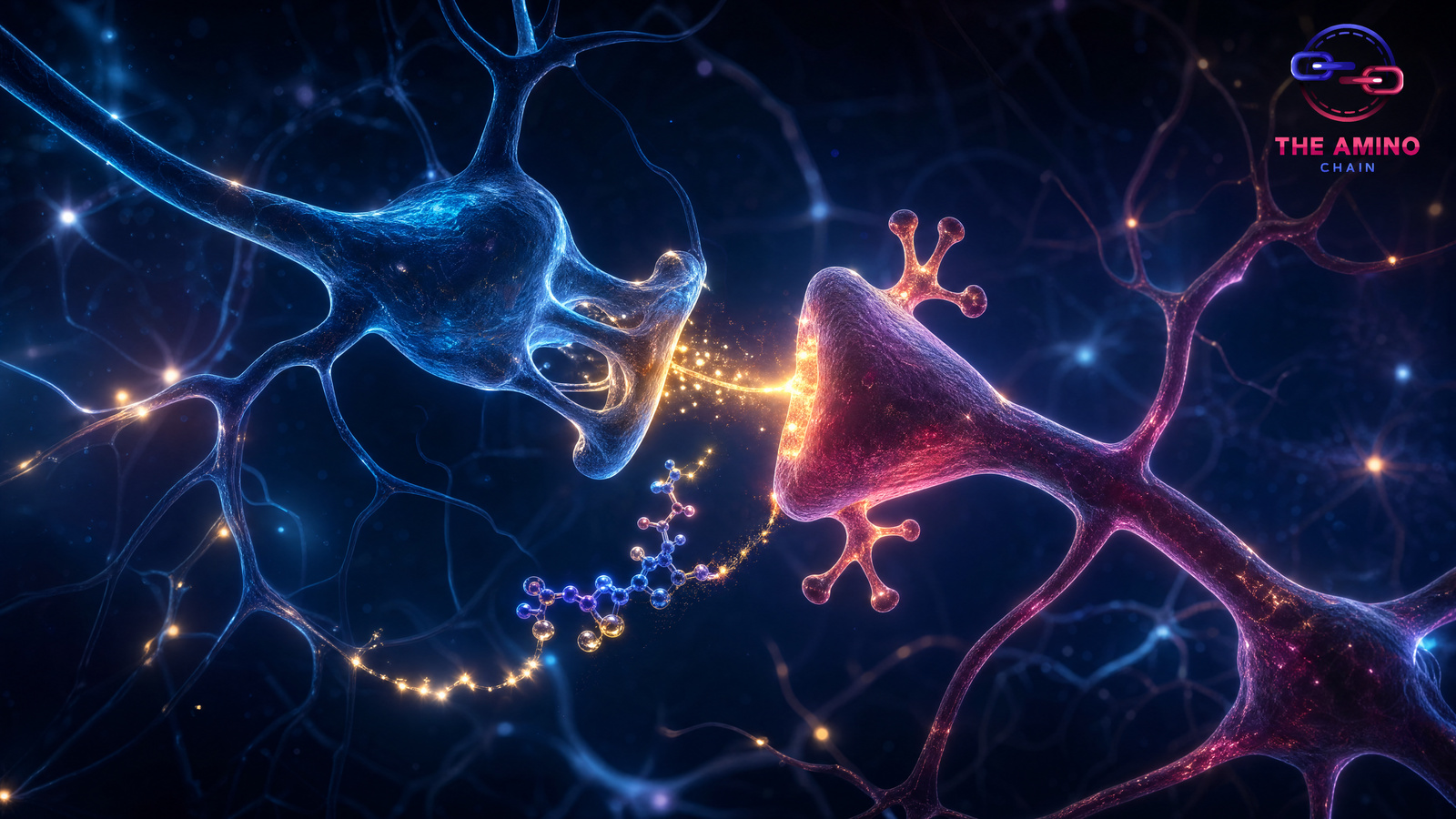
Dihexa (N-hexanoic-Tyr-Ile-(6) aminohexanoic amide) is a small peptide analog of angiotensin IV that has generated significant interest in the cognitive enhancement and neuroscience research communities. Published studies from the laboratory of Dr. Joseph Harding at Washington State University reported that Dihexa promotes synaptic connectivity through hepatocyte growth factor (HGF) signaling with extraordinary potency — described as 10 million times more potent than brain-derived neurotrophic factor (BDNF) in promoting synaptogenesis. These claims require careful evaluation.
The Angiotensin IV Connection
Dihexa was developed from research on angiotensin IV (Ang IV), a metabolite of angiotensin II that acts through the AT4 receptor (now identified as insulin-regulated aminopeptidase, IRAP). Published research had shown that Ang IV and its analogs enhanced cognitive performance in animal models — improving spatial learning, memory consolidation, and recall. Dihexa was designed as a metabolically stable, orally bioavailable analog that could cross the blood-brain barrier.
The HGF/c-Met Mechanism
Published research identified Dihexa's primary mechanism as augmentation of hepatocyte growth factor (HGF) signaling through its receptor c-Met. HGF is a neurotrophic factor involved in synapse formation, neuronal survival, and dendritic spine development. Published in vitro studies showed Dihexa promoted new synaptic connections between neurons at extremely low concentrations — the basis for the "10 million times more potent than BDNF" claim.
The mechanism appears to involve Dihexa binding to HGF and stabilizing its interaction with c-Met, enhancing the receptor's signaling cascade. Downstream effects include activation of pro-survival and pro-growth pathways including PI3K/Akt and MAPK/ERK — pathways well-established in neuronal plasticity and survival research.
Cognitive Enhancement Research
Published animal studies demonstrated cognitive improvements in several paradigms. In the Morris water maze (spatial memory test), Dihexa-treated animals showed faster learning and better retention than controls. In scopolamine-induced cognitive impairment models (which mimic aspects of cholinergic dysfunction in dementia), Dihexa reversed the cognitive deficits. The compound also showed effects in aged animal models with naturally declined cognitive function.
Notably, Dihexa was effective when administered orally — unusual for a peptide-based compound. Its small size and specific chemical modifications appear to confer oral bioavailability and blood-brain barrier penetration, though the extent of CNS exposure after oral dosing in humans has not been characterized.
Neurodegenerative Disease Research
The HGF/c-Met pathway is relevant to neurodegenerative diseases because HGF signaling supports neuronal survival, promotes synaptogenesis, and has documented neuroprotective effects against various toxic insults. Published research has examined Dihexa in models relevant to Alzheimer's disease and other neurodegenerative conditions, with results suggesting preservation of cognitive function and synaptic density.
Critical Evaluation
Despite the impressive preclinical data, several important caveats apply. The "10 million times more potent than BDNF" comparison refers to in vitro synaptogenesis at specific concentrations — this is a measure of potency in one specific assay, not a comprehensive comparison of overall neurotrophic activity. BDNF and Dihexa work through completely different mechanisms, making direct potency comparisons of limited biological meaning.
The published research originates primarily from one laboratory group. While the papers are published in peer-reviewed journals, independent replication of the key findings by other research groups is limited. No human clinical trials have been published. And the long-term safety implications of chronically enhancing HGF/c-Met signaling — a pathway also involved in cell proliferation and potentially in cancer biology — require careful investigation.
Dihexa represents genuinely interesting neuroscience, but the gap between provocative preclinical findings and established clinical utility remains substantial. Researchers should evaluate the published data critically and recognize the limitations of the current evidence base.