DSIP: The Delta Sleep Inducing Peptide and Its Surprising Research Beyond Sleep
DSIP was discovered for its sleep-promoting effects but published research reveals a much broader profile — stress resilience, pain modulation, hormone regulation, and even opioid withdrawal support.
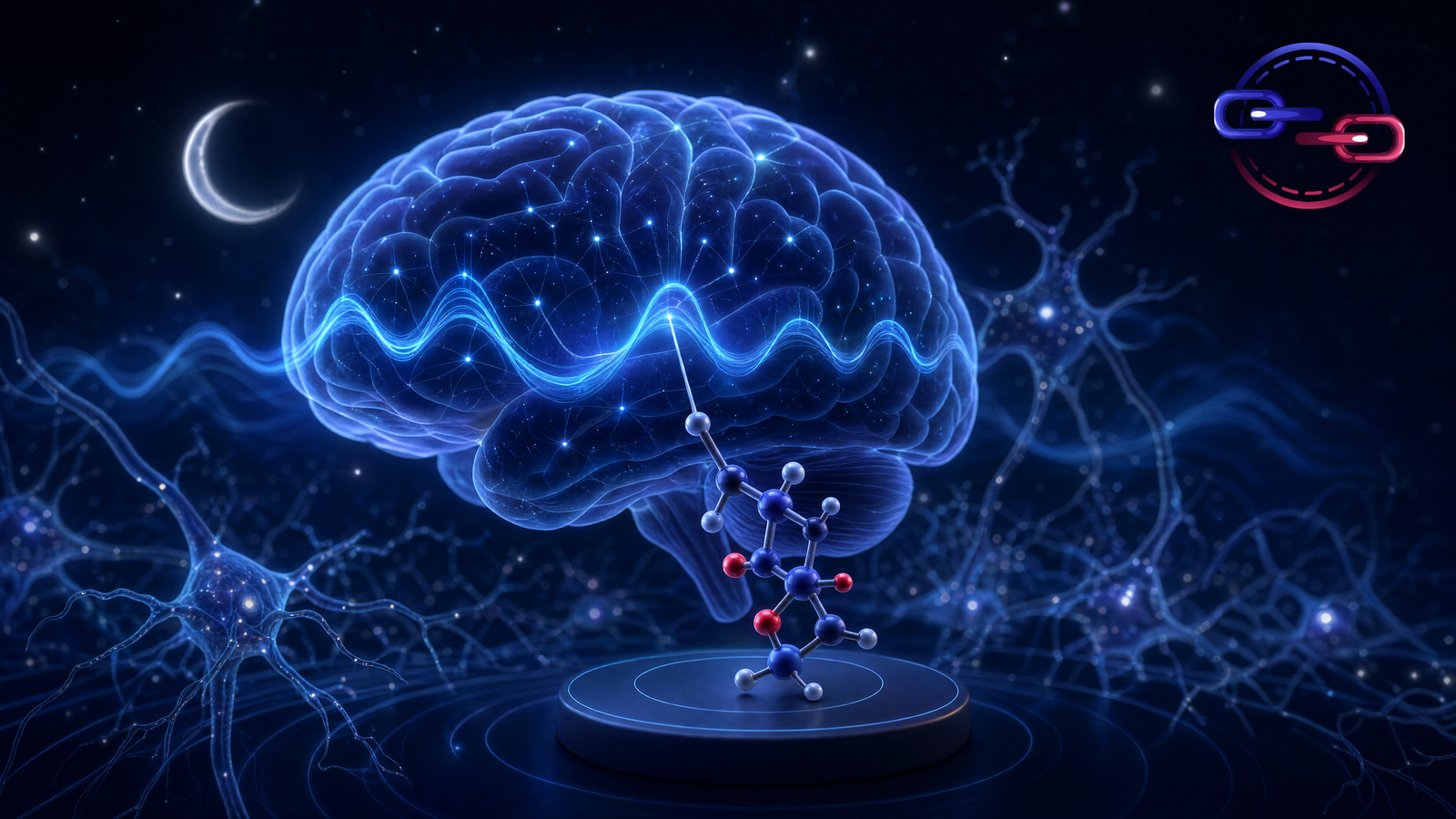
Delta Sleep Inducing Peptide (DSIP) was first isolated from cerebral venous blood of rabbits during induced sleep in 1977. This 9-amino acid peptide (Trp-Ala-Gly-Gly-Asp-Ala-Ser-Gly-Glu) was named for its ability to promote delta wave sleep — the deepest, most restorative stage of sleep. But published research over the following decades revealed that sleep promotion is just one facet of a surprisingly broad biological profile spanning stress response, pain modulation, hormone regulation, and addiction research.
Sleep Architecture Effects
Published research on DSIP's sleep effects focused on its promotion of slow-wave sleep (SWS) — characterized by high-amplitude delta waves (0.5-4 Hz) on EEG. Delta sleep is the most physiologically restorative sleep stage, during which growth hormone secretion peaks, tissue repair is most active, and memory consolidation occurs. DSIP increased the duration and depth of SWS without significantly affecting other sleep stages, suggesting selective modulation of sleep architecture rather than general sedation.
Importantly, DSIP appeared to normalize sleep patterns in individuals with disrupted sleep rather than forcing sleep in normal subjects. Published studies in insomnia models showed more pronounced effects than in subjects with normal sleep — suggesting a restorative rather than sedative mechanism.
Stress Resilience
Published research demonstrated that DSIP has significant stress-protective properties. In animal models of chronic stress, DSIP administration reduced stress hormone levels (ACTH and cortisol), prevented stress-induced organ damage, and improved behavioral measures of stress resilience. The mechanism appears to involve modulation of the hypothalamic-pituitary-adrenal (HPA) axis — the body's central stress response system.
The stress-sleep connection is biologically significant. Chronic stress disrupts sleep architecture, particularly reducing delta sleep. DSIP's dual capacity to promote delta sleep and reduce stress signaling suggests it addresses the stress-sleep cycle at both ends — potentially breaking the self-reinforcing loop of stress-disrupted sleep and sleep-worsened stress.
Pain Modulation
Published research revealed that DSIP has analgesic properties, reducing pain perception in several experimental models. The mechanism involves interaction with opioid receptor systems — but unlike exogenous opioids, DSIP does not appear to produce tolerance, dependence, or respiratory depression at research doses. Some published studies suggested DSIP modulates endogenous opioid peptide levels (enkephalins and endorphins) rather than directly activating opioid receptors.
Hormone Regulation
DSIP's effects on the endocrine system are complex and still being characterized. Published research documented effects on growth hormone secretion (enhanced during sleep), luteinizing hormone (LH) regulation, and cortisol modulation. The peptide appeared to support physiological hormone rhythms rather than simply increasing or decreasing specific hormones — consistent with a regulatory rather than stimulatory mechanism.
Addiction and Withdrawal Research
One of the more unexpected applications of DSIP research involves opioid and alcohol withdrawal. Published clinical studies — primarily from European research groups — reported that DSIP administration during withdrawal reduced symptom severity, improved sleep quality, and decreased craving. The mechanism may involve DSIP's modulation of endogenous opioid systems and its stress-protective properties, as withdrawal symptoms are driven partly by HPA axis hyperactivation.
Research Limitations
DSIP research has an unusual publication pattern — much of the foundational work comes from Soviet-era and European research groups, with relatively limited recent Western research. The peptide's pharmacokinetics are complex, with an unusually long biological half-life relative to its apparent metabolic half-life, suggesting binding to carrier proteins or tissue reservoirs. These pharmacokinetic complexities have made dose optimization challenging for clinical research.