GHK-Cu and Anti-Aging: Published Research on Wrinkles, Elasticity, and Skin Remodeling
GHK-Cu levels decline by 60% between ages 20 and 60. This article examines the published research on how this copper peptide influences collagen production, skin elasticity, and the biological mechanisms of skin aging.
GHK-Cu is naturally present in human blood plasma at approximately 200 ng/mL in young adults — but by age 60, levels have dropped by roughly 60%. This age-related decline correlates with the progressive loss of skin thickness, elasticity, and regenerative capacity that characterizes intrinsic skin aging. Published research on GHK-Cu's effects on skin biology spans collagen synthesis, elastin production, glycosaminoglycan remodeling, and gene expression patterns associated with youthful versus aged skin.
The Biology of Skin Aging
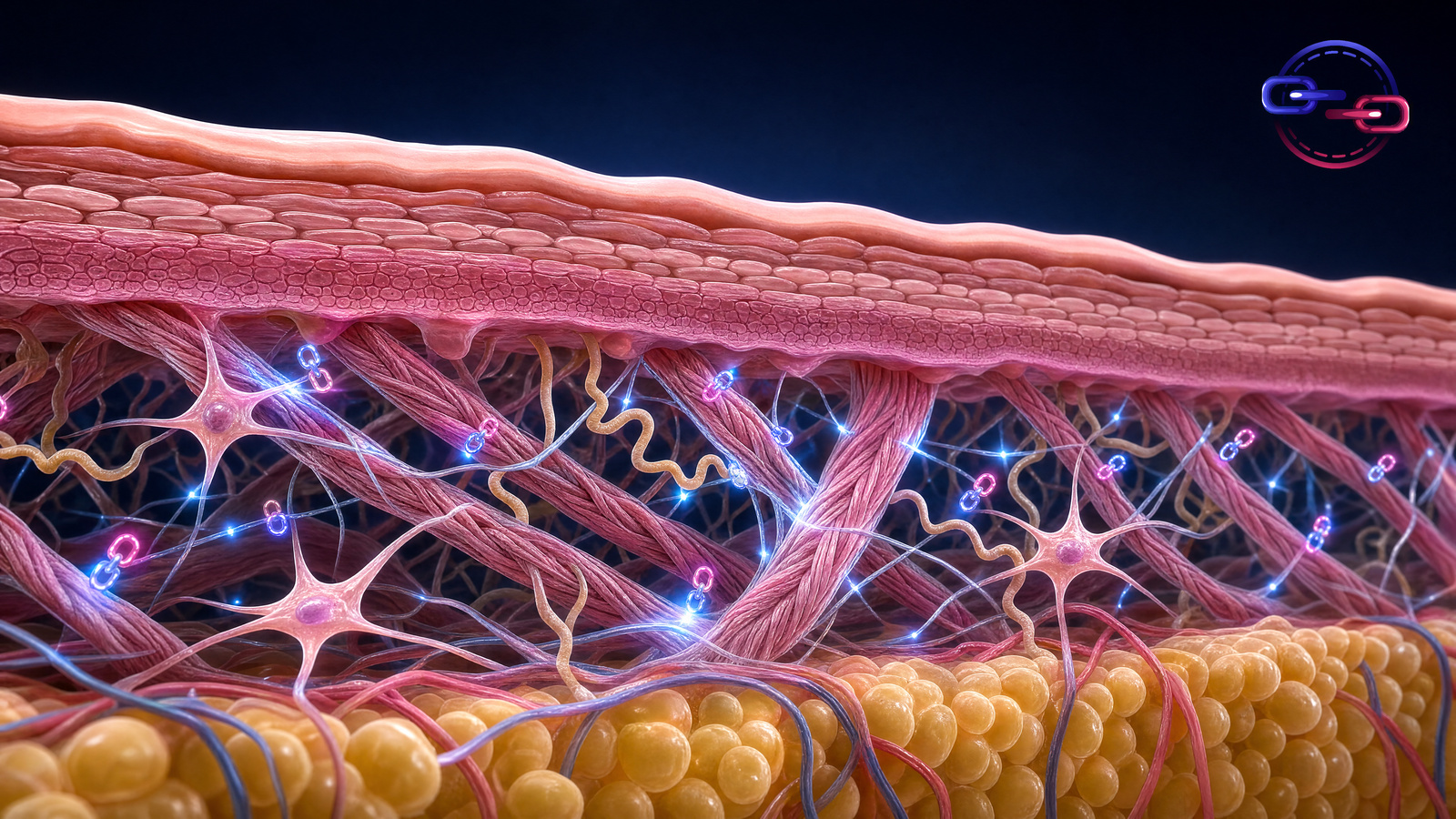
Skin aging involves both intrinsic factors (genetic programming, hormonal changes, cellular senescence) and extrinsic factors (UV exposure, pollution, smoking). At the molecular level, aged skin shows decreased collagen synthesis (approximately 1% decline per year after age 30), fragmented elastic fibers, reduced glycosaminoglycan content, accumulated oxidative damage, and altered gene expression favoring degradation over synthesis.
The dermis — the structural layer of the skin — is primarily composed of type I and type III collagen fibers embedded in a ground substance of hyaluronic acid and other glycosaminoglycans. In aged skin, collagen fibers become fragmented, crosslinked in dysfunctional patterns, and surrounded by degradative enzymes (matrix metalloproteinases, or MMPs) that further break down the remaining matrix.
GHK-Cu and Collagen
Published research consistently demonstrates GHK-Cu's ability to stimulate collagen synthesis in human fibroblast cultures. Both type I collagen (the predominant structural collagen) and type III collagen (important for skin elasticity and found in higher proportions in young skin) show increased production in GHK-Cu-treated cells.
Importantly, GHK-Cu doesn't just increase collagen quantity — it delivers copper for lysyl oxidase activity, which is essential for proper collagen crosslinking. Crosslinks between collagen fibers provide the tensile strength that gives skin its firmness. Age-related decline in crosslinking quality contributes to the loss of skin firmness and the formation of wrinkles.
Elastin and Skin Resilience
Elastin provides skin with its ability to stretch and rebound — the snap-back quality that diminishes noticeably with age. Unlike collagen, which is continuously produced throughout life (albeit at declining rates), elastin is produced primarily during development and early childhood. Adult skin has very limited capacity to produce new elastin, making protection of existing elastic fibers critical.
Published GHK-Cu research has demonstrated both stimulation of elastin synthesis (unusual for adult cells) and reduction in elastase activity (the enzyme that degrades elastic fibers). This dual effect — promoting new elastin production while protecting existing fibers — is mechanistically significant for anti-aging applications.
Gene Expression: 4,000+ Genes
Perhaps the most striking finding in GHK-Cu research is its broad gene modulatory profile. Published genomic analysis using the Connectivity Map (cMap) database identified over 4,000 human genes whose expression is significantly altered by GHK-Cu — representing approximately 6% of the human genome. The pattern of gene expression changes was consistently in the direction of a "younger" gene expression profile.
Specifically, GHK-Cu upregulated genes associated with collagen synthesis, antioxidant defense, DNA repair, and stem cell maintenance. It downregulated genes associated with inflammation, fibrosis, and tissue degradation. This broad reprogramming effect — shifting gene expression patterns from an aged toward a youthful profile — is unprecedented for a simple tripeptide-copper complex.
Clinical Skin Studies
Published clinical studies using topical GHK-Cu formulations have demonstrated measurable improvements in skin parameters. In controlled trials, subjects using GHK-Cu creams showed increased skin thickness, improved elasticity, reduced fine lines and wrinkles, and enhanced skin density compared to placebo controls. The effects were typically observed after 8-12 weeks of regular application.
While these studies have methodological limitations (variable formulations, relatively small sample sizes, potential confounding from cream vehicle ingredients), the consistency of results across different research groups supports the biological plausibility of GHK-Cu's anti-aging effects.
Beyond Topical Application
The research question of systemic GHK-Cu administration for anti-aging purposes is more speculative. The age-related decline in circulating GHK-Cu levels provides biological rationale for systemic supplementation, but the pharmacokinetics, optimal dosing, and tissue distribution of systemically administered GHK-Cu in the context of skin aging are not well characterized in published research.