GHK-Cu and Inflammation: Research on Immune Modulation, NF-kB, and Chronic Inflammatory Conditions
Chronic inflammation drives aging, tissue damage, and disease progression. Published GHK-Cu research on NF-kB suppression, cytokine modulation, and oxidative stress reduction reveals a broad anti-inflammatory profile.
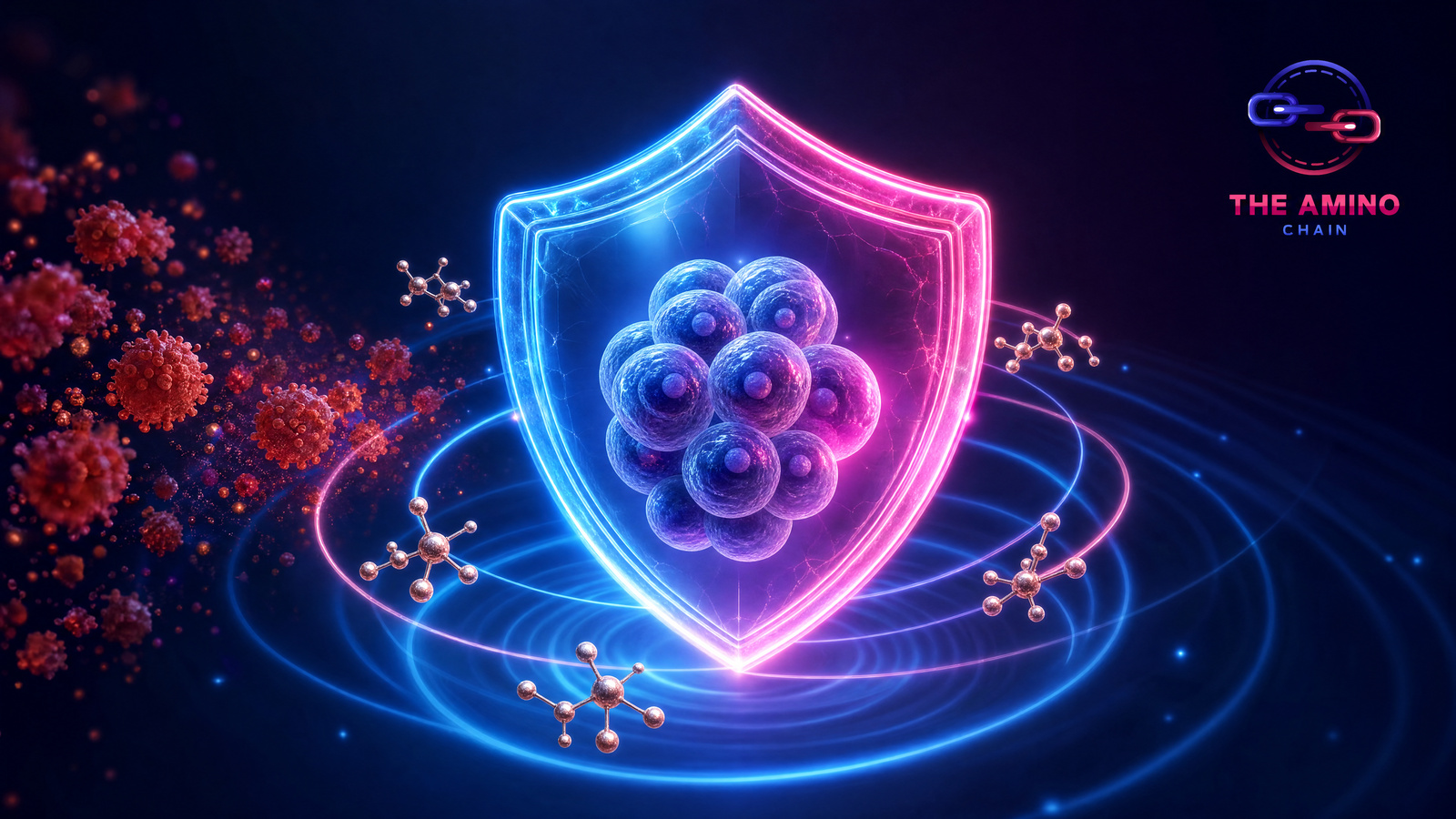
Chronic low-grade inflammation — sometimes called "inflammaging" — is increasingly recognized as a central driver of age-related tissue damage, degenerative disease, and impaired healing capacity. Unlike acute inflammation, which serves a protective function and resolves naturally, chronic inflammation persists indefinitely, gradually damaging tissues through sustained cytokine production, oxidative stress, and matrix degradation. Published GHK-Cu research reveals a broad anti-inflammatory profile that addresses multiple nodes in the inflammatory cascade.
NF-kB: The Master Inflammatory Switch
Nuclear Factor kappa B (NF-kB) is the central transcription factor controlling inflammatory gene expression. When activated, NF-kB translocates to the cell nucleus and switches on genes encoding pro-inflammatory cytokines (TNF-alpha, IL-1, IL-6), adhesion molecules, enzymes (COX-2, iNOS), and other inflammatory mediators. Chronic NF-kB activation is a hallmark of aged tissues and is associated with virtually every age-related disease.
Published genomic analysis of GHK-Cu's gene expression effects identified suppression of NF-kB signaling as one of the compound's most prominent actions. By reducing NF-kB-driven gene transcription, GHK-Cu may attenuate the chronic inflammatory state that contributes to tissue damage and impaired repair in aging individuals.
Cytokine Modulation
Published GHK-Cu research demonstrates modulation of key inflammatory cytokines. Interleukin-6 (IL-6), which drives chronic inflammation when chronically elevated, was downregulated by GHK-Cu in published gene expression studies. TNF-alpha — another central inflammatory mediator — showed similar suppression. Simultaneously, anti-inflammatory mediators including IL-10 and TGF-beta were supported, suggesting a shift from pro-inflammatory toward anti-inflammatory signaling rather than simple immunosuppression.
This distinction between immunomodulation and immunosuppression is biologically important. Immunosuppression reduces all immune function, increasing infection risk and impairing protective immunity. Immunomodulation selectively reduces harmful inflammatory signaling while preserving protective immune responses. Published GHK-Cu data consistently supports a modulatory profile.
Oxidative Stress and Antioxidant Defense
Oxidative stress — an imbalance between reactive oxygen species (ROS) production and antioxidant defense — is both a cause and consequence of chronic inflammation. ROS activate NF-kB, which drives inflammatory gene expression, which in turn generates more ROS — creating a self-amplifying cycle of tissue damage.
GHK-Cu addresses oxidative stress through multiple mechanisms. Copper delivery supports superoxide dismutase (SOD) activity — the primary enzymatic defense against superoxide radicals. Published gene expression data shows upregulation of additional antioxidant genes. And the anti-inflammatory effects reduce ROS production at the source by suppressing the inflammatory enzymes (NADPH oxidase, iNOS) that generate reactive species.
Fibrous Tissue and Chronic Inflammation
Chronic inflammation frequently leads to fibrosis — the replacement of functional tissue with excessive, disorganized scar tissue. This process occurs in the liver (cirrhosis), lungs (pulmonary fibrosis), kidneys (glomerulosclerosis), and skin (keloids). Published GHK-Cu research demonstrates anti-fibrotic effects in gene expression analysis, with downregulation of pro-fibrotic mediators including TGF-beta1 and connective tissue growth factor (CTGF).
The combination of anti-inflammatory and anti-fibrotic effects positions GHK-Cu as a research compound relevant to conditions where chronic inflammation drives progressive tissue fibrosis — a common pathological pattern across multiple organ systems.
Joint Inflammation
Chronic joint inflammation — as seen in both osteoarthritis and rheumatoid arthritis — involves sustained production of inflammatory cytokines, matrix metalloproteinases, and reactive oxygen species within the joint space. Published GHK-Cu research on GAG synthesis (including hyaluronic acid), anti-inflammatory cytokine modulation, and antioxidant support is theoretically relevant to joint biology, though specific articular studies are limited.
Research Perspective
GHK-Cu's anti-inflammatory profile is notable for its breadth — affecting multiple nodes in the inflammatory cascade rather than targeting a single mediator. Most anti-inflammatory drugs target one specific pathway (NSAIDs target COX, biologics target specific cytokines). GHK-Cu's multi-target approach, while less potent at any single node, may produce a more physiologically balanced anti-inflammatory effect. This broader modulation is consistent with GHK-Cu's endogenous role as a naturally occurring regulatory peptide.