GHK Without Copper: Research on the Base Tripeptide's Independent Biological Activity
GHK-Cu gets all the attention, but published research shows the GHK tripeptide has biological activity even without copper. Understanding the base peptide's independent effects clarifies which biological actions require copper and which don't.
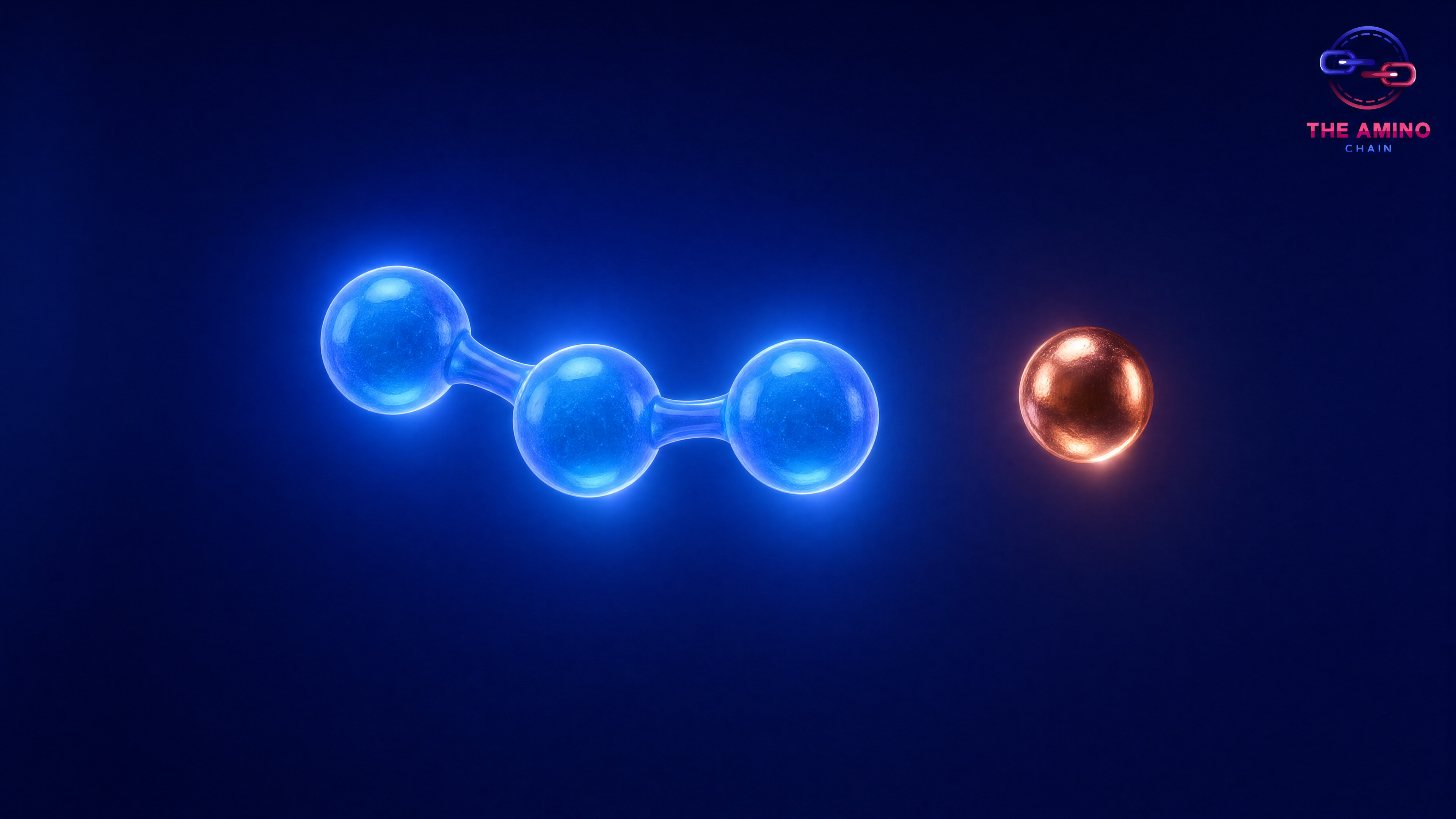
When researchers discuss GHK-Cu, the copper component receives most of the mechanistic attention — copper delivery for lysyl oxidase, superoxide dismutase, and tyrosinase. But GHK (Gly-His-Lys) is a bioactive peptide in its own right, and published research has documented biological effects of the copper-free form that are distinct from copper-dependent mechanisms. Understanding which effects require copper and which are intrinsic to the peptide sequence is important for both mechanistic understanding and practical research design.
The GHK Peptide: Structure and Origin
GHK is one of the simplest bioactive peptides known — just three amino acids with a molecular weight of 341 Da (without copper) or 403 Da (with copper). It was first identified in human plasma by Dr. Loren Pickart in 1973 as a factor in older plasma that lost the ability to stimulate liver cell growth — the factor turned out to be GHK, present at higher concentrations in young plasma than old.
GHK is naturally produced by multiple tissue types and circulates in blood at approximately 200 ng/mL in young adults, declining to approximately 80 ng/mL by age 60. The peptide is released during tissue injury through collagen degradation — type I collagen contains the GHK sequence, and proteolytic breakdown liberates the tripeptide as a matrikine signal.
Copper-Independent Effects
Published genomic studies demonstrated that GHK (without copper) modulates the expression of thousands of genes. The broad gene modulatory effect — affecting approximately 4,000 genes or 6% of the human genome — appears to be a property of the peptide sequence itself rather than solely a consequence of copper delivery. Published data showed GHK without copper still influenced gene expression patterns, though the magnitude of effect was reduced compared to the copper-complexed form for some genes.
The matrikine signaling function — serving as a collagen degradation signal to fibroblasts — is inherent to the peptide sequence and does not require copper. When collagen is degraded, free GHK peptide signals to fibroblasts that matrix repair is needed, triggering synthesis of new collagen, glycosaminoglycans, and other ECM components. This signaling function is analogous to the KTTKS matrikine signal exploited by Matrixyl.
Copper-Dependent Effects
Certain GHK-Cu effects are clearly copper-dependent: the delivery of copper to copper-requiring enzymes (lysyl oxidase for collagen crosslinking, superoxide dismutase for antioxidant defense, tyrosinase for melanin synthesis) requires the copper component by definition. Published research on GHK without copper showed reduced antioxidant effects and reduced collagen crosslinking activity compared to GHK-Cu, confirming the copper requirement for these specific mechanisms.
Copper Binding Dynamics
An important practical consideration: GHK has a high affinity for copper(II) ions. When GHK is administered without copper, it will scavenge copper from the surrounding biological environment — from albumin-bound copper in plasma, from loosely bound copper in tissue, and from copper in the extracellular matrix. This scavenging means that "copper-free" GHK may not remain copper-free for long in a biological context — it may simply acquire copper from endogenous sources.
This copper-scavenging property has implications for understanding GHK's biological effects. Some of the copper-independent effects documented in cell culture (where copper concentrations are controlled) may actually involve copper acquisition from culture media components in vivo, blurring the distinction between copper-dependent and copper-independent mechanisms.
Wound Healing: Peptide vs Complex
Published wound healing research has primarily used GHK-Cu rather than copper-free GHK. The few comparative studies available suggest GHK-Cu is more effective for wound healing than GHK alone, consistent with the importance of copper-dependent collagen crosslinking and antioxidant defense in the healing process. However, GHK alone still showed wound healing activity — supporting the contribution of copper-independent matrikine signaling and gene modulatory effects.
Research Implications
For researchers, the distinction matters for protocol design. When copper delivery is a primary goal (antioxidant defense, collagen crosslinking, melanin production), GHK-Cu is the appropriate form. When gene expression modulation or matrikine signaling is the primary interest, GHK without copper may be sufficient. And when studying GHK's biological effects mechanistically, controlling copper availability is essential for distinguishing copper-dependent from copper-independent mechanisms.