How Long Do Peptides Last? Shelf Life, Expiration, and When to Discard Your Research Compounds
Lyophilized peptides can last years. Reconstituted peptides degrade in weeks. This guide covers exact shelf life timelines for every storage condition, signs of degradation, and when you should discard a compound.
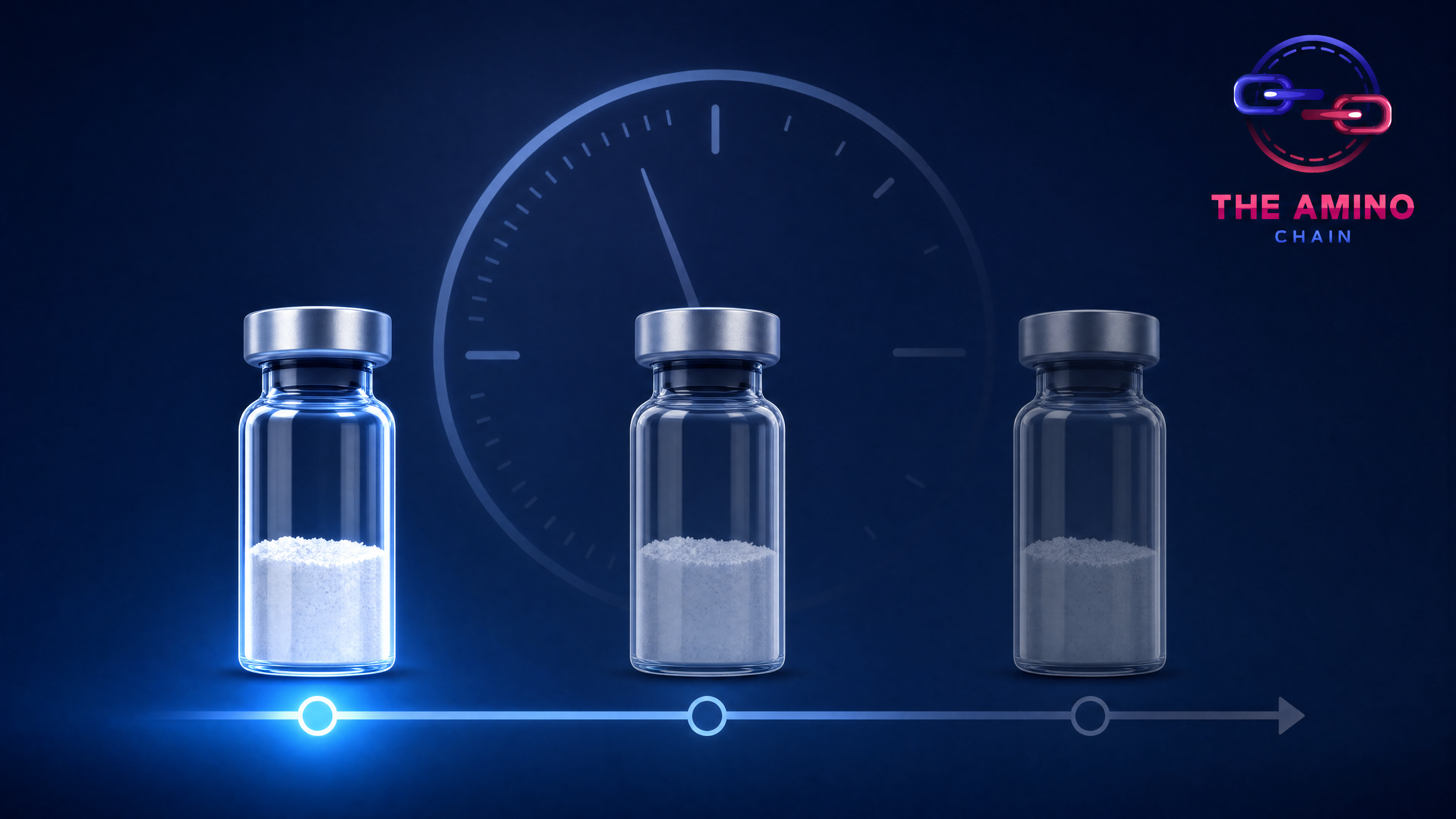
One of the most common questions in peptide research is deceptively simple: how long does this last? The answer depends on the form (lyophilized powder vs reconstituted solution), storage temperature, specific peptide sequence, and handling practices. This guide provides specific shelf life timelines backed by published stability data, along with practical signs that tell you when a compound has degraded beyond usability.
Lyophilized (Freeze-Dried) Peptides
Lyophilized peptides in sealed vials have the longest shelf life because degradation reactions (hydrolysis, deamidation, oxidation) require water to proceed. Without water, these reactions are dramatically slowed.
At -20C (freezer): 2-5 years for most peptides. This is the gold standard for long-term storage. Published stability studies show most peptides maintain greater than 95% purity for 2-3 years at -20C, with some stable peptides lasting 5+ years. BPC-157's proline-rich structure may confer above-average stability. Small, stable peptides like GHK-Cu may be stable even longer due to their simple structure.
At 2-8C (refrigerator): 6-12 months for most peptides. Acceptable for near-term storage when you plan to reconstitute within a few months. Some degradation occurs more quickly than at -20C but remains minimal for most peptides within this timeframe.
At 20-25C (room temperature): 1-3 months depending on the peptide. Not recommended for storage but relevant if a vial is accidentally left out. Degradation is measurably faster at room temperature — the Arrhenius relationship predicts approximately 2-4x faster degradation for every 10C increase.
At 37C+ (high temperature): Days to weeks. Shipping without cold packs during summer, leaving vials in a hot car, or storing near heat sources can cause rapid degradation. If a lyophilized vial was exposed to high temperatures for extended periods, it should be tested or discarded.
Reconstituted Peptides
Once bacteriostatic water is added, the shelf life drops dramatically because water enables hydrolysis, deamidation, and microbial growth.
At 2-8C (refrigerator): 3-4 weeks is the standard recommendation. The benzyl alcohol in bacteriostatic water prevents bacterial growth for approximately 28 days after first puncture (per CDC multi-dose vial guidelines). Some peptides may retain potency longer, but infection risk increases beyond 28 days. This is the maximum recommended use window for any reconstituted multi-use peptide vial.
At -20C (frozen aliquots): 3-6 months for single-use aliquots. If you reconstitute and immediately divide into individual dose syringes, these can be frozen for extended storage. Each aliquot is frozen and thawed only once, avoiding the repeated freeze-thaw cycles that degrade peptides. This strategy maximizes the usable life of expensive peptides.
At room temperature: Hours to days. Reconstituted peptides should never be stored at room temperature. Bacterial growth in the absence of adequate preservative can occur within hours at warm temperatures, and chemical degradation accelerates rapidly.
Signs Your Peptide Has Degraded
Visual inspection provides the first line of quality assessment. Cloudiness or turbidity in a previously clear reconstituted solution indicates protein aggregation or bacterial contamination — discard immediately. Visible particles or floaters that weren't present at reconstitution suggest degradation or contamination. Color changes (yellowing, browning) indicate oxidation or Maillard-type reactions. And the lyophilized cake changing from white/off-white to yellow or brown suggests oxidative degradation.
Performance indicators may also signal degradation. If a compound that previously produced consistent results shows diminished or absent effects at the same dose, degradation is a likely explanation — particularly if the vial is near the end of its expected shelf life or storage conditions were suboptimal.
Bacteriostatic Water Shelf Life
Bacteriostatic water itself has a shelf life that matters. Unopened BAC water stored at room temperature is stable for years (check manufacturer's expiration date). After first puncture, the CDC recommends discarding multi-dose vials after 28 days regardless of remaining volume, because each needle puncture introduces potential contaminants that the benzyl alcohol preservative must suppress.
Maximizing Shelf Life: Practical Tips
Store lyophilized peptides in the freezer (-20C) until ready to reconstitute. Reconstitute only what you'll use within 3-4 weeks. If the vial contains more doses than you'll use in a month, consider aliquoting into single-use syringes and freezing. Protect from light (store in original packaging or wrap in foil). Minimize vial punctures (each puncture is a contamination opportunity). Swab the stopper with alcohol before every puncture. And never store reconstituted peptides at room temperature, even briefly.
The Bottom Line
Lyophilized in the freezer: years. Lyophilized in the fridge: months. Reconstituted in the fridge: weeks. Reconstituted at room temperature: don't. When in doubt, discard — the cost of a new vial is always less than the cost of compromised research results from a degraded compound.