How to Make Bacteriostatic Water: A Complete Guide to Preparation, Sterilization, and Storage
Bacteriostatic water is essential for peptide reconstitution. This guide covers how it's made, the role of benzyl alcohol, proper sterilization techniques, and why commercial BAC water is almost always the safer choice.
Bacteriostatic water (BAC water) is sterile water containing 0.9% benzyl alcohol as a bacteriostatic preservative. It's the standard solvent for reconstituting lyophilized research peptides because the benzyl alcohol prevents bacterial growth in multi-use vials — unlike plain sterile water, which can support bacterial contamination after the first needle puncture. While commercial BAC water is readily available and inexpensive, understanding how it's made illuminates why proper preparation matters and helps researchers evaluate quality.
What Makes Water "Bacteriostatic"
The term "bacteriostatic" means "bacterial growth-inhibiting" — distinct from "bactericidal" (bacterial killing). Benzyl alcohol at 0.9% concentration prevents bacteria from reproducing but doesn't sterilize the solution. This means BAC water must start sterile — the benzyl alcohol maintains sterility after opening, but cannot rescue a solution that was contaminated during preparation.
The 0.9% benzyl alcohol concentration is specific and important. Below approximately 0.5%, the preservative effect is unreliable. Above 2%, benzyl alcohol can cause tissue irritation at injection sites. The 0.9% standard balances effective preservation with tissue compatibility.
Commercial BAC Water: The Recommended Choice
For most researchers, purchasing commercially prepared bacteriostatic water is strongly recommended over making it. Commercial BAC water is prepared in certified clean rooms under pharmaceutical manufacturing standards, sterilized by validated autoclaving or filtration processes, tested for sterility, endotoxin levels, and benzyl alcohol concentration, and sealed in pre-sterilized vials with validated closure integrity.
Replicating these quality controls in a home or non-pharmaceutical laboratory setting is difficult. The risk of contamination — either microbial or chemical — from DIY preparation is meaningful, and the consequences of injecting contaminated solution include abscess formation, systemic infection, and endotoxin reactions.
How BAC Water Is Manufactured
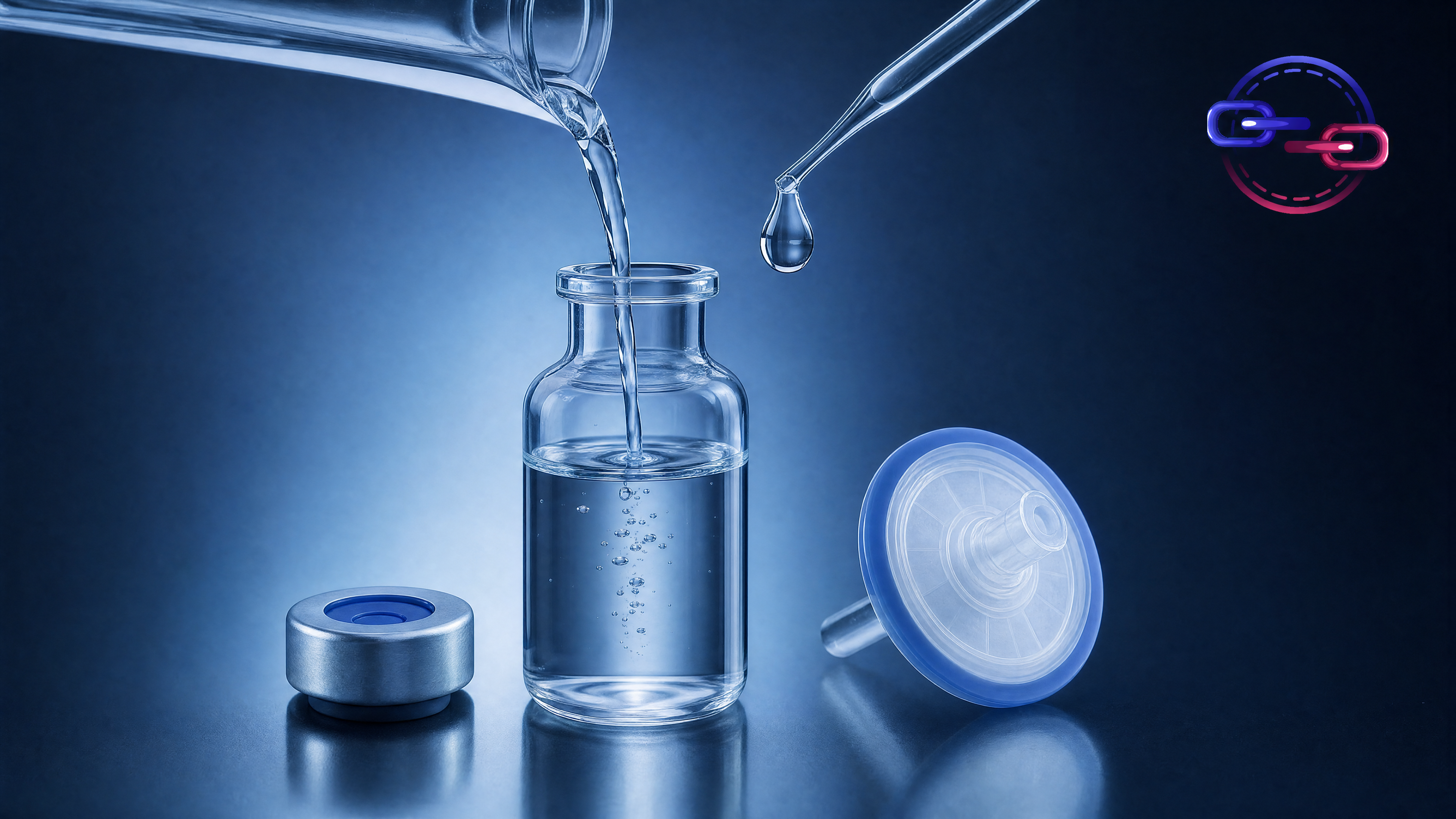
Commercial production follows a standardized process. Water for Injection (WFI) is produced through distillation or reverse osmosis/ultrafiltration to meet USP standards for purity, conductivity, and endotoxin levels. USP-grade benzyl alcohol is added to achieve exactly 0.9% w/v concentration. The solution is sterile-filtered through 0.22-micron membrane filters to remove any bacteria or particles. Filtered solution is aseptically filled into pre-sterilized glass vials. Vials are sealed with pre-sterilized rubber stoppers and aluminum crimps. Finished product is tested for sterility, endotoxin levels, pH, benzyl alcohol concentration, and particulate matter.
DIY Preparation: If You Must
If commercial BAC water is unavailable and you need to prepare it, the following procedure provides the minimum acceptable quality — with the strong caveat that this approach carries inherently higher contamination risk than commercial preparation.
You need sterile water for injection (NOT tap water, NOT distilled water from a hardware store — USP-grade sterile water for injection), USP-grade benzyl alcohol (NOT industrial or fragrance grade), sterile glass vials with rubber stoppers, sterile 0.22-micron syringe filters, and sterile syringes and needles.
The procedure involves calculating the correct volume of benzyl alcohol (0.9mL benzyl alcohol per 100mL water), adding benzyl alcohol to sterile water under aseptic conditions, filtering the solution through a 0.22-micron sterile filter into a sterile vial, and sealing immediately. Label with date, contents, and concentration. Store at room temperature away from light. Use within 28 days of first puncture.
Critical Mistakes to Avoid
Using non-sterile water sources. Tap water, even filtered tap water, contains bacteria, minerals, and potential endotoxins that are incompatible with injection. Only USP-grade sterile water for injection is acceptable as a starting material.
Using wrong benzyl alcohol grade. Industrial benzyl alcohol may contain impurities unsuitable for injection. Only USP or pharmaceutical-grade benzyl alcohol should be used.
Skipping filtration. Even if you start with sterile components, the mixing process can introduce contamination. Sterile filtration through 0.22-micron filters is essential.
Incorrect concentration. Too little benzyl alcohol provides inadequate preservation. Too much causes tissue irritation and potential toxicity. Precise measurement is required.
Using after 28 days. Even with benzyl alcohol preservation, multi-use vials should be discarded 28 days after first puncture per CDC guidelines for multi-dose vials.
Why 0.9% Benzyl Alcohol
Benzyl alcohol's preservative mechanism involves disruption of bacterial cell membrane integrity and inhibition of bacterial metabolism. At 0.9%, it provides effective bacteriostasis against common environmental contaminants (Staphylococcus, Streptococcus, Pseudomonas, fungi) while remaining safe for subcutaneous and intramuscular injection. The concentration has been validated through decades of pharmaceutical use and is codified in the USP monograph for Bacteriostatic Water for Injection.
Storage and Handling
Store BAC water at controlled room temperature (20-25 degrees C). Refrigeration is not required and may cause precipitation of benzyl alcohol at low temperatures. Protect from light. Do not freeze. Inspect visually before each use — discard if cloudy, discolored, or containing visible particles. And always swab the rubber stopper with an alcohol prep pad before each needle puncture.