IGF-1 LR3: The Long-Acting Insulin-Like Growth Factor With Enhanced Potency and Duration
IGF-1 LR3 is an 83-amino acid analog of IGF-1 with a 13-amino acid extension and an arginine substitution that reduces IGF binding protein interaction. Published research on muscle hypertrophy, cell proliferation, and metabolic effects reveals both potential and important safety considerations.
Insulin-Like Growth Factor 1 (IGF-1) is the primary mediator of growth hormone's anabolic effects — stimulating protein synthesis, cell proliferation, and tissue growth throughout the body. IGF-1 LR3 (Long R3 IGF-1) is a modified version with two key changes: an N-terminal extension of 13 amino acids and a substitution of arginine for glutamic acid at position 3. These modifications dramatically reduce binding to IGF binding proteins (IGFBPs), resulting in a compound with approximately 2-3 times the potency of native IGF-1 and a significantly longer half-life.
Why Modify IGF-1?
Native IGF-1 circulates in blood almost entirely bound to IGF binding proteins — approximately 99% is bound, with less than 1% in the free, biologically active form. The six IGFBPs regulate IGF-1 bioavailability, extend its half-life (paradoxically, by sequestering it from receptors AND from degradation), and target its delivery to specific tissues. Free IGF-1 has a half-life of only 10-20 minutes.
IGF-1 LR3's reduced IGFBP binding means a much larger fraction circulates in the free, active form. The 13-amino acid N-terminal extension sterically hinders IGFBP interaction, while the Arg3 substitution eliminates a key IGFBP contact point. The result is approximately 2-3 fold greater biological potency per microgram and a functional half-life of 20-30 hours — dramatically longer than native IGF-1.
Muscle Hypertrophy Research
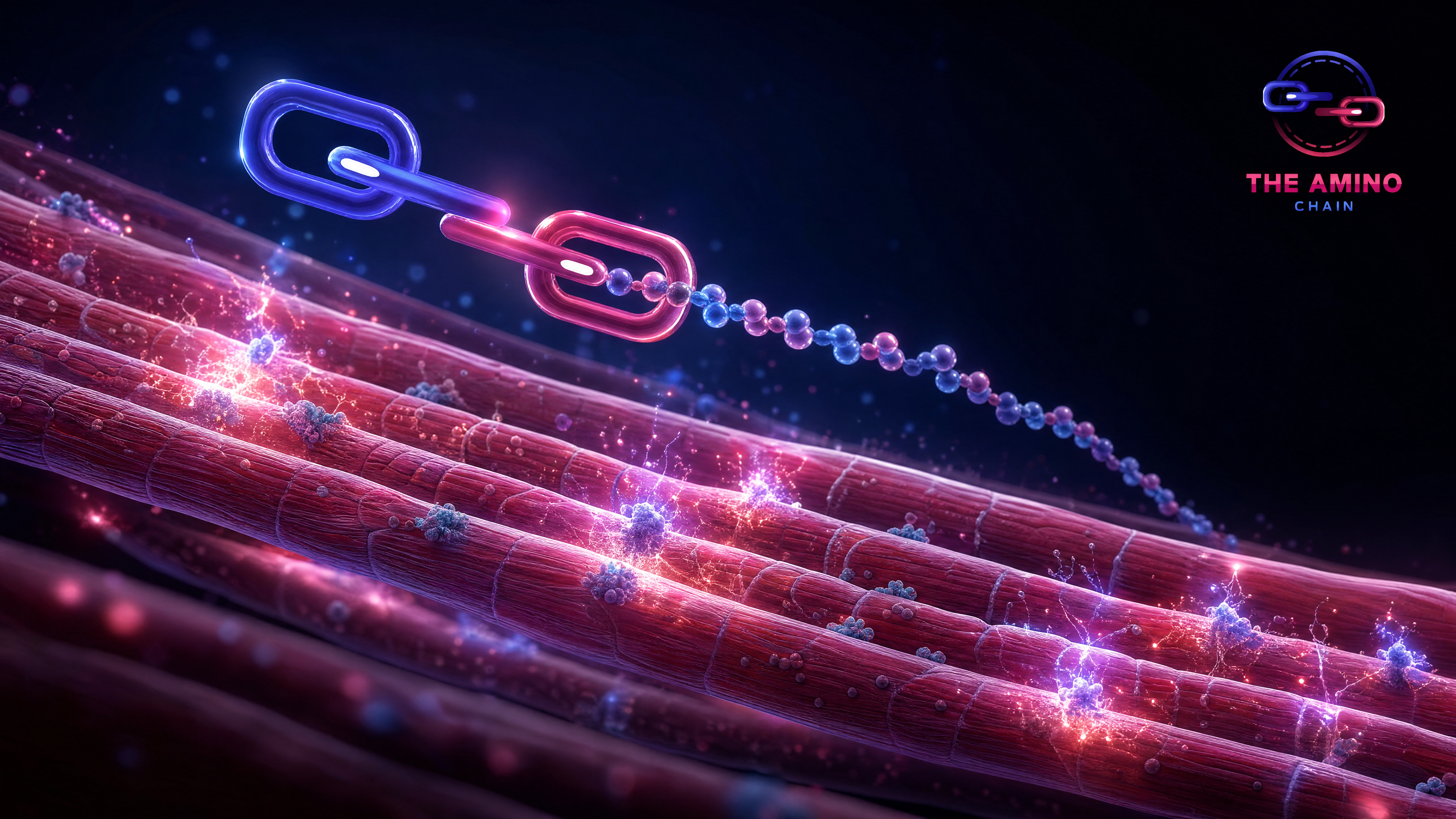
Published research demonstrated that IGF-1 LR3 stimulates muscle protein synthesis through activation of the PI3K/Akt/mTOR signaling cascade — the master regulator of cellular growth. IGF-1 receptor activation on muscle fibers promotes satellite cell proliferation and differentiation, increases amino acid uptake, and inhibits protein degradation pathways (FOXO-mediated atrophy genes). The net effect is enhanced muscle protein accretion — more protein built than broken down.
Published studies in muscle cell cultures showed IGF-1 LR3 was significantly more potent than native IGF-1 at stimulating myoblast proliferation and differentiation. In animal models, local IGF-1 overexpression produced localized muscle hypertrophy even without exercise stimulus — demonstrating that IGF-1 signaling can drive muscle growth directly.
Cell Proliferation: The Double Edge
IGF-1 LR3's potent cell proliferation effects are both its primary research interest and its primary safety concern. IGF-1 signaling promotes proliferation in virtually all cell types — muscle, bone, cartilage, connective tissue, epithelial cells, and unfortunately, tumor cells. Published epidemiological research has consistently associated elevated IGF-1 levels with increased risk of several cancers, particularly prostate, breast, and colorectal cancer.
This cancer association doesn't mean IGF-1 causes cancer, but it does mean IGF-1 signaling promotes the growth of existing pre-cancerous or cancerous cells. For a research compound like IGF-1 LR3 with enhanced potency and duration, this safety consideration is significant and should inform research design.
Metabolic Effects
IGF-1 shares structural homology with insulin and can activate insulin receptors at high concentrations. Published research showed IGF-1 LR3 has insulin-like effects on glucose metabolism — promoting glucose uptake and potentially causing hypoglycemia, particularly at higher doses. This hypoglycemic potential requires careful dose management and glucose monitoring during research protocols.
Wound Healing and Tissue Repair
Published research demonstrated IGF-1's role in wound healing — promoting fibroblast proliferation, collagen synthesis, and keratinocyte migration. IGF-1 LR3's enhanced potency may provide greater wound healing stimulus than native IGF-1 at equivalent doses. However, IGF-1's effects on wound healing are primarily proliferative (more cells) rather than organizational (better tissue architecture), which is why it's often discussed alongside peptides like BPC-157 and GHK-Cu that influence tissue organization.
Research Context
IGF-1 LR3 is among the most potent anabolic peptides available for research. This potency demands proportional caution in research design. The cancer association, hypoglycemic potential, and broad proliferative effects mean IGF-1 LR3 research requires more careful monitoring and shorter duration protocols than less potent compounds. It is explicitly banned by WADA and all sports anti-doping organizations.