LL-37: The Human Antimicrobial Peptide at the Intersection of Immunity, Wound Healing, and Cancer Research
LL-37 is the only cathelicidin antimicrobial peptide in humans. Published research spans direct pathogen killing, immune modulation, wound healing, and even anti-cancer activity — making it one of the most multifunctional peptides known.
LL-37 is a 37-amino acid peptide that serves as the only member of the cathelicidin antimicrobial peptide family in humans. It's produced by immune cells (neutrophils, macrophages), epithelial cells (skin, lungs, gut), and other cell types as part of the innate immune system's first-line defense against infection. But LL-37's functions extend far beyond antimicrobial activity — published research has documented roles in immune modulation, wound healing, angiogenesis, and even anti-tumor activity, making it one of the most multifunctional peptides in human biology.
Direct Antimicrobial Activity
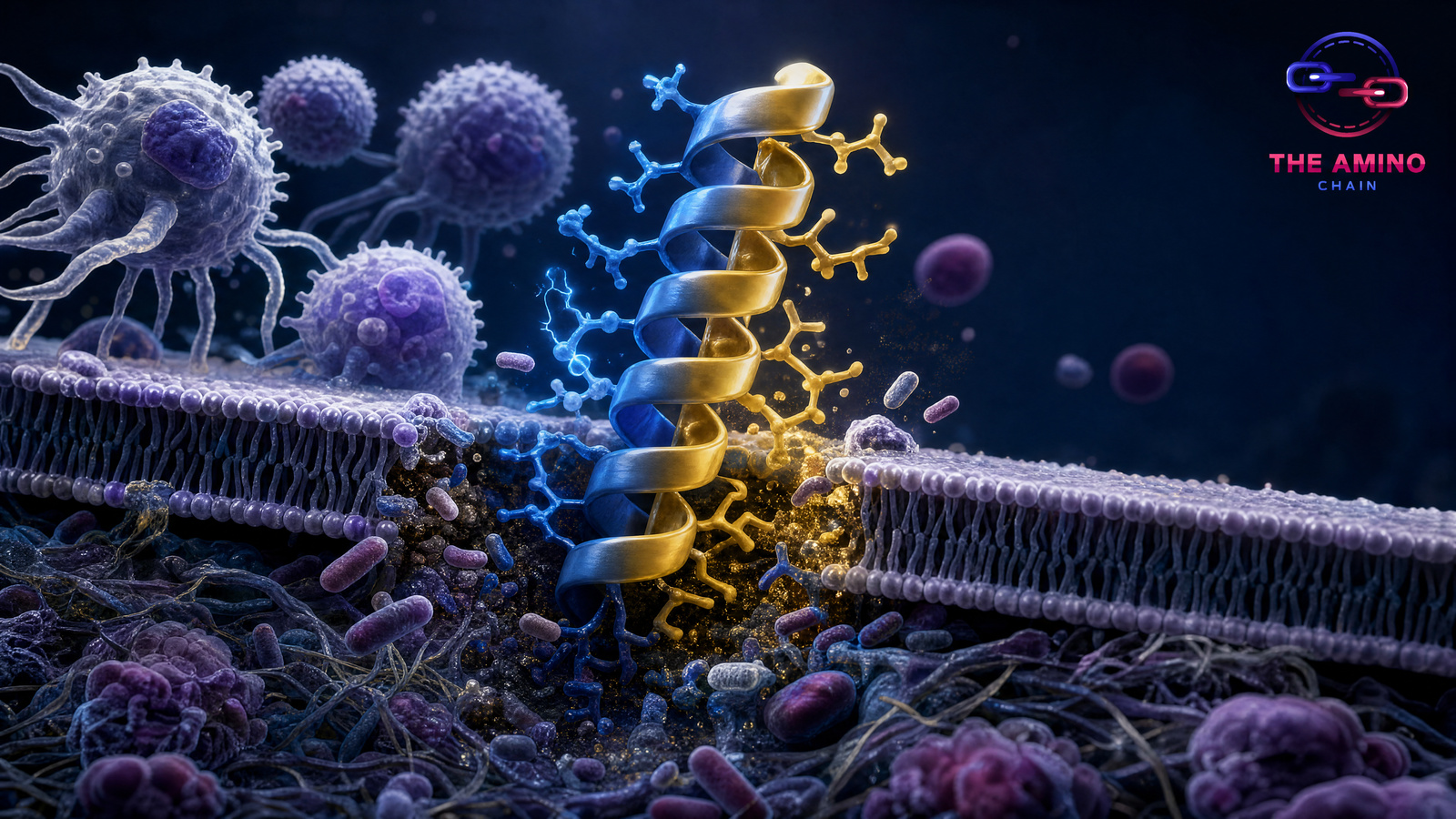
LL-37's antimicrobial mechanism involves its amphipathic alpha-helical structure — one side of the helix is positively charged, while the other is hydrophobic. This structure allows LL-37 to insert into negatively charged microbial cell membranes, creating pores that disrupt membrane integrity and kill the pathogen. This mechanism is effective against a broad spectrum of bacteria (both Gram-positive and Gram-negative), fungi, and enveloped viruses.
Published research has demonstrated LL-37's activity against clinically important pathogens including methicillin-resistant Staphylococcus aureus (MRSA), Pseudomonas aeruginosa, Escherichia coli, and Candida albicans. Its broad-spectrum activity and membrane-disrupting mechanism make resistance development difficult for pathogens — unlike conventional antibiotics that target specific metabolic pathways, membrane disruption is harder for bacteria to evolve resistance against.
Biofilm Disruption
One of LL-37's most clinically relevant properties is its ability to disrupt bacterial biofilms — structured bacterial communities that are 100-1000 times more resistant to conventional antibiotics than planktonic (free-floating) bacteria. Biofilms are responsible for chronic infections in wounds, medical devices, and the respiratory tract. Published research showed LL-37 both prevents biofilm formation and disrupts established biofilms at concentrations lower than those needed to kill planktonic bacteria.
Immune Modulation: Beyond Killing
LL-37's immunomodulatory functions may be more biologically significant than its direct antimicrobial activity. Published research has documented multiple immune-regulating effects: recruitment of immune cells to infection sites through chemotactic activity, modulation of dendritic cell differentiation (influencing adaptive immune responses), regulation of inflammatory cytokine production (both pro- and anti-inflammatory depending on context), and enhancement of phagocytosis (immune cell engulfment of pathogens).
The immunomodulatory profile is context-dependent — LL-37 can amplify immune responses during active infection while dampening excessive inflammation during resolution. This dual capacity makes it fundamentally different from simple immunostimulants or immunosuppressants.
Wound Healing
Published research has demonstrated LL-37's involvement in multiple wound healing processes. The peptide promotes keratinocyte migration (essential for re-epithelialization), stimulates angiogenesis through VEGF-dependent and VEGF-independent mechanisms, and modulates the inflammatory phase of wound healing. LL-37 expression is upregulated in wound tissue, and individuals with LL-37 deficiency show impaired wound healing — providing genetic evidence for its role in the wound repair process.
Anti-Cancer Research
Published research has explored LL-37's effects on cancer cells, with results that vary by cancer type. In some cancer models (gastric, colon, hematological malignancies), LL-37 showed anti-tumor activity through direct cytotoxicity, immune cell recruitment to the tumor microenvironment, and anti-angiogenic effects. In other models (ovarian, breast), some studies suggested potential pro-tumorigenic effects. This context-dependent activity is an active area of research.
Vitamin D Connection
LL-37 expression is regulated by vitamin D — specifically, the active form 1,25-dihydroxyvitamin D3 activates the cathelicidin gene promoter, increasing LL-37 production. This connection provides a molecular explanation for some of vitamin D's known immune-supporting effects and has implications for understanding the relationship between vitamin D status, immune function, and infection susceptibility.
Research Challenges
LL-37's 37-amino acid length makes it relatively expensive to synthesize and potentially susceptible to proteolytic degradation in vivo. Published research has explored shorter fragments and modified analogs that retain antimicrobial and immunomodulatory activity with improved stability and reduced synthesis costs. The peptide's context-dependent effects — beneficial in infection and wound healing but potentially harmful in certain inflammatory or cancer contexts — require careful consideration in research design.