MGF (Mechano Growth Factor): The Exercise-Activated IGF-1 Splice Variant for Muscle Repair Research
MGF is not a separate gene product — it's a splice variant of IGF-1 produced specifically in response to mechanical loading. Published research on satellite cell activation, local muscle repair, and exercise-specific signaling reveals a unique growth factor.
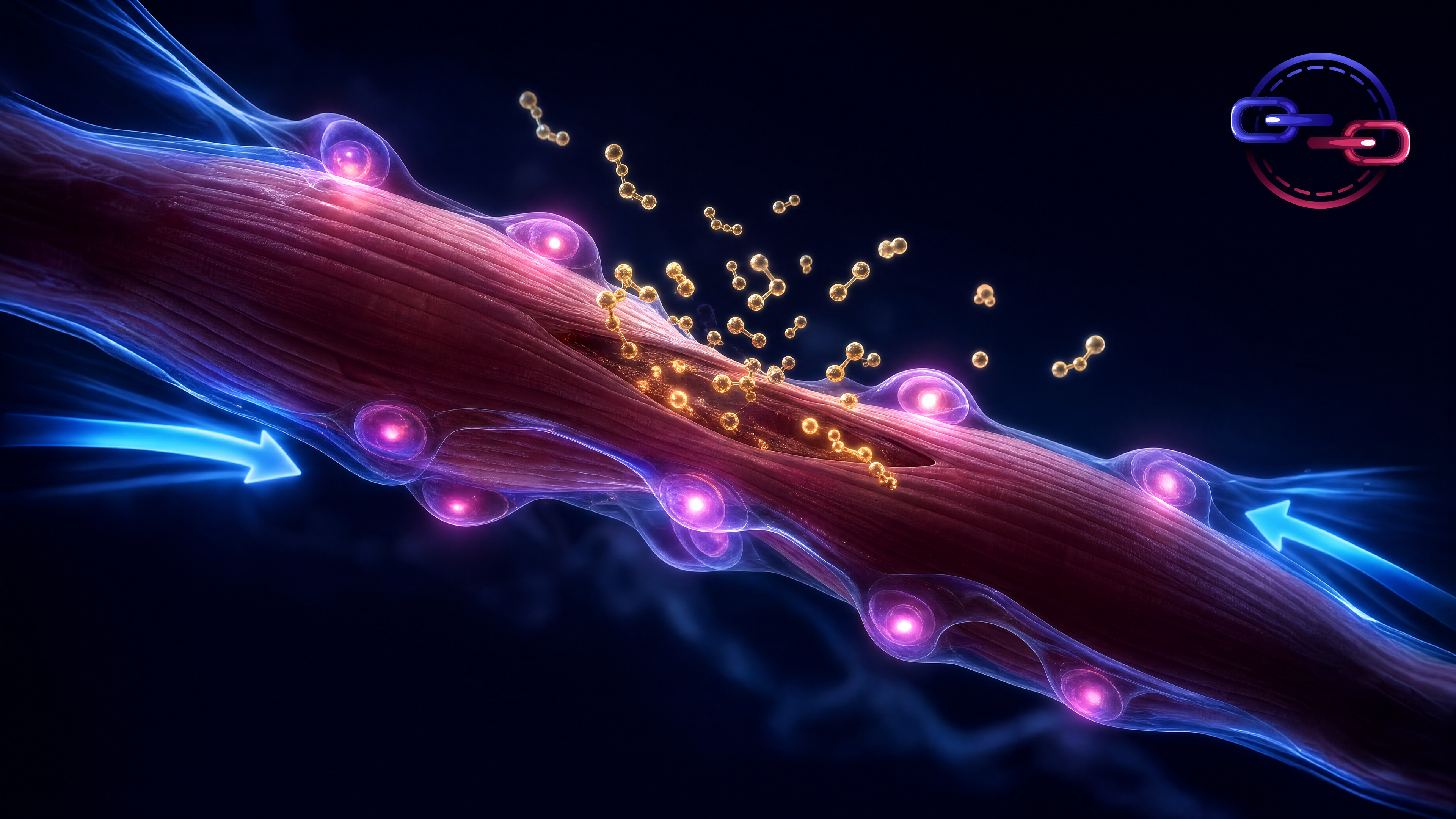
Mechano Growth Factor (MGF) is a splice variant of the IGF-1 gene produced specifically in response to mechanical loading of muscle tissue — exercise, stretch, or injury. Unlike systemic IGF-1 (IGF-1Ea), which is produced primarily by the liver under growth hormone stimulation and circulates throughout the body, MGF (IGF-1Ec in humans, IGF-1Eb in rodents) is produced locally in the exercised or damaged muscle and acts in an autocrine/paracrine manner. This local production makes MGF the muscle's own repair signal — produced where it's needed, when it's needed.
Splicing Biology: How One Gene Makes Two Growth Factors
The IGF-1 gene can be spliced into different mRNA variants through alternative exon inclusion. The liver-type splice variant (IGF-1Ea) includes exons 1, 3, 4, and 6, producing the systemic IGF-1 that mediates GH effects throughout the body. The mechano-sensitive splice variant (IGF-1Ec/MGF) includes exon 5, which adds a unique 24-amino acid C-terminal peptide (the E domain) not present in systemic IGF-1.
This E domain is what gives MGF its distinct biological properties. Published research showed the E domain is responsible for MGF's satellite cell activation — the function that distinguishes MGF from systemic IGF-1 at the molecular level.
Satellite Cell Activation
Published research demonstrated that MGF is a potent activator of satellite cells — the muscle stem cells that reside between the sarcolemma and basal lamina of muscle fibers. Upon activation, satellite cells proliferate, differentiate into myoblasts, and fuse with damaged muscle fibers to repair them — or fuse together to form new muscle fibers. This satellite cell activation is the biological basis of exercise-induced muscle repair and hypertrophy.
MGF activates satellite cells through a mechanism distinct from systemic IGF-1. Published data showed MGF's unique E domain peptide activated quiescent satellite cells before they became responsive to systemic IGF-1 signaling. This suggests a sequential model: MGF activates dormant satellite cells first, and systemic IGF-1 subsequently drives their proliferation and differentiation. The two IGF-1 splice variants work in series, not in parallel.
Exercise Timing and MGF Expression
Published research on MGF expression kinetics showed a rapid but transient spike following exercise — MGF mRNA peaks within hours of mechanical loading and returns to baseline within 24-72 hours. This is followed by a slower, more sustained increase in systemic IGF-1Ea expression. The temporal separation supports the sequential activation model: MGF provides the initial "wake up" signal to satellite cells, while IGF-1Ea sustains their proliferative response over days.
The magnitude of MGF expression correlates with the mechanical stimulus intensity — heavier loads and eccentric contractions (which cause more microstructural damage) produce greater MGF responses. This dose-response relationship connects mechanical loading directly to regenerative signaling.
Synthetic MGF: PEG-MGF
Synthetic MGF peptide (typically the 24-amino acid E domain peptide) has a very short half-life in vivo — estimated at minutes due to rapid enzymatic degradation. PEGylated MGF (PEG-MGF) attaches a polyethylene glycol molecule to extend the half-life to several days. Published research has explored both forms, with PEG-MGF showing sustained satellite cell activation over longer periods.
Age-Related MGF Decline
Published research showed that MGF expression in response to exercise declines with age — even when the exercise stimulus is equivalent. Aged muscle produces less MGF per unit of mechanical loading, which contributes to the impaired repair capacity and reduced hypertrophic response observed in aging muscle (anabolic resistance). This age-related decline in exercise-induced MGF production is one mechanism underlying sarcopenia.