Pentosan Polysulfate (PPS): The Semi-Synthetic Polysaccharide With 40 Years of Joint Research
PPS has been used for joint health in veterinary medicine for decades and is FDA-approved for bladder conditions. Published research on cartilage protection, subchondral bone health, and anti-inflammatory effects makes it uniquely positioned in joint research.
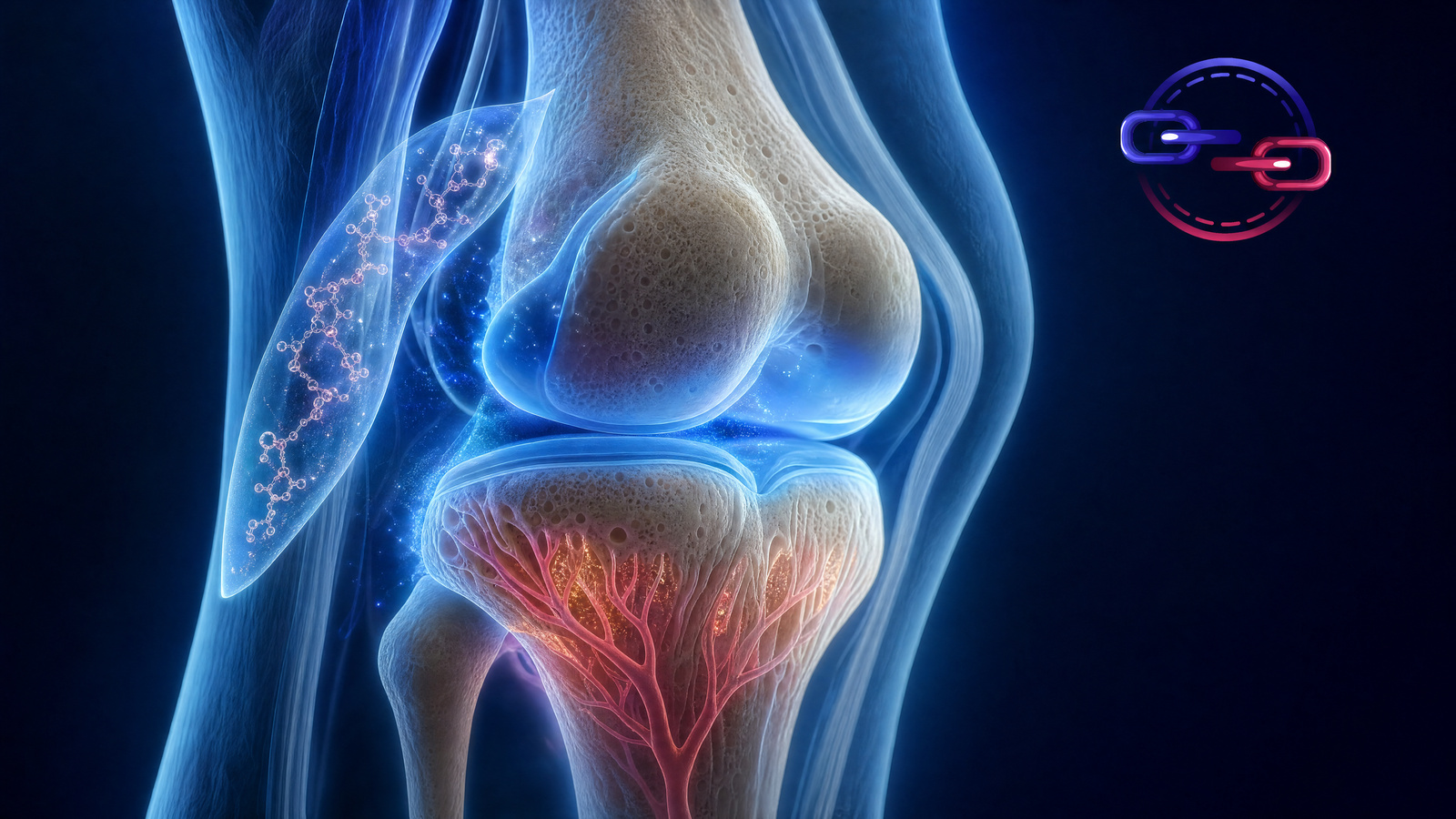
Pentosan Polysulfate (PPS) occupies a unique position in joint health research — it's not a peptide but a semi-synthetic polysaccharide derived from beechwood hemicellulose. It's included here because it's increasingly studied alongside research peptides in musculoskeletal research protocols. PPS has been approved for veterinary use for joint conditions in multiple countries for over 30 years, and is FDA-approved in the US for interstitial cystitis (bladder pain syndrome). Its published research on cartilage protection, subchondral bone health, and joint inflammation represents one of the most extensive datasets for any joint-targeted compound.
How PPS Differs from Peptides
PPS is a sulfated polysaccharide — a chain of xylose sugar units with sulfate groups attached — with a molecular weight of approximately 6000 Da. It shares structural similarities with heparin and heparan sulfate, which are naturally occurring glycosaminoglycans in cartilage and joint fluid. This structural similarity allows PPS to interact with many of the same biological pathways as endogenous GAGs, but with specific pharmacological advantages.
Cartilage Protection Mechanisms
Published research has documented multiple mechanisms through which PPS protects cartilage. PPS inhibits matrix metalloproteinases (MMPs) and aggrecanases — the enzymes responsible for degrading cartilage extracellular matrix in osteoarthritis. It stimulates hyaluronic acid production by synoviocytes — improving synovial fluid viscosity and joint lubrication. It promotes proteoglycan synthesis by chondrocytes — supporting the water-retaining matrix that gives cartilage its compressive strength. And it reduces inflammatory mediator production in the joint space.
This multi-mechanism approach addresses osteoarthritis pathology at several levels simultaneously — reducing the destructive process while supporting the reparative response.
Subchondral Bone
One of PPS's most distinctive research features is its effects on subchondral bone — the bone immediately beneath articular cartilage. Published research showed that PPS improves subchondral bone blood flow through its mild anticoagulant properties, reducing the subchondral bone ischemia and remodeling that contribute to osteoarthritis progression. This effect distinguishes PPS from most joint supplements, which focus exclusively on cartilage without addressing the subchondral bone compartment.
Veterinary Evidence Base
PPS has one of the strongest veterinary evidence bases of any joint-targeted compound. Published studies in dogs, horses, and other species have demonstrated improvements in lameness scores, joint effusion, cartilage preservation, and overall joint health. The veterinary data, while not directly translatable to human medicine, provides decades of safety and efficacy observation across thousands of treated animals.
Clinical Research in Humans
Published human clinical trials for osteoarthritis have shown improvements in pain scores, joint function, and patient-reported outcomes with PPS treatment. The compound has been administered both orally and via intramuscular injection, with injectable administration showing more consistent joint tissue penetration. Some studies reported benefits comparable to or exceeding those of commonly used joint supplements.
Combination Research
PPS is increasingly studied in combination with other joint-targeted compounds. The combination of PPS (addressing cartilage matrix, subchondral bone, and inflammation) with peptides like BPC-157 (addressing angiogenesis and tissue repair) or AOD-9604 (addressing chondrocyte biology) represents a multi-mechanism approach that targets different aspects of joint pathology simultaneously.