Is Your Peptide Still Good? 7 Signs of Degradation
Visual indicators, solubility changes, and performance shifts that tell you a peptide has degraded — plus prevention strategies that actually work.
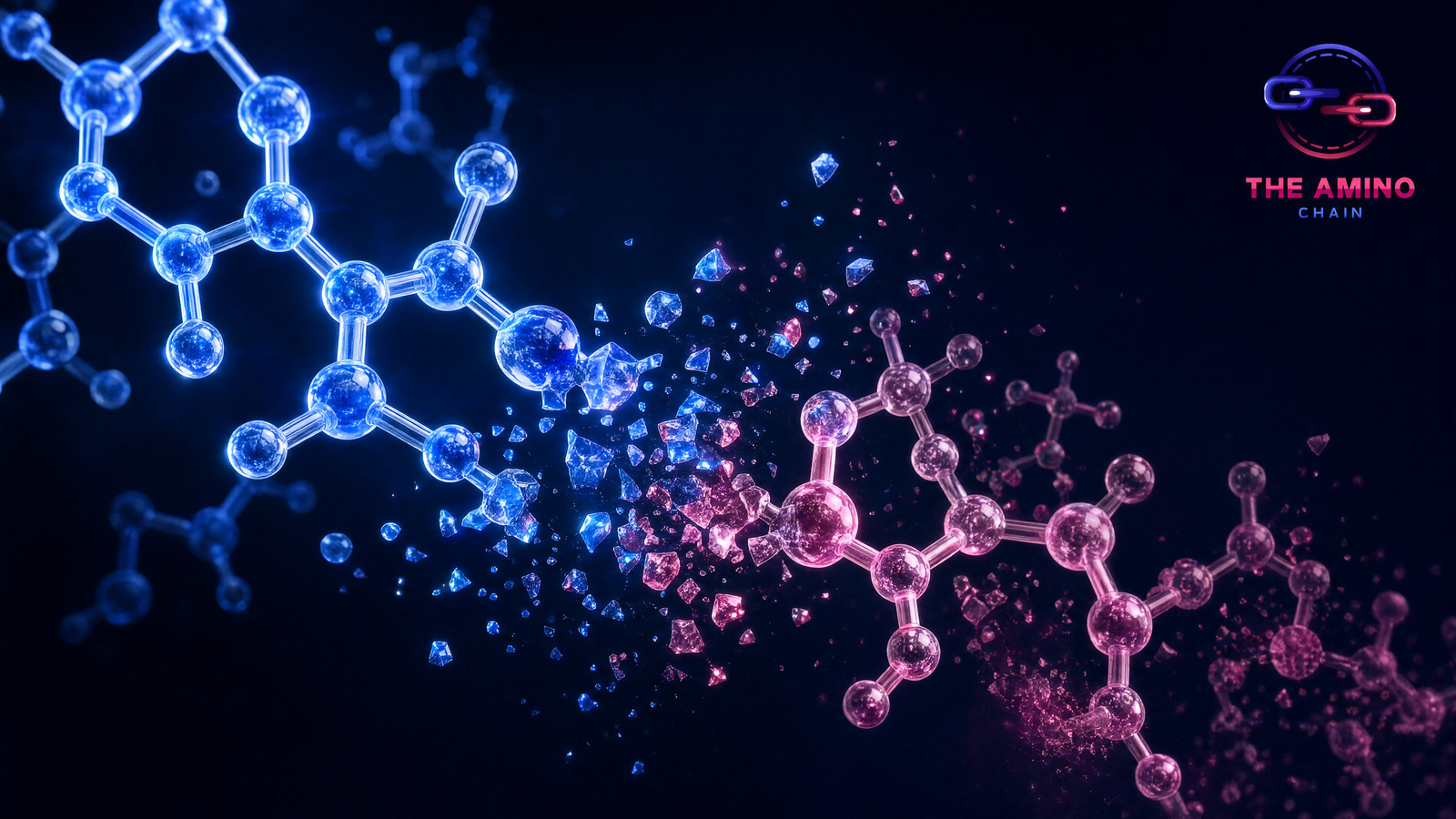
Peptide degradation is one of the most common — and most overlooked — sources of experimental variability. A degraded peptide can produce shifted dose-response curves, inconsistent results, or complete loss of activity. Knowing what to look for helps you catch problems before they compromise your research.
1. Color Changes
Lyophilized peptides should be white to off-white. Yellowing or browning indicates oxidative degradation, particularly of methionine, tryptophan, or tyrosine residues. Any significant color change warrants investigation before use.
2. Cake Collapse
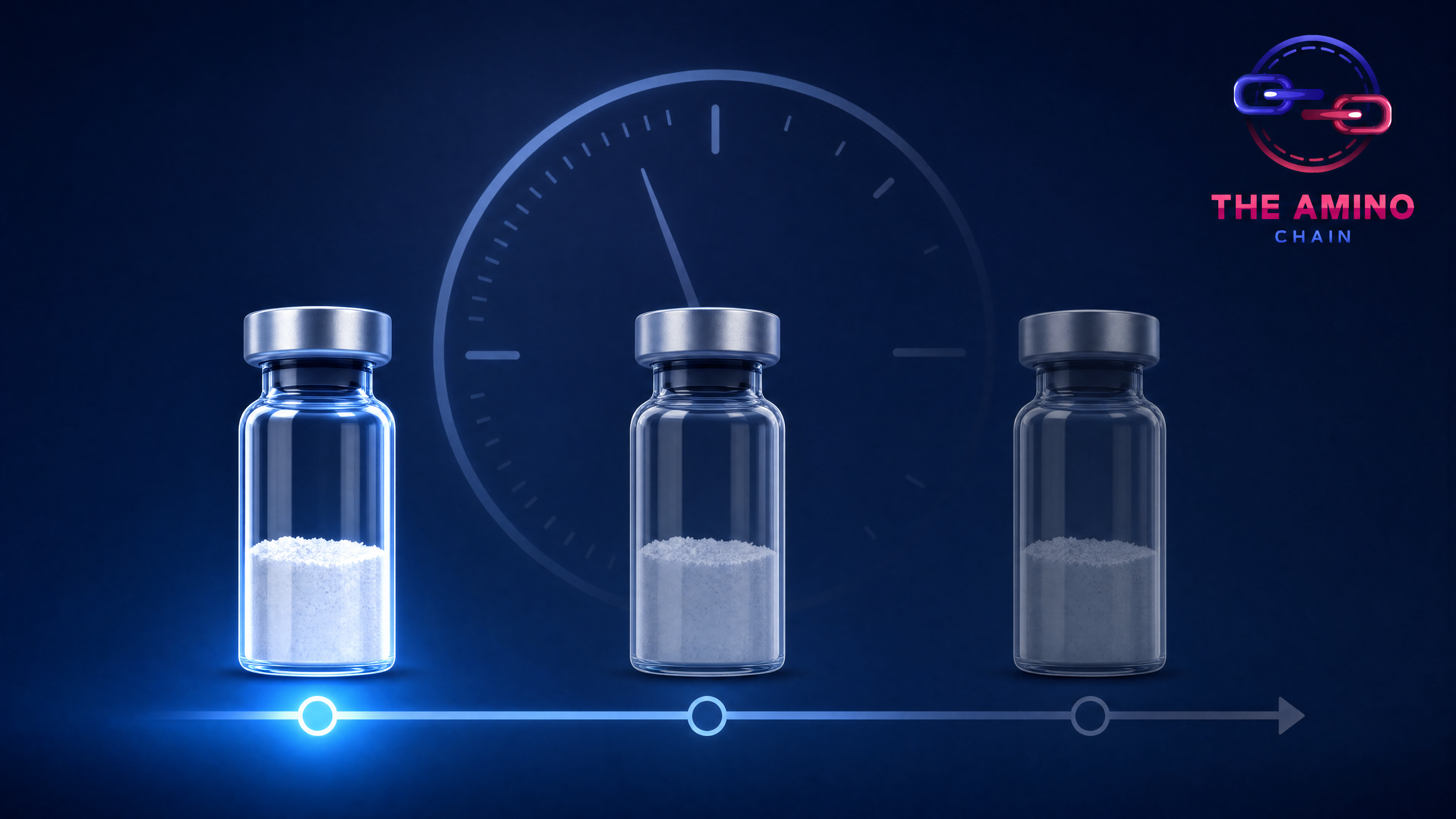
A properly lyophilized peptide forms a porous cake or loose powder. If the cake has collapsed into a dense, glassy mass, the peptide may have been exposed to moisture or temperature excursions during storage or shipping.
3. Cloudiness After Reconstitution
A properly dissolved peptide solution should be clear and colorless. Cloudiness, visible particles, or gel formation indicate aggregation — peptide molecules associating into non-functional clusters.
4. Changed Dissolution Time
If a peptide that previously dissolved in 1-2 minutes now takes 10+ minutes or fails to dissolve completely, partial degradation or aggregation has likely occurred.
5. Unusual Odor
Reconstituted peptides in BAC water should have a faint benzyl alcohol smell. Any other odor — particularly sour or sulfurous — suggests microbial contamination or chemical breakdown.
6. Shifted Experimental Results
If your dose-response curves shift rightward (requiring higher concentrations for the same effect) or results become inconsistent between experiments, peptide degradation should be considered as a variable.
7. Precipitation Over Time
If a solution that was initially clear develops precipitate during storage, the peptide is aggregating. This is accelerated by temperature fluctuations and freeze-thaw cycles.
Prevention
Store lyophilized peptides at -20°C for long-term, 2-8°C for near-term. Aliquot reconstituted solutions. Protect from light. Use sterile technique. And always source from suppliers with batch-specific quality documentation.