Peptide Lab Safety: What Every Researcher Needs to Know
Essential safety practices for handling research peptides in laboratory settings — from PPE and reconstitution safety to proper disposal and documentation requirements.
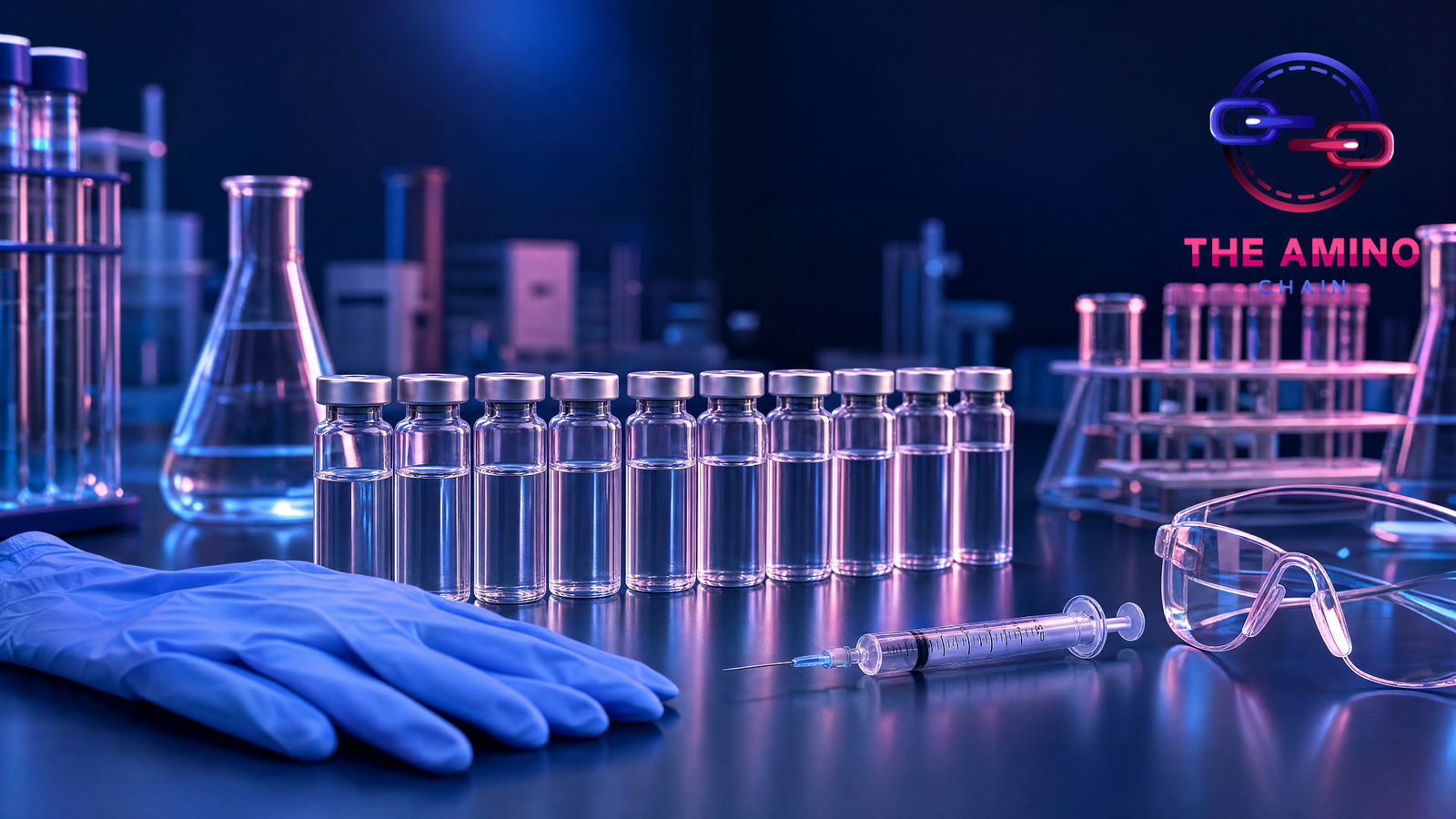
Research peptides are potent biological compounds that deserve the same careful handling as any laboratory reagent. While they present fewer acute hazards than many organic solvents or strong acids, proper safety practices protect both the researcher and the integrity of the research.
Personal Protective Equipment
At minimum, wear nitrile gloves and safety glasses when handling peptides. Lab coats provide additional protection against splashes during reconstitution. Gloves should be changed between handling different compounds to prevent cross-contamination, and after any contact with solvents that may compromise glove integrity.
If working with large quantities of lyophilized powder (unusual in typical research settings), consider wearing a dust mask to avoid inhalation of peptide dust during transfers.
Safe Reconstitution Practices
Reconstitution involves working with needles and glass vials — the primary injury risks in peptide research. Use proper sharps handling technique: never recap needles by hand, dispose of used needles immediately in designated sharps containers, and work on a stable, flat surface to prevent vial tipping.
When adding bacteriostatic water to a lyophilized vial, insert the needle through the septum at an angle and inject slowly. Rapid injection can create pressure buildup in sealed vials, potentially spraying solution when the needle is withdrawn.
Chemical Compatibility
Bacteriostatic water contains 0.9% benzyl alcohol. While this concentration is low, be aware that benzyl alcohol is incompatible with certain plastics and can leach compounds from some container materials. Use glass vials for storage whenever possible.
If reconstituting peptides in DMSO (for poorly water-soluble compounds), exercise additional caution. DMSO rapidly penetrates skin and carries dissolved compounds with it — meaning any peptide dissolved in DMSO can potentially be absorbed through skin contact.
Spill Management
Small spills of reconstituted peptide solution can be wiped up with paper towels moistened with 70% isopropyl alcohol, then disposed of as biological waste. For lyophilized powder spills, carefully collect the powder without creating airborne dust, then wipe the area with alcohol.
Document all spills, including the compound, estimated quantity, and cleanup method. This information is important for laboratory safety records and may be relevant if unexpected results occur in subsequent experiments using materials from the same batch.
Waste Disposal
Expired or unused peptide solutions should be disposed of according to your institution's chemical waste procedures. Sharps go in sharps containers. Empty vials can typically be disposed of as glass waste after rinsing, but check your local regulations. Never pour peptide solutions down the drain.
Documentation
Maintain a log of all peptides in your laboratory, including compound name, lot number, date received, storage location, reconstitution date, and disposal date. This documentation supports good laboratory practice, enables troubleshooting if results are inconsistent, and fulfills regulatory requirements for research chemical inventory management.