Peptide Stability Under Different Conditions: Temperature, pH, Light, and Oxidation Research
How stable is your peptide? Published research on peptide degradation under different temperatures, pH levels, light exposure, and oxidative conditions reveals exactly how storage choices affect compound integrity.
Peptide stability is not a binary property — compounds don't simply go from "good" to "bad" overnight. Degradation is a continuous process influenced by temperature, pH, light exposure, oxidative stress, and mechanical forces. Understanding the kinetics of degradation under different conditions allows researchers to make informed decisions about storage, handling, and acceptable use windows. This article examines published research on peptide stability under the conditions most relevant to research laboratory settings.
Temperature: The Arrhenius Equation in Practice
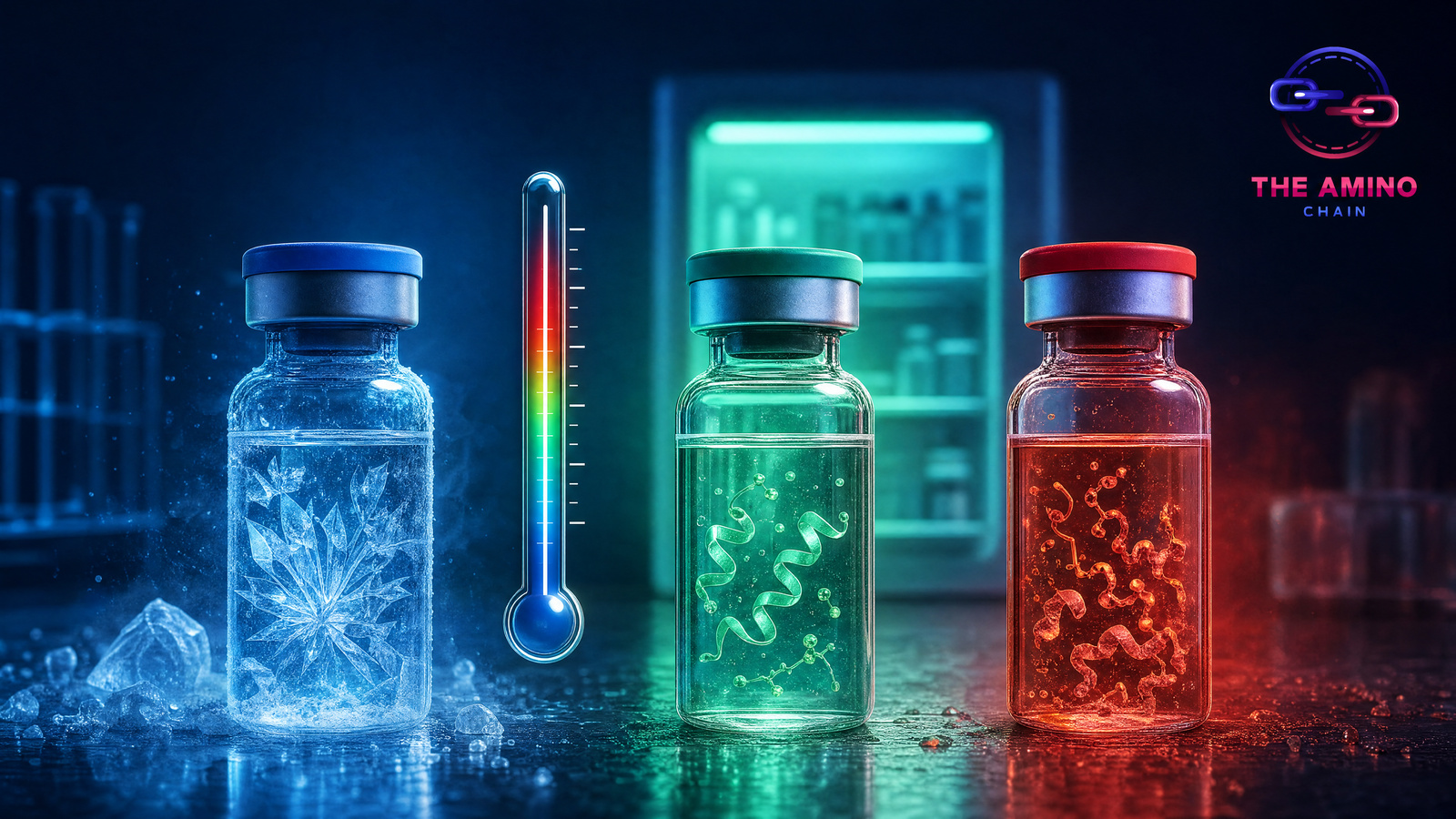
The Arrhenius equation describes a fundamental relationship: reaction rates approximately double for every 10°C increase in temperature. For peptide degradation, this means a peptide stored at 25°C (room temperature) degrades approximately 4-8 times faster than the same peptide stored at 4°C (refrigerator), and 16-64 times faster than one stored at -20°C (freezer).
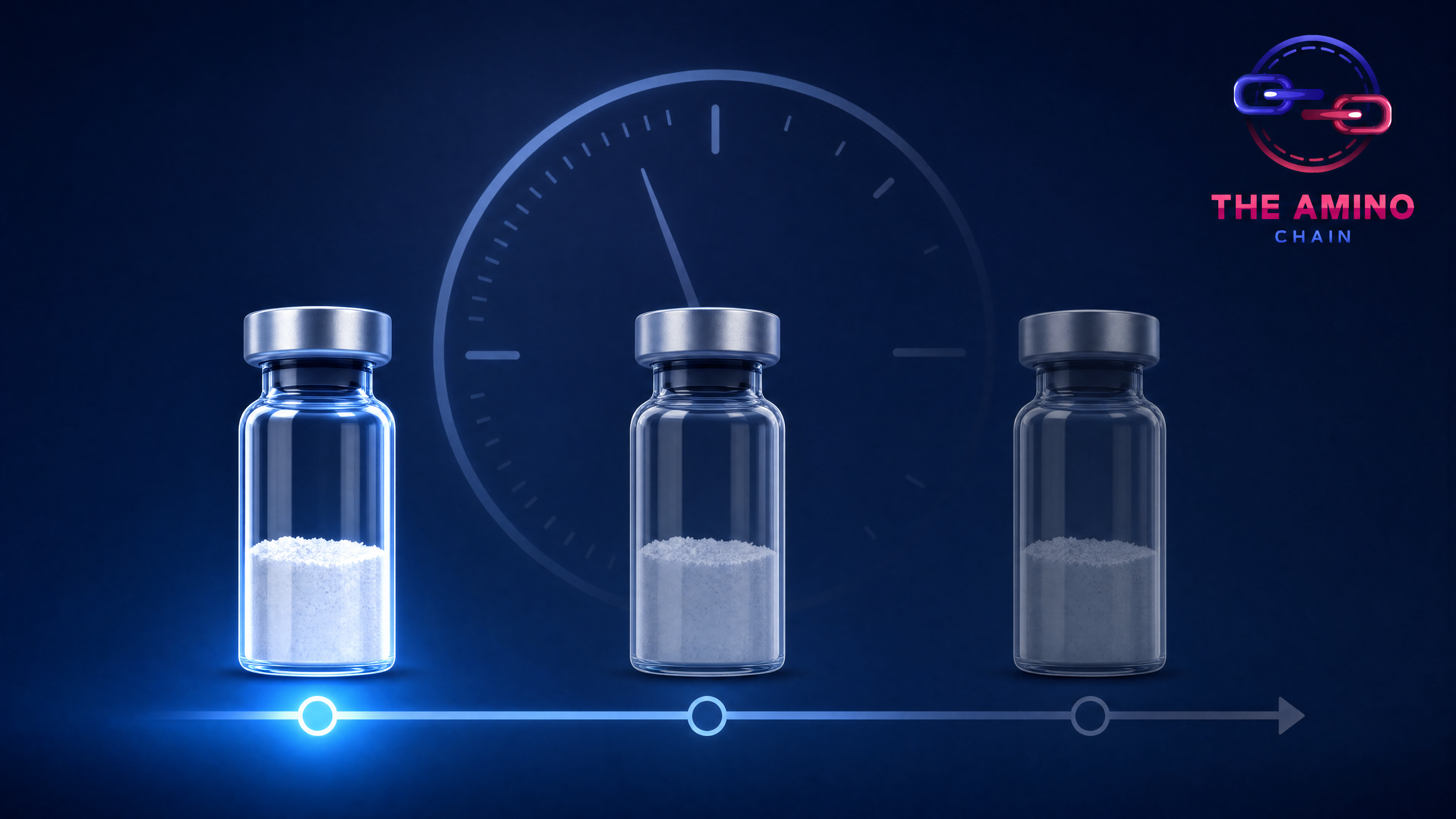
Published stability studies on various peptides confirm this relationship in practice. Lyophilized (freeze-dried) peptides stored at -20°C typically maintain greater than 95% purity for 2-3 years. The same peptides stored at 4°C maintain similar purity for 6-12 months. At room temperature (25°C), significant degradation can occur within weeks to months depending on the specific peptide's vulnerability.
For reconstituted peptides (dissolved in bacteriostatic water), temperature effects are even more pronounced because degradation reactions occur faster in solution than in the solid state. Reconstituted peptides should always be stored at 2-8°C and used within 3-4 weeks.
pH and Peptide Stability
Solution pH affects peptide stability through multiple mechanisms. Acid-catalyzed hydrolysis of peptide bonds accelerates at low pH, while base-catalyzed reactions including deamidation and racemization accelerate at high pH. Most peptides are most stable near neutral pH (6.0-7.5), which is why bacteriostatic water (pH approximately 5.5-7.0) is the standard reconstitution solvent.
BPC-157 is a notable exception to pH sensitivity — its stability in gastric acid (pH 1-2) is unusual and relates to its gastric juice origin and proline-rich structure. Most other research peptides would be rapidly degraded under such acidic conditions.
Asparagine deamidation — one of the most common peptide degradation pathways — is pH-dependent and accelerated under mildly alkaline conditions. The deamidation product (aspartic acid or iso-aspartic acid) alters the peptide's charge and can significantly reduce biological activity.
Light-Induced Degradation
Ultraviolet and visible light can damage peptides through photosensitization reactions, primarily affecting aromatic amino acid residues. Tryptophan is the most photosensitive amino acid, absorbing UV light and generating reactive oxygen species that damage the peptide. Tyrosine and phenylalanine are also photosensitive but less so than tryptophan.
Published studies show measurable photodegradation of tryptophan-containing peptides after as little as 2-4 hours of direct sunlight exposure. Even indoor fluorescent lighting can cause slow photodegradation over days to weeks. This is why peptide storage in amber vials or wrapped in foil is recommended — opaque containers block the wavelengths that cause photodamage.
For peptides without aromatic residues (like BPC-157, which contains no tryptophan, tyrosine, or phenylalanine), light sensitivity is much lower. However, best practice is to protect all peptides from light regardless of composition, as even non-aromatic peptides can undergo indirect photodegradation through solvent-mediated radical reactions.
Oxidation
Oxidative degradation primarily affects methionine and cysteine residues. Methionine oxidation to methionine sulfoxide is one of the most common peptide degradation reactions, occurring readily in the presence of atmospheric oxygen, peroxides, or metal ions. Cysteine oxidation can form disulfide bonds (between two cysteine residues) or sulfenic acid (single cysteine oxidation).
Published stability data shows that methionine-containing peptides can lose 5-15% purity through oxidation within weeks of reconstitution, even under refrigerated storage, if exposed to atmospheric oxygen. Purging the vial headspace with nitrogen or argon gas before sealing significantly reduces oxidative degradation.
Freeze-Thaw Cycles
Repeated freezing and thawing is one of the most damaging conditions for peptide integrity. Ice crystal formation during freezing physically disrupts peptide structure. The freeze-concentrate effect — where solutes concentrate in unfrozen liquid pockets as water freezes — exposes peptides to locally extreme pH and salt concentrations. And the air-liquid interfaces created during thawing promote surface denaturation.
Published studies show measurable purity loss after as few as 3-5 freeze-thaw cycles for many peptides. The solution is simple: aliquot reconstituted peptides into single-use volumes before freezing, so each aliquot is frozen and thawed only once.
Practical Stability Guidelines
Based on published stability research, the following general guidelines apply to most research peptides. Lyophilized peptides should be stored at -20°C for maximum long-term stability, with 2-8°C acceptable for near-term use within a few months. Reconstituted peptides should be refrigerated at 2-8°C and used within 3-4 weeks. All peptides should be protected from light, moisture, and repeated freeze-thaw cycles. And peptides containing methionine or cysteine need extra protection from oxidation.