Peptides and Arthritis: Joint Pain, Cartilage Biology, and What Research Shows
Arthritis affects over 350 million people worldwide. This article examines published research on BPC-157, TB-500, and GHK-Cu in the context of joint cartilage biology, synovial inflammation, and degenerative joint disease.
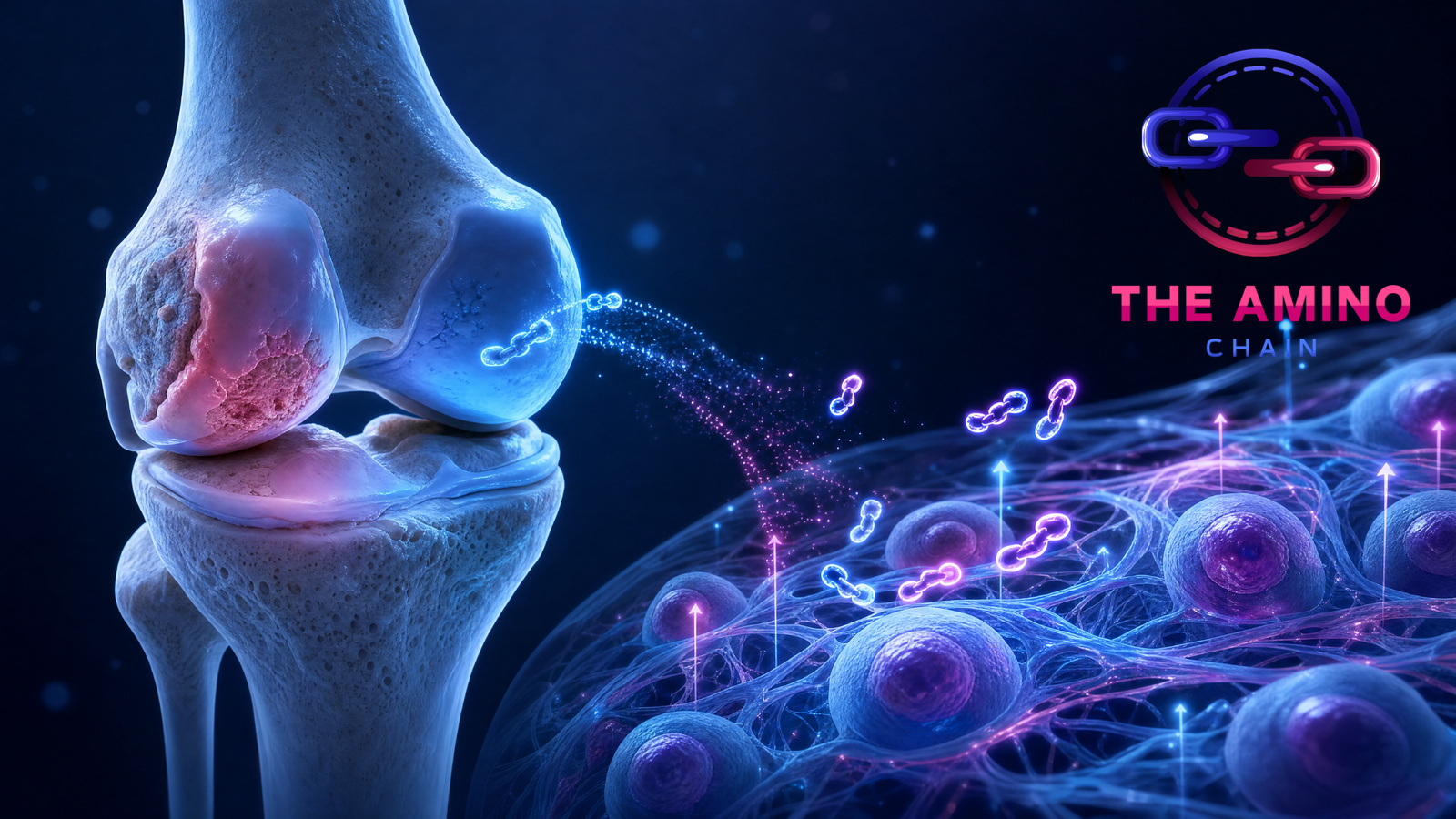
Arthritis encompasses over 100 different conditions affecting joints, but osteoarthritis (OA) — the progressive degeneration of articular cartilage — dwarfs all others in prevalence, affecting over 350 million people worldwide. The challenge with OA is fundamental: articular cartilage has virtually no capacity for self-repair. Once damaged, the degradation tends to be progressive and irreversible. Research into compounds that might support cartilage biology represents one of the most important frontiers in musculoskeletal science.
Articular Cartilage: The Tissue That Can't Heal
Articular cartilage is a remarkable engineering material — it's smoother than ice, can withstand compressive forces 5-10 times body weight, and in healthy individuals lasts 70+ years without replacement. But it has a critical vulnerability: it contains no blood vessels, no lymphatic drainage, and no nerve supply. The cells within it — chondrocytes — are isolated in a dense extracellular matrix and must receive all nutrients through diffusion from the synovial fluid.
This avascular biology means the standard tissue repair process — inflammatory signaling, immune cell recruitment, blood vessel formation, repair cell migration — simply cannot occur in cartilage. When cartilage is damaged, the chondrocytes nearby attempt repair by increasing proteoglycan and collagen synthesis, but this response is inadequate for significant defects. The result is progressive degeneration that characterizes osteoarthritis.
BPC-157 and Joint Biology
BPC-157's research profile includes several mechanisms with theoretical relevance to joint conditions. While most published BPC-157 research focuses on tendons and the gastrointestinal tract, the peptide's effects on NO modulation, growth factor signaling, and cytoprotection extend to joint biology.
Nitric oxide plays a dual role in joints. At physiological levels, NO maintains chondrocyte function and cartilage homeostasis. In osteoarthritis, NO is overproduced by inducible nitric oxide synthase (iNOS) in inflamed synovium and damaged cartilage, contributing to matrix degradation and chondrocyte apoptosis. BPC-157's bidirectional NO modulation — demonstrated in other tissue systems — could theoretically help restore NO toward physiological levels in the joint environment.
The peptide's anti-inflammatory properties are relevant to the synovitis that accompanies osteoarthritis. Synovial inflammation produces cytokines (TNF-alpha, IL-1beta, IL-6) and matrix metalloproteinases (MMPs) that accelerate cartilage breakdown. Published BPC-157 research in inflammatory models has demonstrated modulation of these pathways.
GHK-Cu and Cartilage Biology
GHK-Cu may have the most directly relevant published data for joint conditions. The peptide's broad gene modulatory profile — affecting over 4,000 genes — includes genes involved in extracellular matrix production, anti-inflammatory responses, and tissue remodeling. Published studies have demonstrated stimulation of glycosaminoglycan synthesis, including hyaluronic acid — a critical component of both cartilage matrix and synovial fluid.
Copper delivery through GHK-Cu supports superoxide dismutase activity — an important antioxidant defense in joints, where reactive oxygen species contribute to cartilage degradation. The peptide's stimulation of collagen synthesis in fibroblast cultures, while studied primarily in dermal contexts, reflects a general capacity to support extracellular matrix production that extends to cartilage-like tissues.
TB-500 and Joint Recovery
TB-500's anti-inflammatory properties are relevant to the synovitis component of osteoarthritis. By modulating pro-inflammatory cytokines, the peptide could theoretically reduce the chemical environment that drives cartilage degradation. TB-500's effects on extracellular matrix remodeling — including MMP modulation — are also relevant, as MMP overactivity is a hallmark of osteoarthritic cartilage destruction.
AOD-9604: The Cartilage Connection
AOD-9604 deserves special mention in the context of arthritis research. Originally studied for fat metabolism, the peptide has demonstrated unexpected effects on chondrocyte biology. Published studies showed stimulation of proteoglycan and collagen synthesis in cartilage cells, leading to regulatory approval in Australia as an injectable treatment for knee osteoarthritis. This represents one of the few cases where a research peptide has progressed to approved clinical use for a joint condition.
Conventional Approaches
Evidence-supported approaches for osteoarthritis include progressive exercise to strengthen periarticular muscles and improve joint stability, weight management to reduce mechanical load, physical therapy for mobility and function, appropriate use of analgesics for pain management, and surgical options including joint replacement for severe end-stage disease. These approaches have strong clinical evidence and should form the foundation of any arthritis management strategy.