Peptides and Neck Pain: Cervical Spine Research, Disc Degeneration, and Recovery
Neck pain from cervical disc degeneration, muscle tension, or nerve compression is incredibly common. This article examines how peptide research on tissue repair and nerve protection relates to cervical spine conditions.
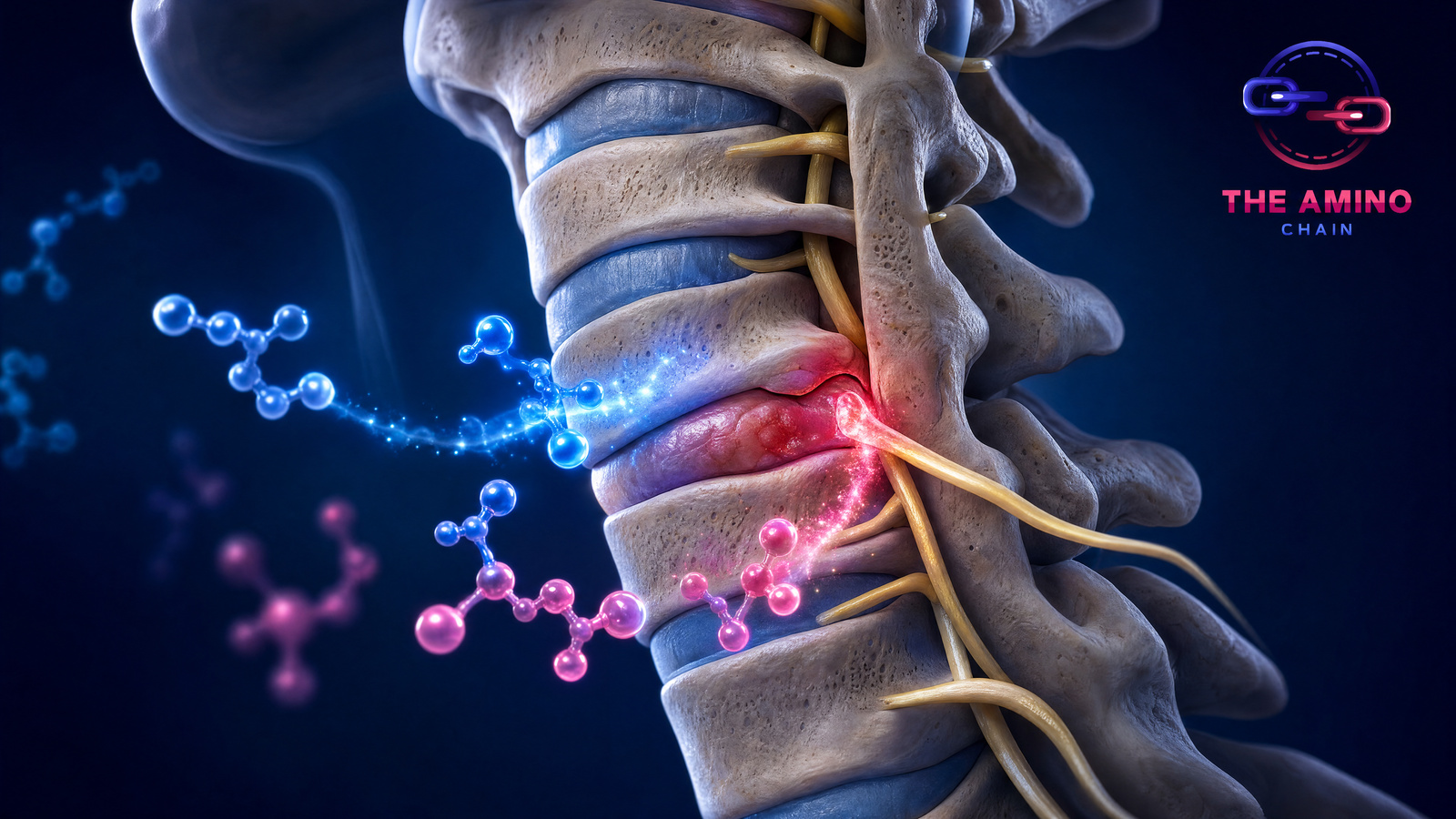
Neck pain is the fourth leading cause of disability globally, with a lifetime prevalence exceeding 70%. The cervical spine — seven vertebrae supporting the weight of the head while allowing remarkable range of motion — is vulnerable to degenerative changes, disc herniation, and muscle-related pain. As research continues to explore peptides' roles in tissue repair and nerve protection, understanding the cervical spine's unique biology provides important context.
Cervical Disc Degeneration
The cervical intervertebral discs share the same basic structure as lumbar discs — nucleus pulposus, annulus fibrosus, cartilaginous endplates — but are smaller and subject to different mechanical forces. While lumbar discs bear primarily compressive loads, cervical discs experience complex combinations of compression, flexion, extension, rotation, and lateral bending during normal daily activities.
Cervical disc degeneration begins earlier than many people realize. MRI studies of asymptomatic individuals show disc degeneration in 17% of people in their 20s, increasing to over 80% by age 50. This means degenerative changes are nearly universal but not always symptomatic — the relationship between structural degeneration and pain is complex and influenced by inflammatory, neurological, and psychosocial factors.
Cervical Radiculopathy: When Discs Affect Nerves
When cervical disc herniation or osteophyte formation compresses a spinal nerve root, the result is cervical radiculopathy — pain, numbness, or weakness radiating into the arm along the distribution of the affected nerve. C6 and C7 nerve roots are most commonly affected, producing symptoms in the thumb/index finger and middle finger respectively.
The pathophysiology involves both mechanical compression and chemical irritation. Herniated disc material releases inflammatory mediators including TNF-alpha, IL-1beta, and IL-6 that sensitize nerve fibers and amplify pain signaling. This inflammatory component is significant because it suggests that modulating the inflammatory environment — not just relieving mechanical compression — may influence pain and recovery.
BPC-157 and Cervical Spine Biology
BPC-157's published neuroprotective effects are relevant to cervical radiculopathy. The peptide's demonstrated promotion of peripheral nerve healing in animal models suggests potential relevance to compressed cervical nerve roots, where both mechanical and ischemic damage compromise neural function.
The NO system modulation is particularly interesting for cervical conditions because the vertebral arteries — which supply blood to the brain stem, cerebellum, and posterior brain — course through the cervical spine's transverse foramina. Cervical degenerative changes can affect vertebral artery blood flow, and NO is a critical regulator of cerebrovascular perfusion. BPC-157's bidirectional NO modulation could theoretically have implications for cervical vascular biology, though this remains speculative without direct research.
BPC-157's anti-inflammatory and cytoprotective properties address the chemical irritation component of cervical radiculopathy. By modulating the inflammatory mediators released by herniated disc material, the peptide could theoretically reduce nerve sensitization and support neural function during the recovery period.
TB-500 and Cervical Muscle Recovery
Many cases of neck pain involve the cervical musculature rather than disc pathology. The deep cervical flexors, cervical extensors, and scapular stabilizers can develop dysfunction patterns that contribute to chronic neck pain. TB-500's effects on cellular migration and tissue repair extend to muscle biology, where the peptide's promotion of satellite cell activation and migration could be relevant to muscle recovery and adaptation.
TB-500's anti-inflammatory modulation is also relevant to the chronic low-grade inflammation that characterizes many cases of persistent neck pain. The cervical facet joints and surrounding soft tissues often develop inflammatory changes that perpetuate pain cycles — modulating these responses could theoretically break the cycle and allow recovery.
Conventional Approaches
Evidence-supported approaches for neck pain include deep cervical flexor strengthening exercises, postural education and ergonomic modifications, manual therapy and mobilization techniques, progressive loading to build cervical tissue capacity, and medical evaluation for red flags including myelopathy symptoms, progressive weakness, or bowel/bladder changes. Most cervical radiculopathy resolves within 4-6 months with conservative management.