Peptides and Nerve Pain: Neuropathy Research and Neural Repair Pathways
Peripheral neuropathy affects an estimated 20 million Americans. This article explores published research on BPC-157's neuroprotective properties and how peptide research relates to nerve damage and repair biology.
Peripheral neuropathy — damage to the nerves outside the brain and spinal cord — affects an estimated 20 million Americans, causing pain, numbness, tingling, and weakness that can significantly impact quality of life. The peripheral nervous system has some capacity for regeneration, but the process is slow, incomplete, and often produces imperfect results. Research into compounds that may support neural repair pathways represents an important frontier, and BPC-157 has generated particular interest due to its published neuroprotective profile.
How Peripheral Nerves Get Damaged
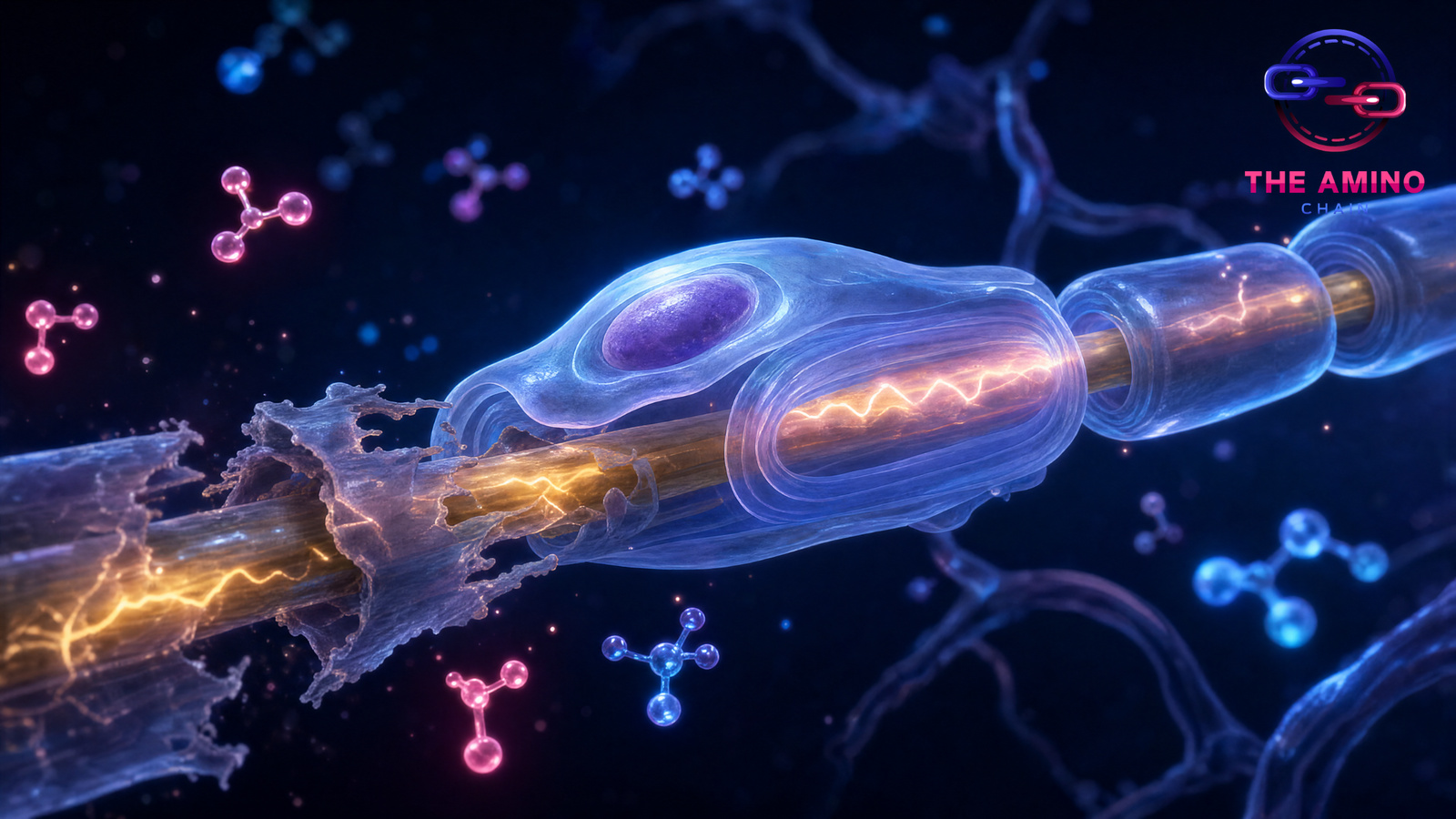
Peripheral nerves can be damaged through mechanical compression (carpal tunnel syndrome, disc herniation), metabolic disruption (diabetic neuropathy), toxic exposure (chemotherapy-induced neuropathy), inflammatory attack (Guillain-Barre syndrome), or traumatic injury (lacerations, crush injuries). Regardless of the cause, the resulting damage falls into two categories: demyelination (damage to the nerve's insulating sheath) and axonal degeneration (damage to the nerve fiber itself).
Demyelination slows nerve conduction but is potentially reversible if the myelin-producing Schwann cells remain viable. Axonal degeneration is more severe — the nerve fiber distal to the injury undergoes Wallerian degeneration, and recovery requires the nerve to physically regrow from the injury site to its target tissue at a rate of approximately 1mm per day.
BPC-157 and Nerve Repair Research
BPC-157 has the most extensive published neuroprotective profile among research peptides. Multiple studies across different nerve injury models have demonstrated effects on neural recovery.
Published studies on peripheral nerve transection in rat models showed that BPC-157-treated animals demonstrated faster functional recovery compared to controls, with improved nerve conduction velocity and enhanced morphological parameters of the regenerating nerve. These findings suggest effects on both the speed of nerve regrowth and the quality of the regenerated tissue.
BPC-157 has also been studied in crush injury models, where the nerve is damaged but not completely severed. These studies reported accelerated recovery of sensory and motor function, with histological analysis showing improved myelination patterns in treated nerves. Since crush injuries preserve the nerve's connective tissue scaffold (endoneurium, perineurium, epineurium), they more closely model the type of nerve damage seen in compression neuropathies.
The NO Connection to Nerve Health
BPC-157's interaction with the nitric oxide system is particularly relevant to neuropathy. NO plays multiple roles in nerve biology: it regulates nerve blood flow, modulates synaptic transmission, and influences nerve growth cone guidance during regeneration. In pathological states — such as diabetic neuropathy — NO homeostasis is disrupted, contributing to both vascular and neural dysfunction.
Published data suggests BPC-157 modulates NO signaling bidirectionally, which could theoretically address the NO dysregulation seen in neuropathic conditions. By helping restore NO toward physiological levels, the peptide could potentially support both nerve blood flow and regenerative signaling simultaneously.
TB-500 and Neural Recovery
TB-500's published role in neural biology is less extensive than BPC-157's, but the peptide's general properties are relevant to nerve repair. Schwann cells — the myelinating cells of the peripheral nervous system — must migrate along the nerve scaffold and proliferate to remyelinate regenerating axons. TB-500's promotion of cell migration through actin regulation could facilitate this process.
The anti-inflammatory properties of TB-500 are also relevant because neuroinflammation contributes to ongoing nerve damage in many neuropathic conditions. Modulating the inflammatory environment in and around damaged nerves could theoretically reduce secondary damage and create more favorable conditions for regeneration.
Types of Neuropathic Pain
Understanding the different pain mechanisms in neuropathy provides context for peptide research. Nociceptive pain results from activation of normal pain receptors by tissue damage. Neuropathic pain results from dysfunction of the nerve itself — damaged nerves generate spontaneous pain signals, respond to normally innocuous stimuli (allodynia), and produce exaggerated responses to painful stimuli (hyperalgesia).
Central sensitization — where the spinal cord and brain amplify pain signals — often develops in chronic neuropathy, creating a situation where pain persists even after the initial nerve damage begins to resolve. This central component adds complexity to any intervention targeting peripheral nerve repair, as addressing the peripheral damage alone may not fully resolve the pain experience.
Conventional Approaches
Evidence-supported approaches for peripheral neuropathy include addressing underlying causes (glucose control for diabetic neuropathy, decompression for entrapment neuropathies), pharmacological pain management with medications targeting nerve pain pathways, physical therapy to maintain function and prevent secondary complications, and emerging interventional approaches including nerve stimulation techniques. Early intervention generally produces better outcomes, as prolonged nerve damage becomes increasingly difficult to reverse.