Peptides and Post-Surgical Recovery: What Research Shows About Healing After Surgery
Surgical recovery involves wound healing, tissue repair, and inflammation management all at once. This article examines how BPC-157 and TB-500 research relates to the specific biology of post-operative healing.
Surgery is fundamentally an act of controlled tissue damage — cutting, repositioning, and suturing tissues to achieve a therapeutic goal. The body must then heal that surgical trauma through the same biological repair processes it uses for any wound: inflammation, proliferation, and remodeling. The quality and speed of this recovery depends on the patient's biology, the surgical technique, and the post-operative environment. Research peptides like BPC-157 and TB-500 have attracted interest because their studied mechanisms map directly onto the key processes of surgical wound healing.
The Biology of Surgical Healing
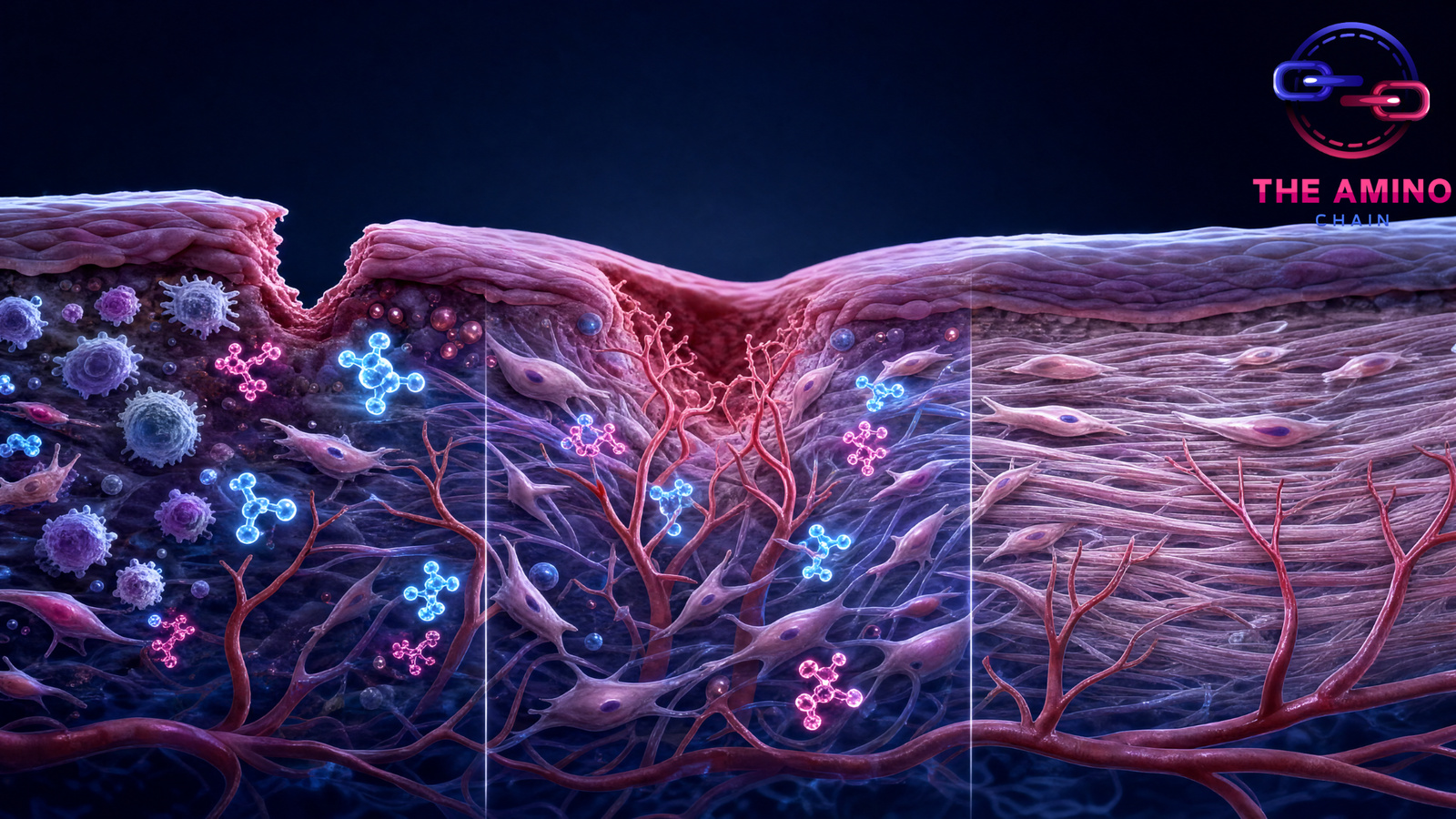
Post-surgical healing proceeds through well-characterized phases. The inflammatory phase (days 0-5) involves hemostasis, immune cell infiltration, and debris clearance. The proliferative phase (days 5-21) involves angiogenesis, fibroblast migration, collagen deposition, and epithelial coverage. The remodeling phase (weeks to months) involves collagen reorganization, crosslinking, and gradual strengthening of the repair tissue.
Each phase must complete successfully before the next can proceed optimally. Disruptions at any stage — excessive inflammation, inadequate blood supply, poor fibroblast activity, disorganized collagen deposition — can result in complications including delayed wound healing, infection, excessive scarring, or wound dehiscence.
BPC-157 and Surgical Wound Healing
BPC-157's published research profile aligns remarkably well with the requirements of surgical healing. The peptide has demonstrated effects on virtually every phase of the wound healing cascade.
During the inflammatory phase, BPC-157's immunomodulatory properties may help balance the necessary inflammatory response against excessive inflammation that delays healing. Published data suggests the peptide modulates rather than suppresses inflammation — a critical distinction for surgical healing, where some inflammation is essential for debris clearance and repair signaling.
During the proliferative phase, BPC-157's promotion of angiogenesis (via VEGF upregulation) addresses the critical need for new blood vessel formation in healing surgical wounds. Adequate blood supply is the single most important factor in wound healing — it delivers oxygen, nutrients, immune cells, and repair cells to the healing site. Published studies have consistently demonstrated enhanced vascularization in BPC-157-treated healing tissue.
The FAK-paxillin pathway activation promotes fibroblast migration and adhesion — essential processes for populating the surgical wound with the cells that produce new connective tissue matrix. Growth factor receptor upregulation amplifies the tissue's responsiveness to repair signals, potentially accelerating the transition from inflammation to productive repair.
TB-500 and Post-Operative Recovery
TB-500's relevance to surgical recovery centers on its promotion of cell migration and its anti-inflammatory properties. Surgical wounds create tissue defects that must be populated by repair cells, and TB-500's actin-regulation mechanism directly facilitates the cellular migration required for wound closure.
Published studies on TB-500 in dermal wound models have demonstrated accelerated wound closure with improved healing quality. The peptide promoted migration of multiple cell types involved in wound healing — fibroblasts, endothelial cells, and keratinocytes — suggesting a broad facilitation of the wound healing cellular response.
The anti-inflammatory modulation is particularly relevant in the early post-operative period, when surgical inflammation can contribute to pain, swelling, and delayed mobilization. By modulating pro-inflammatory cytokines while supporting anti-inflammatory mediators, TB-500 could theoretically optimize the inflammatory phase for healing rather than simply suppressing it.
Anastomotic Healing
One specific surgical context where BPC-157 has been directly studied is gastrointestinal anastomotic healing. Anastomoses — surgical connections between bowel segments — are among the most clinically significant surgical wounds, as anastomotic failure (leakage) is a life-threatening complication. Published animal studies have demonstrated BPC-157's effects on anastomotic healing, with treated animals showing accelerated healing, improved biomechanical strength, and reduced leak rates compared to controls.
This is one of the few areas where BPC-157 has been directly studied in a surgical model rather than inferred from other tissue systems, providing stronger evidence for the peptide's relevance to post-surgical healing.
Scar Formation and Tissue Quality
The quality of surgical healing — not just the speed — is critically important. Excessive scar formation can cause functional limitations, cosmetic concerns, and pain. Conversely, inadequate scar formation leads to wound weakness and potential dehiscence.
Both BPC-157 and GHK-Cu have published data relevant to scar quality. BPC-157's promotion of organized collagen deposition suggests potential for more functional, less disorganized scar tissue. GHK-Cu's effects on collagen synthesis and crosslinking — and its broad gene modulatory profile affecting over 4,000 genes including those involved in tissue remodeling — suggest potential influence on the remodeling phase that determines final scar quality.
Important Surgical Context
Post-surgical recovery decisions should always be made in consultation with the surgical team. Factors including the type of surgery, tissue quality, nutritional status, comorbidities, medications, and rehabilitation protocol all influence recovery outcomes. Evidence-supported recovery optimization includes adequate protein intake, appropriate wound care, early mobilization as directed, pain management, and compliance with physical therapy recommendations.