Peptides and Tennis Elbow: Research on Lateral Epicondylitis and Tendon Repair
Tennis elbow affects up to 3% of the population and is notoriously resistant to treatment. This article explores how BPC-157 and TB-500 research relates to the specific biology of lateral epicondylitis.
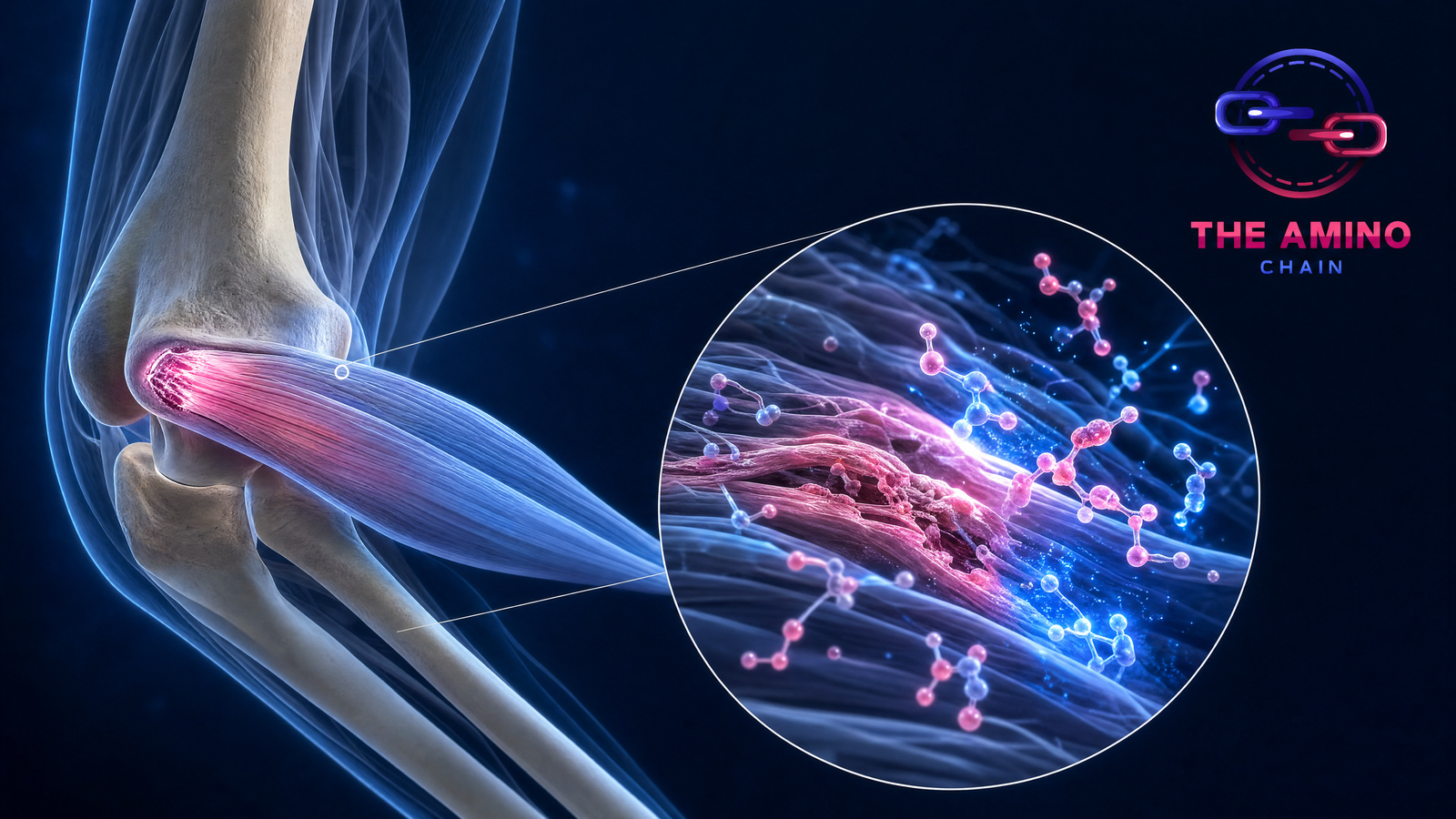
Lateral epicondylitis — commonly known as tennis elbow — is one of the most prevalent overuse injuries, affecting 1-3% of the general population and up to 15% of workers in high-risk occupations. Despite its name, fewer than 10% of cases actually involve tennis. The condition centers on the common extensor tendon origin at the lateral epicondyle of the elbow, where repetitive gripping and wrist extension create cumulative microtrauma that overwhelms the tendon's repair capacity.
Tennis Elbow Is Not Inflammation
Like plantar fasciitis, lateral epicondylitis has historically been misnamed. The "-itis" suffix implies inflammation, but histological examination of surgical specimens consistently reveals a non-inflammatory degenerative process. The correct pathological term is angiofibroblastic tendinosis — characterized by disorganized collagen, immature fibroblast proliferation, and abnormal vascular ingrowth.
This distinction is critically important for research context. Anti-inflammatory approaches (NSAIDs, corticosteroid injections) may provide temporary pain relief but do not address the underlying degenerative pathology. In fact, published research suggests corticosteroid injections, while providing short-term benefit, may worsen long-term outcomes by further weakening the already compromised tendon tissue.
Why the Common Extensor Origin Is Vulnerable
The common extensor tendon experiences a unique biomechanical environment. It anchors five forearm muscles to a relatively small bony prominence, concentrating significant force through a limited cross-sectional area. During gripping activities, eccentric loading on the wrist extensors generates tensile and shear forces at the tendon origin that can exceed the tissue's capacity for repair between loading cycles.
Additionally, the blood supply to the extensor carpi radialis brevis (ECRB) tendon origin — the most commonly affected structure — is limited compared to other forearm tendons. This hypovascular zone, similar to the one described in rotator cuff pathology, creates a biological environment where tissue damage accumulates faster than repair can occur.
BPC-157 and Extensor Tendon Biology
BPC-157's published tendon research is directly relevant to lateral epicondylitis. The peptide's demonstrated effects on tendon healing in animal models — accelerated functional recovery, improved collagen organization, enhanced vascularization — address the core pathological features of angiofibroblastic tendinosis.
VEGF upregulation is particularly relevant for tennis elbow because the ECRB tendon origin's hypovascular zone is central to the pathology. Improving blood supply to this region could theoretically enhance nutrient delivery, waste removal, and repair cell recruitment — the fundamental requirements for tendon healing that the current vasculature cannot adequately support.
Growth factor receptor upregulation (EGF, VEGF receptors) may also address a specific feature of tendinosis: the presence of immature, dysfunctional fibroblasts. In angiofibroblastic tendinosis, the fibroblasts present at the lesion site are metabolically active but producing disorganized, mechanically inferior collagen. Enhancing growth factor signaling could theoretically promote maturation of these cells toward more functional collagen production.
TB-500 and Elbow Recovery
TB-500's role in elbow tendon research relates to its cell migration and anti-inflammatory properties. The ECRB tendon origin's limited vascularity means repair cells face the same access challenges seen in other hypovascular tendons. TB-500's promotion of cellular migration through actin regulation could help overcome this barrier.
The anti-inflammatory modulation offered by TB-500 — suppressing TNF-alpha, IL-1beta, and IL-6 while supporting anti-inflammatory mediators — is relevant even in a primarily degenerative condition. While the pathology is not inflammatory in origin, chronic pain signaling and secondary inflammatory responses in the surrounding tissues contribute to the clinical picture and may impede the repair process.
GHK-Cu and Tendon Quality
For tennis elbow specifically, GHK-Cu deserves mention. The central pathological feature of lateral epicondylitis is disorganized, mechanically inferior collagen. GHK-Cu's published effects on collagen synthesis and crosslinking — mediated through copper delivery for lysyl oxidase activity — directly target this quality issue. If the degenerative tendon tissue could produce better-organized, properly crosslinked collagen, the mechanical properties of the repair tissue would improve.
Conventional Evidence-Based Treatment
Evidence-supported approaches for lateral epicondylitis include eccentric wrist extensor exercises (the single most effective conservative treatment in published literature), counterforce bracing to reduce load on the tendon origin, activity modification to reduce provocative gripping tasks, and patience — most cases resolve within 12-18 months regardless of treatment. These approaches should form the foundation of any management strategy.