Peptides and Wrist Pain: Carpal Tunnel, Tendinitis, and Nerve Compression Research
Wrist pain from carpal tunnel syndrome, tendinitis, or repetitive strain affects millions. This article explores how peptide research on nerve protection and tendon repair relates to common wrist conditions.
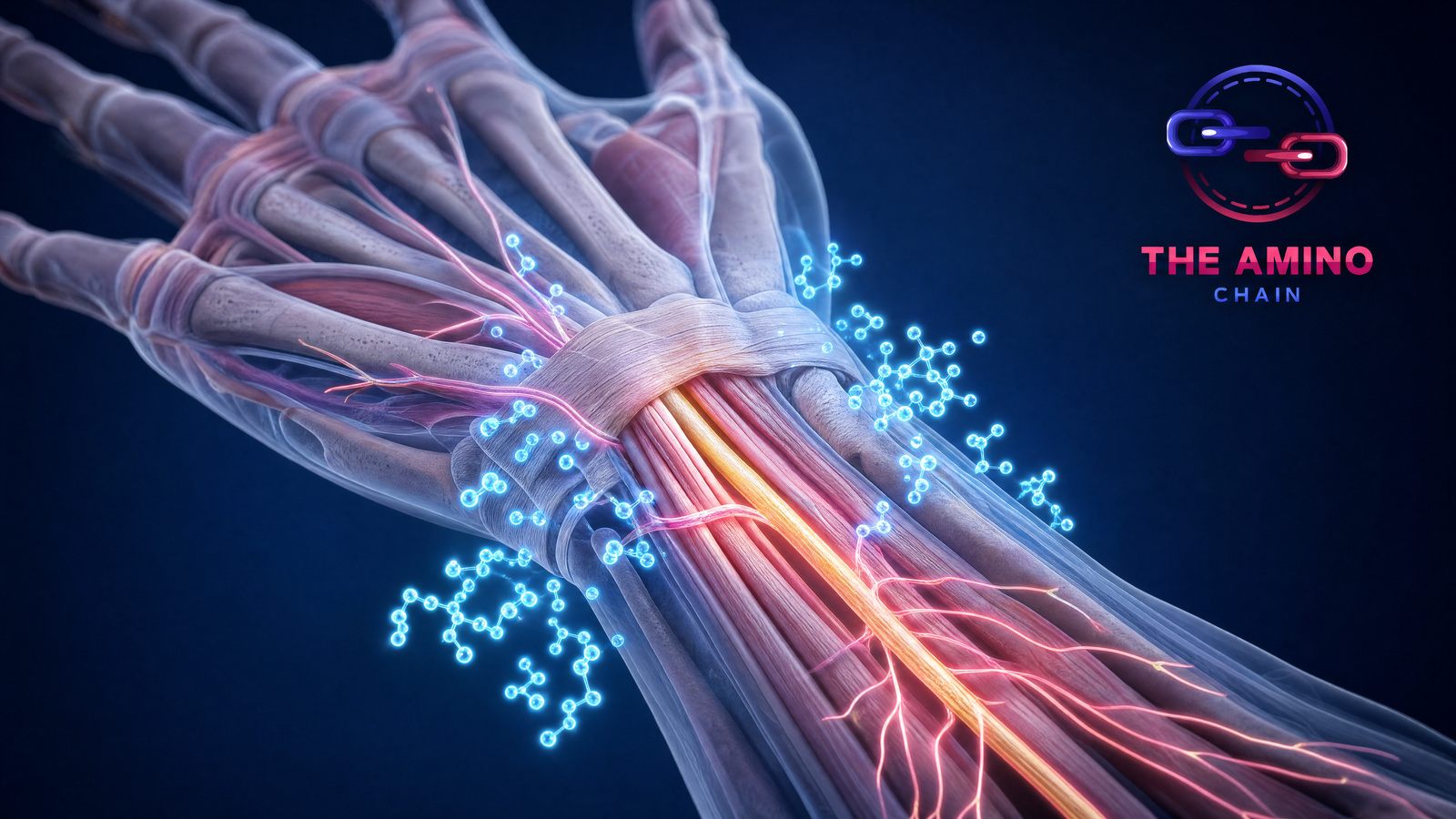
The wrist is one of the most mechanically complex joints in the body — 8 carpal bones, multiple ligaments, tendons from both the forearm flexors and extensors, and the median nerve all packed into a remarkably small space. When things go wrong here — whether from carpal tunnel syndrome, De Quervain's tenosynovitis, or repetitive strain — the impact on daily life is immediate and significant. Emerging peptide research on nerve protection and tendon repair offers interesting perspectives on the biology underlying these conditions.
Carpal Tunnel Syndrome: A Nerve Compression Problem
Carpal tunnel syndrome (CTS) is the most common peripheral nerve entrapment, affecting 3-6% of the general population. The median nerve passes through the carpal tunnel — a rigid channel formed by the carpal bones and the transverse carpal ligament — alongside nine flexor tendons. Any process that increases pressure within this tunnel compresses the median nerve, producing the characteristic numbness, tingling, and weakness.
The pathology involves both mechanical compression and ischemic damage. Increased tunnel pressure reduces blood flow to the median nerve, compromising the blood-nerve barrier and causing edema within the nerve itself. Over time, this leads to demyelination and, in severe cases, axonal degeneration — processes that peptide research on nerve protection may be relevant to understanding.
BPC-157 and Nerve Protection
BPC-157's published neuroprotective profile is particularly relevant to carpal tunnel syndrome. Animal studies have demonstrated the peptide's effects on peripheral nerve healing following various injury models, with treated subjects showing faster functional recovery and improved nerve conduction parameters.
The NO system modulation is directly relevant to nerve compression injuries because nitric oxide plays a critical role in maintaining nerve blood flow. In CTS, compressed nerves experience reduced perfusion — and the resulting ischemia is a major driver of nerve damage. BPC-157's ability to modulate NO signaling toward physiological levels could theoretically support nerve perfusion in compressed conditions.
Additionally, BPC-157's cytoprotective effects — demonstrated in multiple tissue systems — may be relevant to protecting nerve cells under mechanical and ischemic stress. The peptide has shown effects on cell survival pathways that could help nerve tissue maintain function under the adverse conditions present in carpal tunnel syndrome.
Wrist Tendinitis and De Quervain's
De Quervain's tenosynovitis involves the abductor pollicis longus and extensor pollicis brevis tendons at the first dorsal compartment of the wrist. Like other tendinopathies, it typically involves a degenerative process — thickening and disorganization of the tendon tissue within the tendon sheath, rather than true inflammation.
BPC-157's published effects on tendon healing apply directly here. The demonstrated improvements in collagen organization, enhanced vascularization, and growth factor receptor upregulation are relevant to restoring normal tendon architecture in the affected compartment. TB-500's cell migration properties could facilitate repair cell access to the confined space of the tendon sheath.
TB-500 and Wrist Recovery
TB-500's anti-inflammatory modulation is relevant to both CTS and wrist tendinitis. In CTS, tenosynovitis (inflammation of the tendon sheaths within the carpal tunnel) is often the precipitating cause of increased tunnel pressure. By modulating inflammatory cytokines, TB-500 could theoretically reduce tendon sheath swelling and decrease pressure on the median nerve.
For wrist tendinitis, TB-500's promotion of cell migration addresses the challenge of healing in the confined anatomical spaces of the wrist. The tendon sheaths and retinacular structures create compartments that can limit the influx of repair cells, making migration efficiency particularly important.
Conventional Treatment Approaches
Evidence-supported approaches for wrist conditions include wrist splinting (particularly night splints for CTS to maintain neutral wrist position), ergonomic workplace modifications to reduce repetitive strain, nerve gliding exercises for CTS to improve median nerve mobility within the tunnel, tendon gliding exercises for tendinitis, and surgical consultation for CTS not responding to 3-6 months of conservative management or showing progressive neurological deficits.