How to Read a COA Like a Scientist
Most researchers glance at the purity number and move on. Here is how to actually evaluate a Certificate of Analysis — chromatograms, mass spec data, and the red flags that matter.
A Certificate of Analysis is the single most important quality document in peptide research. Yet most researchers give it a cursory glance — checking the purity percentage and filing it away. Understanding how to read a COA critically can save you from unreliable compounds and irreproducible results.
The Purity Number Is Not Enough
A COA stating 99.2% purity is meaningless without the data behind it. The purity percentage should be derived from HPLC analysis — specifically, the area percentage of the main peak relative to all detected peaks. Without seeing the chromatogram, you cannot evaluate whether the measurement is reliable.
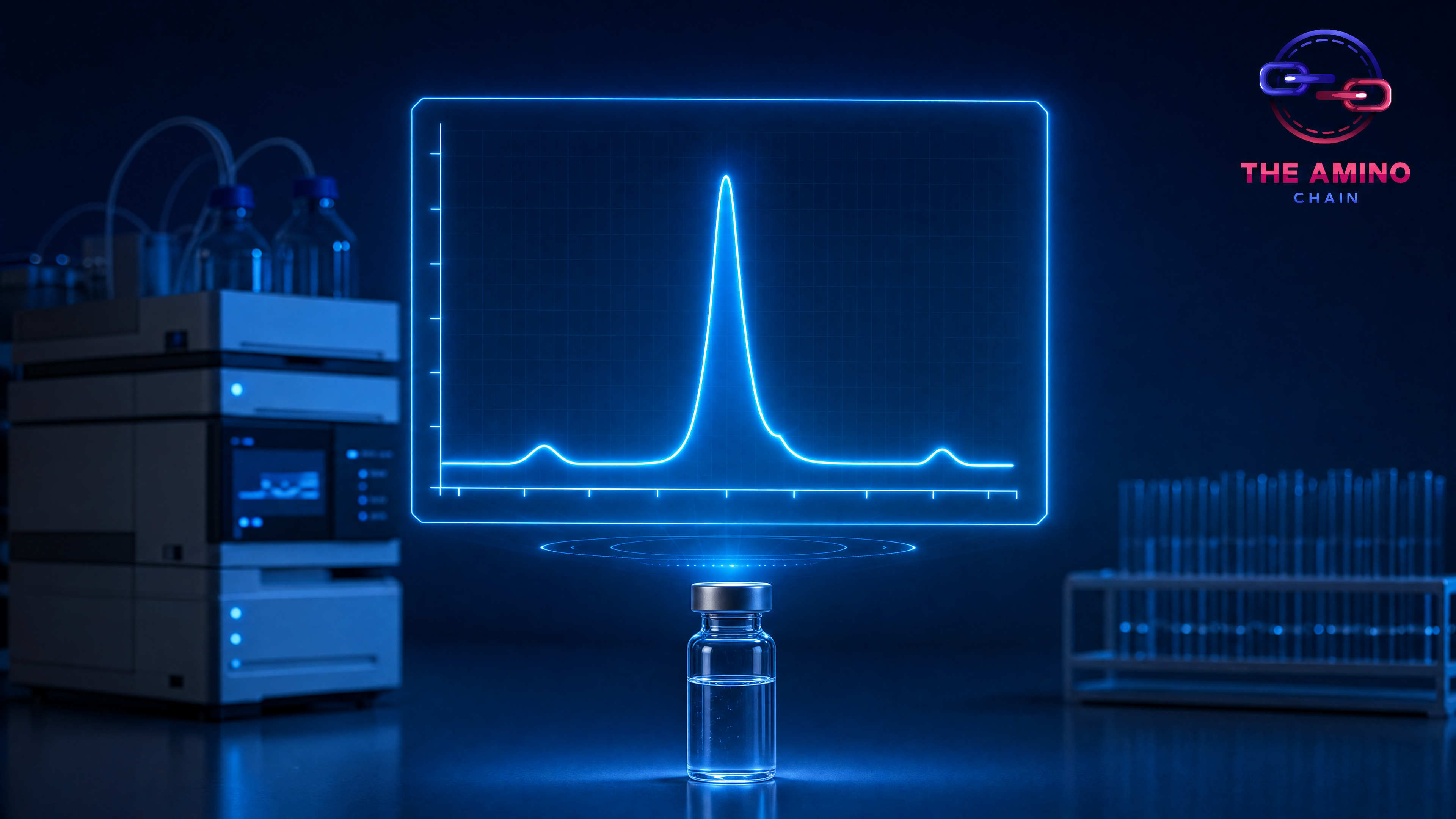
Reading the HPLC Chromatogram
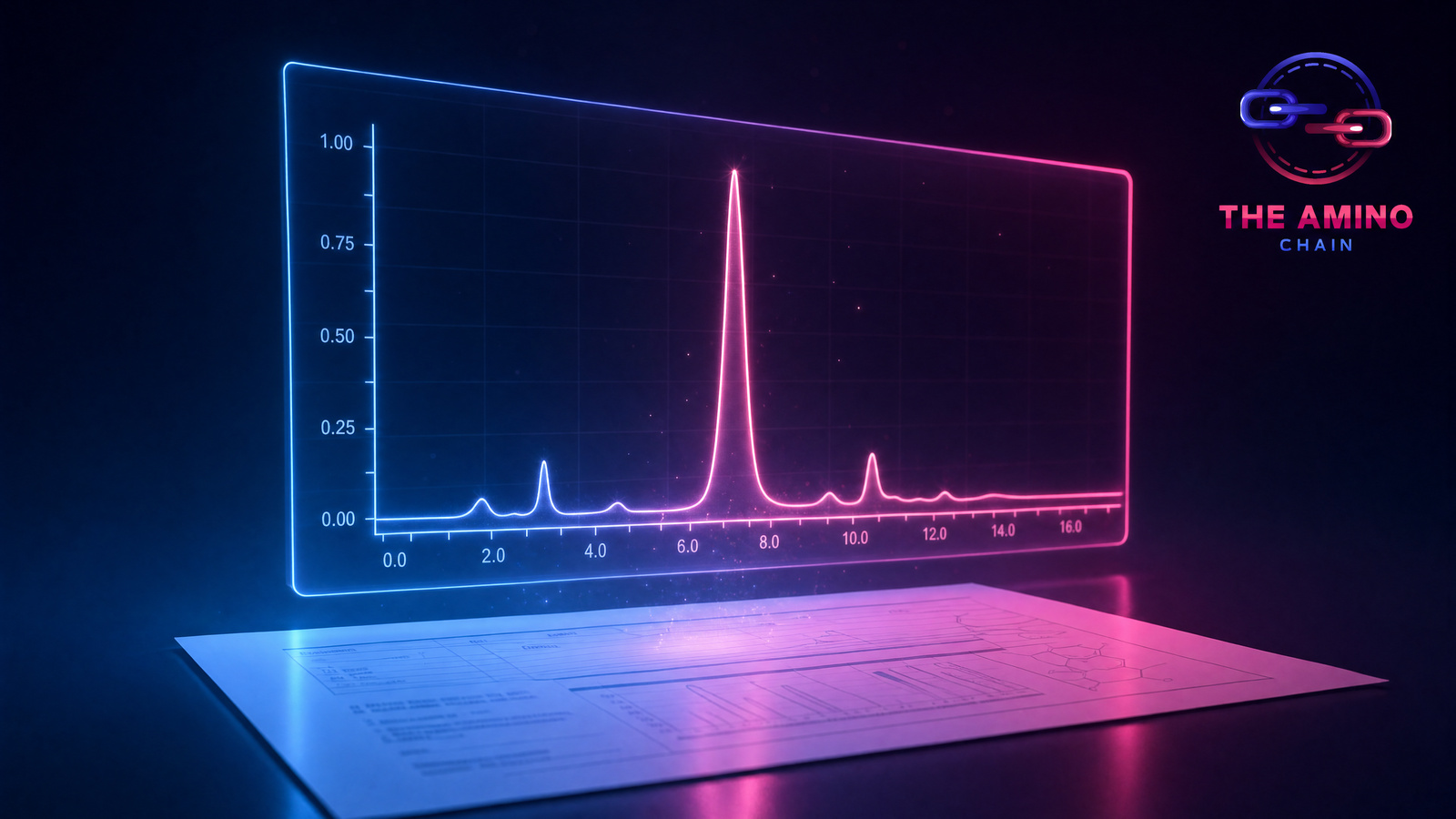
A chromatogram plots detector response (y-axis) against time (x-axis). The main peak represents your target peptide. Key things to evaluate:
Peak symmetry: A Gaussian (bell-shaped) peak indicates good chromatographic separation. Tailing or fronting suggests column issues or sample overloading.
Baseline quality: A flat, stable baseline indicates a well-maintained instrument. Drift or noise can affect purity calculations.
Impurity peaks: Small peaks before and after the main peak represent impurities. Their relative size should be consistent with the stated purity.
Mass Spectrometry Data
While HPLC tells you how pure the sample is, mass spectrometry tells you what it actually is. The observed molecular weight should match the theoretical molecular weight within 1 Da for peptides under 3000 Da. A mismatch suggests the wrong compound, incomplete synthesis, or unexpected modifications.
Red Flags to Watch For
Generic COAs without batch-specific lot numbers. Suspiciously round purity numbers (exactly 99.0% every time). COAs showing identical results across different batches. Documents from unnamed laboratories. These patterns suggest template documents rather than actual analytical testing.