Peptide Reconstitution Masterclass: From Vial to Solution
A comprehensive, step-by-step guide to reconstituting lyophilized peptides — covering solvent selection, volume calculations, technique, and storage after reconstitution.
Proper reconstitution is the foundation of reliable peptide research. A perfectly synthesized, HPLC-purified, lyophilized peptide can be rendered useless by improper reconstitution technique. This guide covers everything from solvent selection to storage optimization.
Understanding Your Starting Material
Lyophilized peptides arrive as a white to off-white powder or cake in a sealed glass vial. This freeze-dried form is remarkably stable — the removal of water eliminates the primary degradation pathway (hydrolysis) and dramatically extends shelf life. Your goal in reconstitution is to return the peptide to solution form while preserving its structural integrity.
Solvent Selection
Bacteriostatic water is the standard choice for most research peptides. It contains 0.9% benzyl alcohol, which inhibits bacterial growth and allows multi-use access to the vial. Most common research peptides dissolve readily in BAC water.
Sterile water is an alternative if benzyl alcohol compatibility is a concern, but offers no antimicrobial protection — use the entire volume immediately after opening.
The Golden Rules of Reconstitution
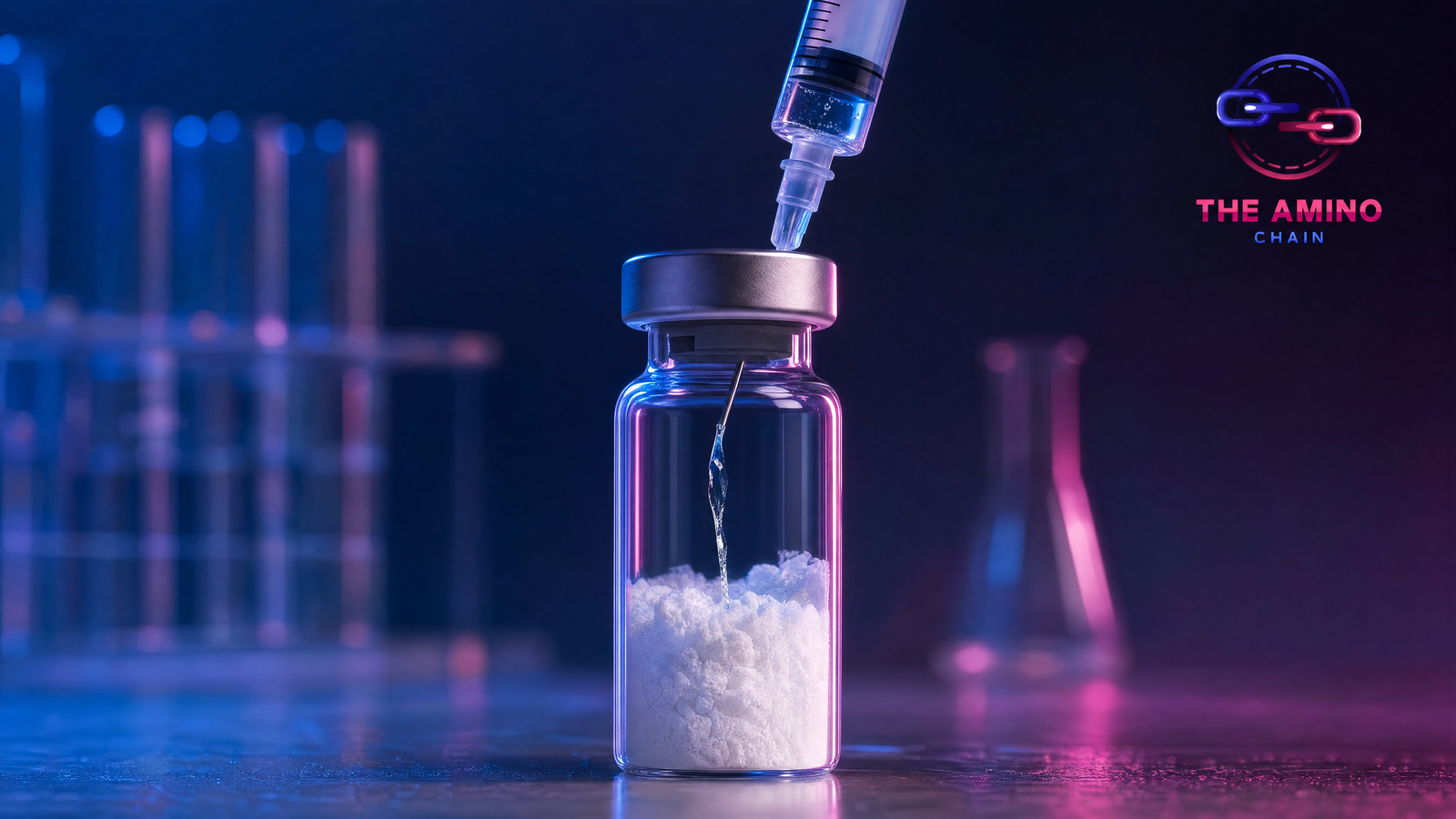
Rule 1: Never inject directly onto the powder. Add solvent slowly down the inside wall of the vial. Direct injection creates localized high concentrations that can cause irreversible aggregation.
Rule 2: Never shake. Gently swirl or roll the vial between your palms. Shaking creates air-liquid interfaces where peptides denature.
Rule 3: Be patient. Most peptides dissolve within 1-3 minutes of gentle swirling. If not, let the vial sit at room temperature for 15 minutes before concluding there is a solubility issue.
Calculating Your Concentration
The formula is simple: Concentration = Amount (mg) ÷ Volume (mL)
For a 5mg vial: adding 2.5mL yields 2mg/mL. Adding 1mL yields 5mg/mL. Choose a concentration that matches your measurement precision — lower concentrations are more forgiving for small-volume measurements.
Post-Reconstitution Storage
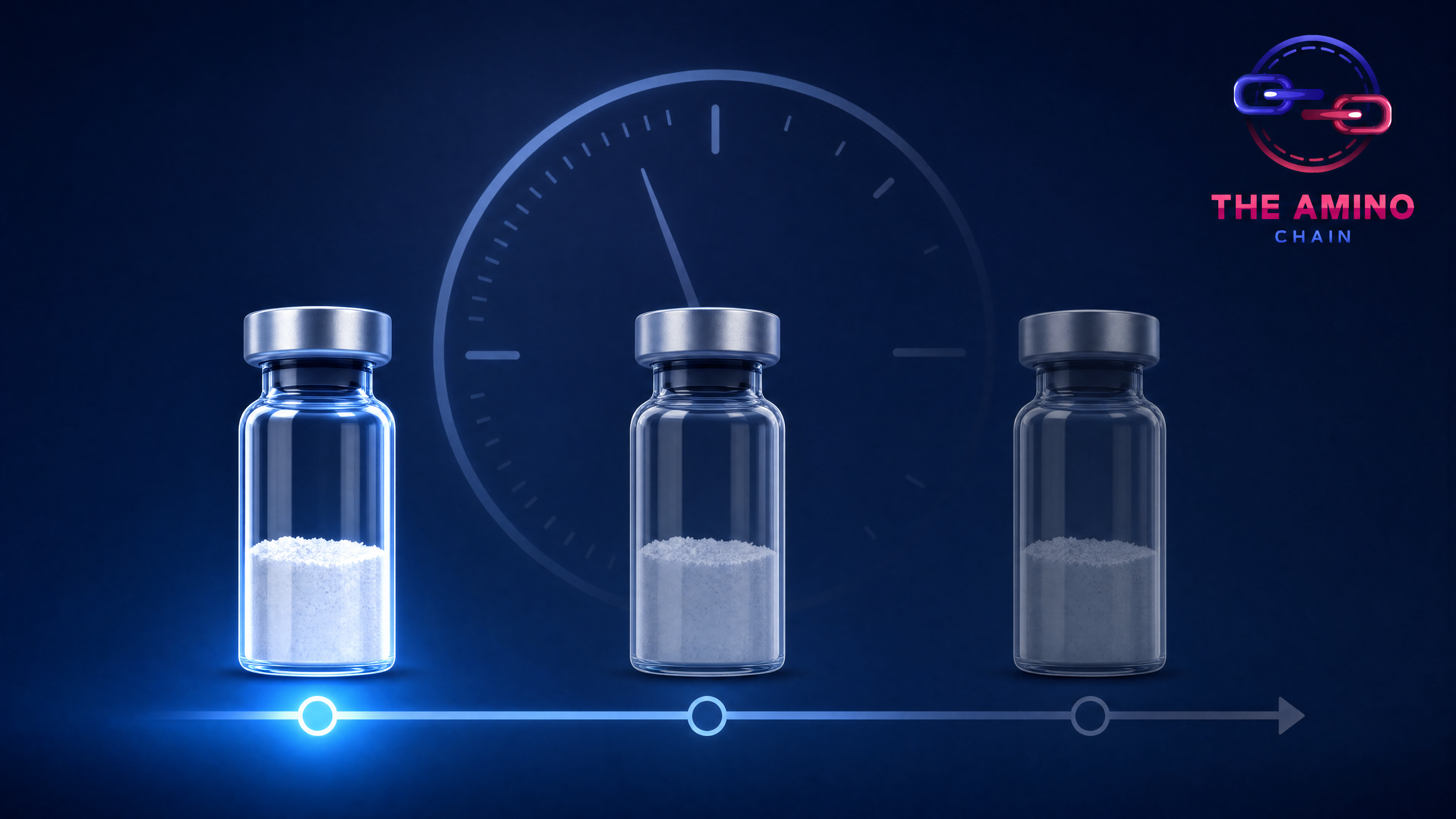
Refrigerate immediately at 2-8°C. Use within 3-4 weeks. If you need longer storage, aliquot into single-use volumes before freezing. Never refreeze a thawed aliquot. Label everything with peptide name, concentration, date, and lot number.