Retatrutide and Appetite: Research on Hunger Signaling, Satiety, and Food Reward Pathways
Appetite regulation involves a complex interplay of hormonal, neural, and psychological signals. Retatrutide engages multiple appetite-regulating pathways simultaneously through its triple receptor mechanism.
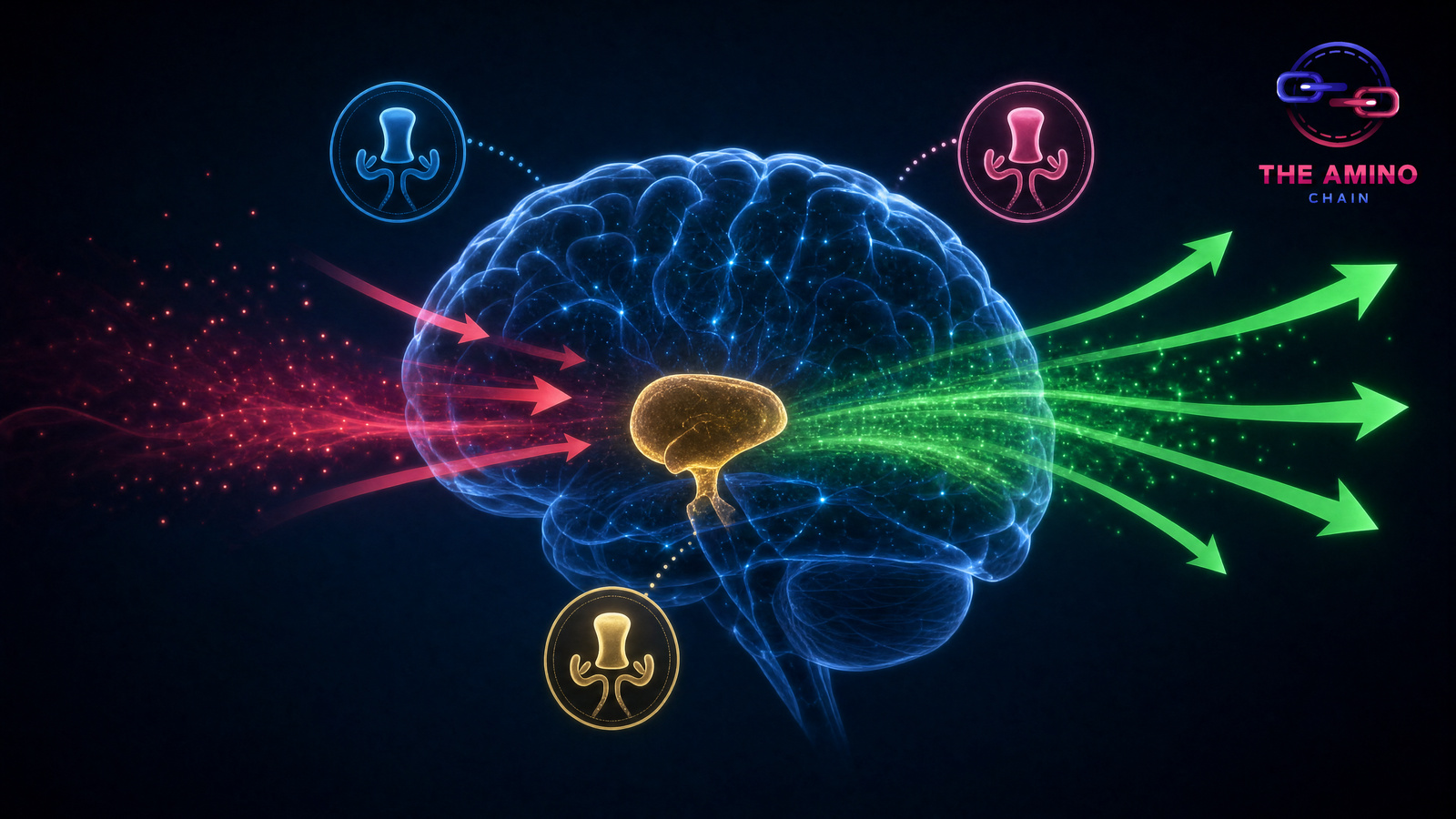
Appetite is not a single signal — it's an orchestra of hormonal, neural, and psychological inputs that the brain integrates to drive feeding behavior. Hunger, satiety, cravings, food reward, and meal timing are regulated by different but overlapping systems. Retatrutide's triple receptor mechanism engages multiple nodes in this network simultaneously, producing appetite effects that differ from single-receptor approaches in both magnitude and character.
GLP-1 and Central Appetite Regulation
GLP-1 receptor activation is the best-characterized appetite-suppressing mechanism among incretin pathways. GLP-1R is expressed in the hypothalamic arcuate nucleus and paraventricular nucleus — brain regions that integrate peripheral metabolic signals to regulate feeding behavior. GLP-1R activation in these areas reduces the activity of orexigenic (hunger-promoting) neurons and enhances the activity of anorexigenic (satiety-promoting) neurons.
Additionally, GLP-1R activation in the nucleus tractus solitarius (NTS) of the brainstem modulates visceral sensory processing, contributing to the sensation of fullness. GLP-1's well-documented effect on gastric emptying rate further extends the duration of post-meal satiety by maintaining gastric distension — a potent satiety signal.
GIP and Adipose Tissue Signaling
GIP's role in appetite regulation is more nuanced and less completely understood than GLP-1's. GIPR is expressed in adipose tissue, where GIP signaling influences lipid storage and potentially generates adipose-derived signals that feed back to the brain regarding energy storage status. Published research suggests that GIP may modulate food intake through effects on adipose tissue leptin production and other adipokines that communicate energy reserve status to hypothalamic circuits.
Glucagon and Satiety
Glucagon's effects on appetite are the least intuitive component of the triple agonist mechanism. Published research has documented anorexigenic (appetite-suppressing) effects of glucagon, potentially mediated through hepatic vagal afferent signaling — the liver senses changes in energy substrate availability during GCGR activation and communicates this information to the brain via the vagus nerve. Additionally, glucagon may influence appetite through direct central nervous system effects, as GCGR expression has been documented in brain regions involved in feeding behavior.
Food Reward and Cravings
Beyond homeostatic appetite regulation, hedonic eating — food consumption driven by pleasure and reward rather than caloric need — is a major contributor to overconsumption. The mesolimbic dopamine system mediates food reward, and published GLP-1R research has demonstrated effects on this system, reducing the reward value of highly palatable foods. Whether triple agonism modifies food reward processing differently than GLP-1 agonism alone is an active area of neuroscience research.
Nausea and Tolerability
GLP-1R activation produces dose-dependent nausea, which is both a side effect and a contributor to reduced food intake. The gastrointestinal effects of GLP-1R activation — reduced gastric emptying, altered intestinal motility — can cause nausea, particularly during dose escalation. Whether the addition of GIPR and GCGR activation modifies the GI tolerability profile of GLP-1R activation is a clinically relevant question. Published data suggests that the multi-receptor approach may allow lower relative GLP-1R activation while achieving similar or greater appetite effects through the complementary pathways.
Sustained Appetite Effects
A critical question for any appetite-modulating compound is whether effects persist with chronic administration or attenuate over time (tachyphylaxis). Published data on GLP-1 receptor agonists generally shows sustained appetite effects over months to years of use, though some degree of adaptation may occur. Whether the three-receptor approach of retatrutide provides more durable appetite effects than single-receptor agonism through reduced individual receptor desensitization is a theoretical advantage that requires long-term data to confirm.