Retatrutide and Insulin Resistance: Triple Agonist Research on Glucose Homeostasis and Beta Cell Function
Insulin resistance drives metabolic disease. Retatrutide's three-receptor mechanism addresses glucose metabolism from multiple angles — enhancing insulin secretion, improving insulin sensitivity, and modulating hepatic glucose output.
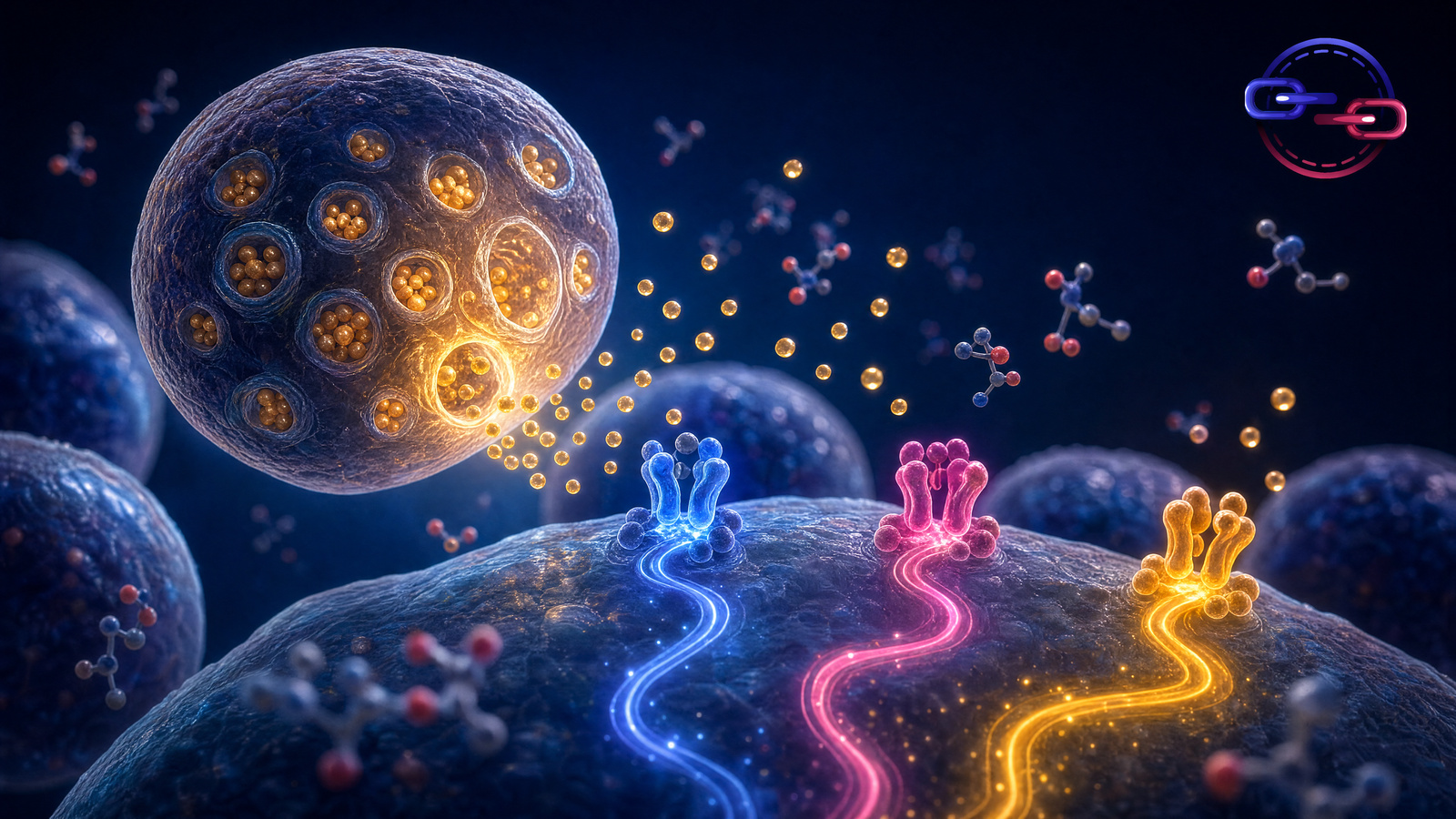
Insulin resistance — the diminished ability of insulin to drive glucose uptake into cells — is the metabolic defect at the center of type 2 diabetes, metabolic syndrome, and polycystic ovary syndrome. It precedes overt diabetes by years to decades, and addressing it early is a primary focus of metabolic research. Retatrutide's triple receptor mechanism engages glucose homeostasis from three distinct angles, offering a research perspective that single-receptor approaches cannot provide.
GLP-1 and Glucose-Dependent Insulin Secretion
GLP-1R activation on pancreatic beta cells enhances glucose-dependent insulin secretion — a critical distinction from sulfonylureas and exogenous insulin, which increase insulin regardless of ambient glucose levels. GLP-1R signaling increases intracellular cAMP in beta cells, priming them to release more insulin in response to glucose stimulation while avoiding inappropriate insulin release during fasting. This glucose-dependency provides an inherent safety mechanism against hypoglycemia.
GLP-1R activation also suppresses glucagon secretion from pancreatic alpha cells in a glucose-dependent manner — reducing the counterregulatory signal that raises blood glucose. Additionally, published research has documented trophic effects of GLP-1R activation on beta cell mass in preclinical models, including stimulation of beta cell proliferation and inhibition of apoptosis, though translation of these effects to human beta cells remains under investigation.
GIP and the Incretin Effect
GIP was the first incretin hormone discovered, and it is responsible for approximately 50-70% of the incretin effect — the enhanced insulin response to oral versus intravenous glucose. GIPR activation on beta cells increases cAMP through Gs-coupled signaling, enhancing glucose-stimulated insulin secretion through mechanisms that partially overlap with but are not identical to GLP-1R signaling.
The dual engagement of both incretin receptors may more fully restore the impaired incretin effect observed in type 2 diabetes, where both GLP-1 and GIP responses are attenuated. By activating both pathways simultaneously, retatrutide may achieve more complete incretin restoration than either pathway alone.
Glucagon and Hepatic Glucose Output
Glucagon's primary metabolic function is to mobilize hepatic glucose through glycogenolysis and gluconeogenesis — effects that would seem counterproductive for glucose lowering. However, in the context of retatrutide's triple agonism, the GCGR activation occurs against a background of simultaneous GLP-1R and GIPR activation that provides robust glucose-lowering. The net glycemic effect depends on the relative potencies at each receptor, and retatrutide's design calibrates these potencies to achieve net glucose improvement.
Furthermore, GCGR activation's effects on hepatic lipid oxidation may indirectly improve hepatic insulin sensitivity. Intrahepatic lipid accumulation (hepatic steatosis) is a major driver of hepatic insulin resistance — by reducing liver fat through enhanced fatty acid oxidation, GCGR activation may improve the liver's responsiveness to insulin's glucose-suppressing effects.
Peripheral Insulin Sensitivity
Beyond direct effects on insulin secretion, weight loss and fat mass reduction are among the most powerful interventions for improving peripheral insulin sensitivity. Adipose tissue — particularly visceral adipose tissue — releases inflammatory adipokines that impair insulin signaling in muscle and liver. By reducing fat mass through its combined appetite-suppressing and energy expenditure-enhancing effects, retatrutide may substantially improve peripheral insulin sensitivity independent of its direct receptor-mediated effects on glucose metabolism.
Research Implications
The multi-receptor approach to glucose homeostasis is mechanistically compelling but also complex. Three receptor systems interacting simultaneously create a larger number of potential outcomes than single-receptor activation. Published research is still characterizing the dose-response relationships at each receptor, the time course of glycemic effects, and the durability of glucose improvements with chronic administration.