Selank and Semax: Research on Nootropic Peptides and Cognitive Biology
Selank and Semax are synthetic peptide analogs developed in Russia with published research on cognitive function, neuroprotection, and anxiety modulation. This article examines their unique mechanisms and what the published literature reveals.
Among the diverse landscape of research peptides, Selank and Semax stand out for their focus on the central nervous system. Developed at the Institute of Molecular Genetics of the Russian Academy of Sciences, these synthetic peptides have been studied for cognitive enhancement, neuroprotection, and anxiolytic effects — a very different application profile from the tissue repair peptides that dominate Western research.
Semax: The ACTH Analog
Semax is a synthetic analog of adrenocorticotropic hormone (ACTH) fragment 4-10, with the sequence Met-Glu-His-Phe-Pro-Gly-Pro. The critical modification is the addition of a C-terminal Pro-Gly-Pro tripeptide, which dramatically extends the biological half-life from the parent fragment's minutes to several hours.
Importantly, Semax retains the neurotrophic properties of the ACTH 4-10 fragment while lacking the steroidogenic (cortisol-producing) activity of full-length ACTH. This separation of neurological from endocrine effects parallels the approach seen with AOD-9604 — taking the therapeutically interesting portion of a larger hormone while discarding unwanted activities.
Semax's Published Mechanisms
Published research has identified several mechanisms through which Semax may influence cognitive function. The peptide has been shown to increase brain-derived neurotrophic factor (BDNF) expression in multiple brain regions. BDNF is a key protein involved in neuronal survival, synaptic plasticity, and memory formation — making it a central target in cognitive research.
Additionally, Semax has demonstrated effects on the expression of genes involved in the immune and vascular systems within the brain, suggesting a broader neuroprotective profile beyond simple neurotrophic support. Published transcriptomic studies have revealed changes in over 100 genes in rat brain tissue following Semax administration, with significant enrichment in categories related to neuronal differentiation, synaptic transmission, and immune regulation.
Selank: The Tuftsin Analog
Selank is a synthetic analog of the immunomodulatory peptide tuftsin (Thr-Lys-Pro-Arg), with the addition of a C-terminal Gly-Pro sequence that extends its half-life. While tuftsin is primarily known for immune functions — stimulating phagocytosis and natural killer cell activity — Selank's research profile has expanded to include significant anxiolytic and nootropic effects.
The anxiolytic properties of Selank have been compared in published studies to benzodiazepine medications, with the notable difference that Selank does not produce sedation, muscle relaxation, or dependence — the common side effects that limit benzodiazepine utility. This profile has generated considerable research interest in anxiety and stress biology.
Selank's Published Mechanisms
Published research suggests that Selank's anxiolytic effects involve modulation of the GABAergic system — the same neurotransmitter system targeted by benzodiazepines, but through a different molecular mechanism. The peptide has been shown to influence GABA receptor expression and GABA metabolism enzyme activity, potentially enhancing inhibitory neurotransmission without directly binding to the benzodiazepine site.
Additionally, Selank has demonstrated effects on monoamine neurotransmitter systems, including serotonin and norepinephrine metabolism in brain tissue. Published studies report stabilization of enkephalin levels — endogenous opioid peptides involved in pain modulation and emotional regulation.
The Russian Research Context
Both Selank and Semax have been approved as pharmaceutical products in Russia — Semax for stroke recovery and cognitive disorders, and Selank for anxiety and neurasthenia. They have extensive clinical use histories in Russian medicine, with published clinical data in Russian medical literature.
Western researchers should note that much of the primary clinical literature is published in Russian-language journals, which can create accessibility barriers. English-language publications have increased in recent years, but the full scope of clinical experience remains partially inaccessible to non-Russian-reading researchers.
Research Considerations
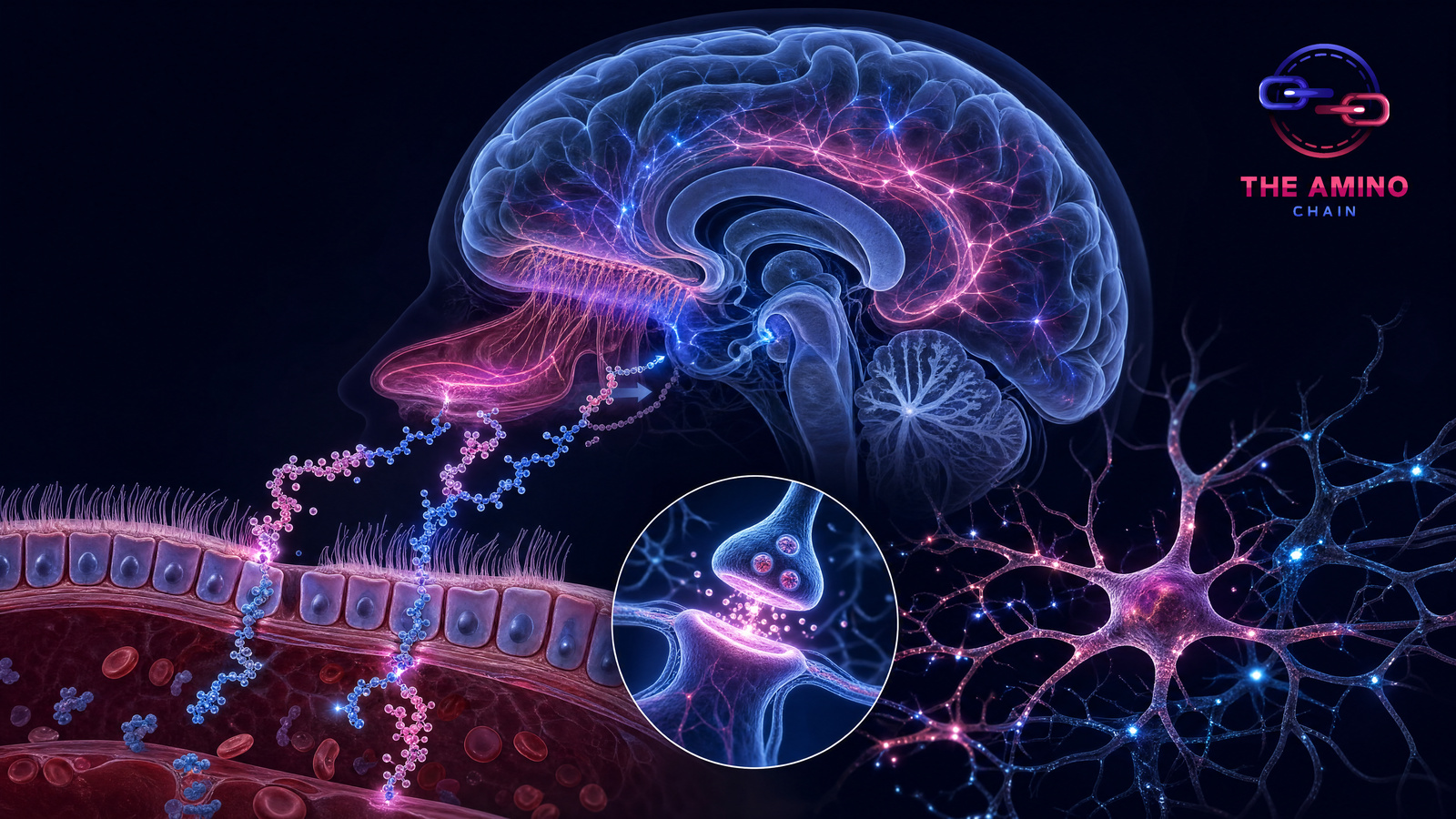
Both peptides are typically administered intranasally in research and clinical settings — a notable difference from most research peptides, which are studied via injection. The intranasal route provides direct access to the CNS through the olfactory and trigeminal nerve pathways, bypassing the blood-brain barrier. Both are reconstituted in bacteriostatic water and should be stored at 2-8 degrees Celsius.