Thymulin: The Zinc-Dependent Thymic Peptide That Declines With Age and Immune Senescence
Thymulin is a 9-amino acid peptide that requires zinc binding for biological activity. Published research on immune restoration, pain modulation, and skin biology reveals an overlooked thymic peptide with unique metallopeptide properties.
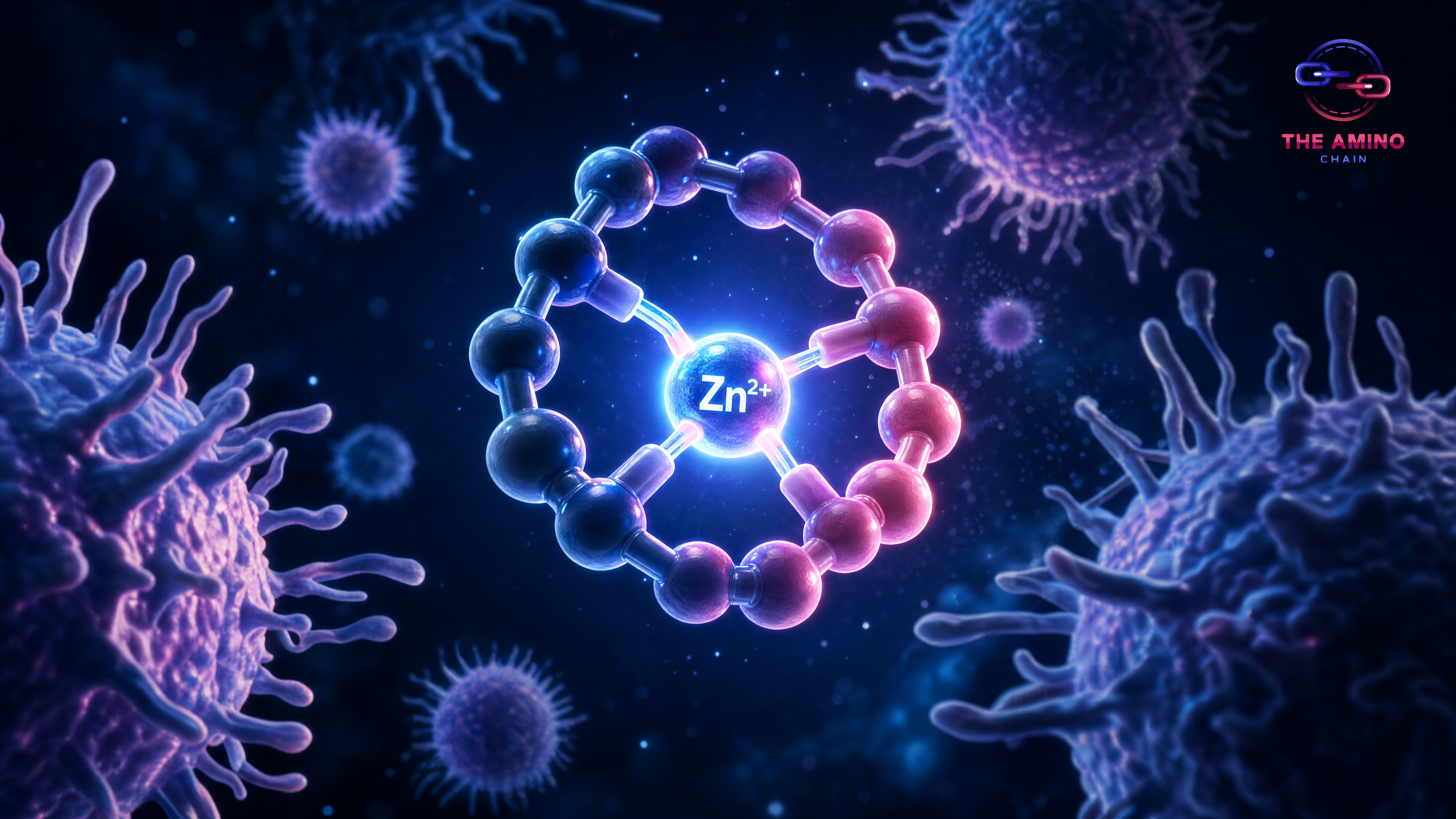
Thymulin (formerly called Facteur Thymique Serique or FTS) is a nonapeptide (9 amino acids: Glu-Ala-Lys-Ser-Gln-Gly-Gly-Ser-Asn) produced exclusively by thymic epithelial cells. What makes Thymulin unique among thymic peptides is its absolute requirement for zinc: the peptide is biologically inactive without a zinc ion bound at a specific coordination site involving the glutamic acid and asparagine residues. This zinc dependency connects thymic immune function directly to zinc nutritional status — and explains some of zinc's well-known immune effects.
Zinc Binding: Structure Meets Function
Thymulin exists in two forms: the zinc-bound active form (ZnFTS) and the zinc-free inactive form (FTS). The zinc ion induces a conformational change in the peptide that is required for receptor recognition. Published structural studies showed that zinc coordination organizes the peptide's backbone into a biologically active conformation that the zinc-free form cannot achieve.
This zinc dependency has profound implications. Zinc deficiency — which affects approximately 2 billion people worldwide — directly reduces circulating active thymulin levels, impairing T-cell maturation and immune function. Published research showed that zinc supplementation restored thymulin activity in zinc-deficient individuals, providing a molecular mechanism for zinc's clinical immune benefits.
Age-Related Decline
Thymulin levels decline dramatically with age, paralleling thymic involution. Published studies showed circulating thymulin is readily detectable in children, begins declining in the third decade, and is often undetectable by age 60. This decline is even steeper than the decline in thymic tissue mass, suggesting active downregulation of thymulin production in the remaining thymic tissue.
The age-related thymulin decline correlates with immunosenescence markers: reduced naive T-cell output, impaired vaccine responses, increased autoimmune susceptibility, and decreased cancer immune surveillance. Whether thymulin decline is a cause or consequence of immune aging — or both — is an active research question.
Immune Modulation
Published research demonstrated thymulin's effects on multiple immune cell populations. In T-cells, thymulin promotes differentiation of precursor cells into mature CD4+ and CD8+ T-cells and influences the balance between helper T-cell subsets. In NK cells, thymulin enhances cytotoxic activity. Published data also showed thymulin modulates cytokine production — promoting IL-2 (T-cell growth factor) while influencing the Th1/Th2 balance.
Pain Modulation
An unexpected finding in thymulin research was significant analgesic activity. Published studies showed thymulin reduced pain responses in inflammatory and neuropathic pain models through mechanisms involving modulation of pro-inflammatory cytokine production at the site of pain generation. The analgesic effect was zinc-dependent — only the active ZnFTS form showed pain-reducing properties.
Skin Biology
Published research documented thymulin's effects on skin cell biology — promoting keratinocyte differentiation and modulating inflammatory responses in skin tissue. The thymus-skin connection is developmentally significant: both organs derive from the same embryonic tissue layer (ectoderm), and both are sites of immune cell education. Thymulin's skin effects may represent a remnant of this developmental relationship.
Research Considerations
Thymulin research requires attention to zinc status. The peptide must be zinc-bound to be active, and studies using zinc-free thymulin may produce false-negative results. Published research protocols typically use equimolar zinc-peptide complexes to ensure consistent activity. The zinc dependency also means that thymulin's biological effects in vivo depend on the subject's zinc nutritional status — a variable that should be controlled or accounted for in research design.