VIP: Vasoactive Intestinal Peptide and Its Role in Gut Health, Immunity, and Neuroprotection
VIP was discovered in the gut but is now known to function throughout the body. Published research on its anti-inflammatory, neuroprotective, and circadian-regulating properties reveals one of the most versatile signaling peptides in human biology.
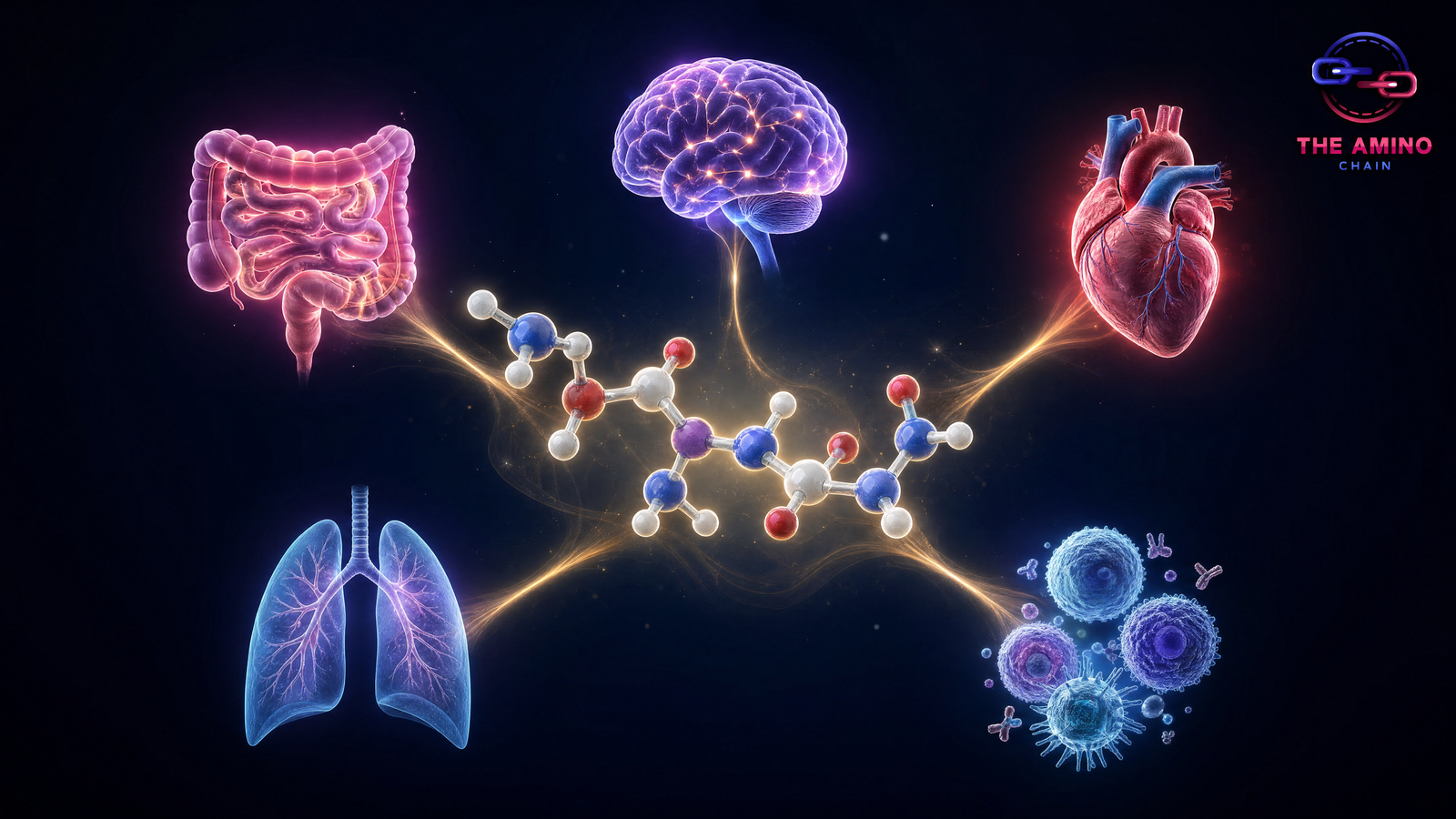
Vasoactive Intestinal Peptide (VIP) is a 28-amino acid peptide that was originally discovered in the small intestine in 1970 — hence its name. But over the following decades, VIP was found virtually everywhere in the body: brain, lungs, heart, immune cells, pancreas, and reproductive organs. It acts through two G-protein coupled receptors (VPAC1 and VPAC2) and functions as a neurotransmitter, immune regulator, vasodilator, and circadian rhythm modulator. Few peptides have such diverse physiological roles.
Gastrointestinal Function
In the gut — where VIP was first discovered — it serves as a key neurotransmitter of the enteric nervous system. VIP stimulates water and electrolyte secretion, relaxes smooth muscle (promoting gut motility), increases intestinal blood flow, and modulates immune responses in the gut-associated lymphoid tissue (GALT). Published research has implicated VIP deficiency or dysregulation in several GI conditions including inflammatory bowel disease and irritable bowel syndrome.
VIP's protective effects on intestinal barrier function have been documented in published studies. The peptide promotes epithelial cell survival, maintains tight junction integrity, and modulates the mucosal immune response — effects conceptually similar to BPC-157's GI protection but operating through different receptor pathways.
Anti-Inflammatory and Immunomodulatory Effects
VIP is one of the most potent endogenous anti-inflammatory peptides identified. Published research has documented its ability to shift immune responses from pro-inflammatory Th1/Th17 profiles toward anti-inflammatory Th2/Treg profiles. VIP inhibits macrophage production of TNF-alpha, IL-6, and IL-12, while promoting production of anti-inflammatory IL-10. It also modulates dendritic cell maturation, influencing the balance between immune activation and tolerance.
Published studies in autoimmune disease models — including rheumatoid arthritis, multiple sclerosis, and type 1 diabetes — showed significant improvements with VIP treatment. The peptide reduced inflammatory infiltrates, preserved tissue architecture, and improved functional outcomes. These effects make VIP relevant to a broad range of inflammatory and autoimmune conditions.
Neuroprotection
VIP is widely expressed in the central and peripheral nervous systems, where it functions as both a neurotransmitter and a neuroprotective factor. Published research demonstrated VIP's protective effects against excitotoxicity, oxidative stress, and inflammation-mediated neuronal damage. The mechanism involves stimulation of neurotrophic factor production (BDNF, ADNF/ADNP), anti-inflammatory effects in glial cells, and direct anti-apoptotic signaling in neurons.
Published studies in models of Parkinson's disease, Alzheimer's disease, and traumatic brain injury showed improved outcomes with VIP treatment — reduced neuronal loss, decreased neuroinflammation, and preserved cognitive or motor function.
Circadian Rhythm Regulation
VIP plays a critical role in the suprachiasmatic nucleus (SCN) — the brain's master circadian clock. VPAC2 receptors in the SCN mediate VIP's synchronization of circadian neuronal firing patterns. Published research showed that VIP-deficient mice have severely disrupted circadian rhythms, demonstrating the peptide's essential role in biological clock function. This circadian connection links VIP to sleep regulation, hormone cycling, metabolism, and the numerous physiological processes governed by circadian timing.
Pulmonary Research
VIP is abundantly expressed in the lungs, where it serves as a bronchodilator and pulmonary vasodilator. Published research has explored VIP in asthma, pulmonary hypertension, and pulmonary fibrosis. The peptide's combination of bronchodilation, anti-inflammatory effects, and pulmonary vascular relaxation provides a multi-mechanism approach to airway and pulmonary vascular disease.
Research Challenges
VIP's therapeutic research has been limited by its short half-life (approximately 1-2 minutes in circulation due to rapid enzymatic degradation) and its broad receptor distribution — effects at one tissue site may produce unwanted effects elsewhere. Published research on VIP analogs with improved stability and receptor selectivity aims to overcome these pharmacological limitations.